Join us on a literary world trip!
Add this book to bookshelf
Grey
Write a new comment Default profile 50px
Grey
Subscribe to read the full book or read the first pages for free!
All characters reduced
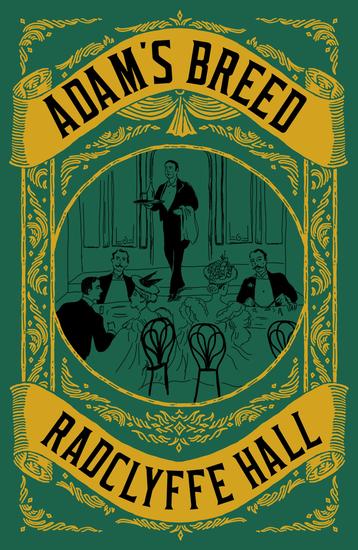
Adam's Breed - cover

Adam's Breed

Radclyffe Hall

Publisher: Renard Press

  • 0
  • 0
  • 0

Summary

Gian-Luca has a rocky start in life, his mother dying in childbirth, his father unknown, and he is sent to grow up with his grandparents amongst an Italian immigrant community on Old Compton Street. He becomes a waiter, where he learns the value of hard work, and soon lands a promotion to head waiter in a fine-dining restaurant. He excels in this position, and it is not long before he meets Maddelena, to whom he gets married. It seems he has found a happy ending.
However, despite his marriage to Maddelena and his achievements in his work, he finds he is not happy, after all. Life loses its joy, and he comes to despise those he serves in the restaurant, seeing in the diners the ugly side of society. Disconsolate, he sets out to seek a more fulfilling life, and becomes a hermit, trying to reconnect with nature, and hoping to find peace outside of society.
Despite winning awards upon its publication, Adam's Breed sank into obscurity following the censorship of Hall's later novel The Well of Loneliness. An early example of immigrant narratives, yet still relevant today, it is time Gian-Luca's stirring tale found its way back to the canon.
Available since: 03/29/2023.
Print length: 408 pages.

Other books that might interest you

  • Emma - cover

    Emma

    Jane Austen

    • 0
    • 0
    • 0
    Emma, is a novel about youthful hubris and romantic misunderstandings. It is set in the fictional country village of Highbury and the surrounding estates of Hartfield, Randalls and Donwell Abbey, and involves the relationships among people from a small number of families. The novel was first published in December 1815, with its title page listing a publication date of 1816. As in her other novels, Austen explores the concerns and difficulties of genteel women living in Georgian–Regency England. Emma is a comedy of manners, and depicts issues of marriage, sex, age, and social status.Before she began the novel, Austen wrote, "I am going to take a heroine whom no one but myself will much like." In the first sentence, she introduces the title character as "Emma Woodhouse, handsome, clever, and rich, with a comfortable home and a happy disposition... had lived nearly twenty-one years in the world with very little to distress or vex her." Emma is spoiled, headstrong, and self-satisfied; she greatly overestimates her own matchmaking abilities; she is blind to the dangers of meddling in other people's lives; and her imagination and perceptions often lead her astray.Emma, written after Austen's move to Chawton, was her last novel to be published during her lifetime, while Persuasion, the last complete novel Austen wrote, was published posthumously.The novel has been adapted for a number of films, television programmes and stage plays.Jane Austen was an English novelist known primarily for her six major novels, which interpret, critique, and comment upon the British landed gentry at the end of the 18th century. Austen's plots often explore the dependence of women on marriage in the pursuit of favorable social standing and economic security. Her works critique the novels of sensibility of the second half of the 18th century and are part of the transition to 19th-century literary realism.
    Show book
  • The Sister of the Baroness - cover

    The Sister of the Baroness

    Katherine Mansfield

    • 0
    • 0
    • 0
    In The Sister of the Baroness by Katherine Mansfield we have the theme of appearance, identity, self-importance, class and escape. Taken from her In a German Pension collection the story is narrated in the first person by an unnamed English woman and after reading the story the reader realises that Mansfield may be exploring the theme of appearance. With the exception of the narrator all the visitors at the Pension are in awe of the Baroness’ sister.
    Show book
  • Emma - cover

    Emma

    Jane Austen

    • 0
    • 0
    • 0
    Emma, by Jane Austen, is a novel about youthful hubris and the perils of misconstrued romance. The story takes place in the fictional village of Highbury and the surrounding estates of Hartfield, Randalls, and Donwell Abbey and involves the relationships among individuals in those locations consisting of "3 or 4 families in a country village". The novel was first published in December 1815 while the author was alive, with its title page listing a publication date of 1816. As in her other novels, Austen explores the concerns and difficulties of genteel women living in Georgian–Regency England; she also creates a lively comedy of manners among her characters and depicts issues of marriage, gender, age, and social status.
    Before she began the novel, Austen wrote, "I am going to take a heroine whom no one but myself will much like." In the first sentence, she introduces the title character as "Emma Woodhouse, handsome, clever, and rich." Emma is spoiled, headstrong, and self-satisfied; she greatly overestimates her own matchmaking abilities; she is blind to the dangers of meddling in other people's lives; and her imagination and perceptions often lead her astray.
    Emma, written after Austen's move to Chawton, was the last novel to be completed and published during her life, as Persuasion, the last novel Austen wrote, was published posthumously.
    This novel has been adapted for several films, many television programmes, and a long list of stage plays. It is also the inspiration for several novels.
    Show book
  • The Story of Keesh - cover

    The Story of Keesh

    Jack London

    • 0
    • 0
    • 0
    Step into the icy heart of the Arctic with The Story of Keesh by Jack London—a timeless tale of resilience, intelligence, and quiet courage. In this powerful work of literary fiction, London weaves an unforgettable narrative of a young Inuit boy named Keesh, who dares to challenge tradition and skepticism in a harsh and unforgiving landscape. 
    This immersive audiobook transports listeners to a world where survival is earned through wit and will, not brute strength. When Keesh, the son of a respected hunter, is mocked for his youth and unorthodox methods, he sets out to prove that honor and leadership come from ingenuity and wisdom. With nothing but determination and respect for his people, Keesh upends expectations and becomes a figure of admiration, all while battling the relentless forces of nature. 
    Narrated with atmospheric depth and emotional clarity, this audiobook brings to life the themes of survival, tradition, and social justice, offering listeners a rich literary experience steeped in cultural insight and historical inspiration. It is both an adventure tale and a quiet character study—a reflection on what it means to lead with integrity in the face of adversity. 
    Whether you're a lover of classic literature, a fan of short stories and narrative fiction, or simply seeking a thought-provoking escape into the wild, The Story of Keesh will leave a lasting impression. Perfect for fans of Jack London, wilderness fiction, and those who appreciate a story where the underdog earns their place through grit and heart. 
    So sit back, press play, and let Jack London's masterful storytelling guide you through snowbound landscapes, tribal traditions, and one young man's remarkable rise.
    Show book
  • On Some Technical Elements of Style in Literature (Unabridged) - cover

    On Some Technical Elements of...

    Robert Louis Stevenson

    • 0
    • 0
    • 0
    Robert Louis Stevenson was a Scottish novelist, essayist, poet and travel writer. Born and educated in Edinburgh, Stevenson suffered from serious bronchial trouble for much of his life, but continued to write prolifically and travel widely in defiance of his poor health. As a young man, he mixed in London literary circles, receiving encouragement from Andrew Lang, Edmund Gosse, Leslie Stephen and W. E. Henley, the last of whom may have provided the model for Long John Silver in Treasure Island.
    ON SOME TECHNICAL ELEMENTS OF STYLE IN LITERATURE: There is nothing more disenchanting to man than to be shown the springs and mechanism of any art.
    Show book
  • The Picture of Dorian Gray - cover

    The Picture of Dorian Gray

    Oscar Wilde

    • 0
    • 0
    • 0
    The story revolves around a portrait of Dorian Gray by Basil Hallward, an artist impressed and infatuated by Dorian's beauty. Through Basil, Dorian meets Lord Henry Wotton, and he soon is enthralled by the aristocrat's hedonistic worldview: that beauty and sensual fulfilment are the only things worth pursuing in life. Newly understanding that his beauty will fade, Dorian expresses the desire to sell his soul, to ensure that the picture, rather than he, will age and fade. The wish is granted, and Dorian pursues a libertine life of varied amoral experiences while staying young and beautiful; all the while, his portrait ages and records every one of Dorian's sins.
    Show book