¡Acompáñanos a viajar por el mundo de los libros!
Añadir este libro a la estantería
Grey
Escribe un nuevo comentario Default profile 50px
Grey
Suscríbete para leer el libro completo o lee las primeras páginas gratis.
All characters reduced
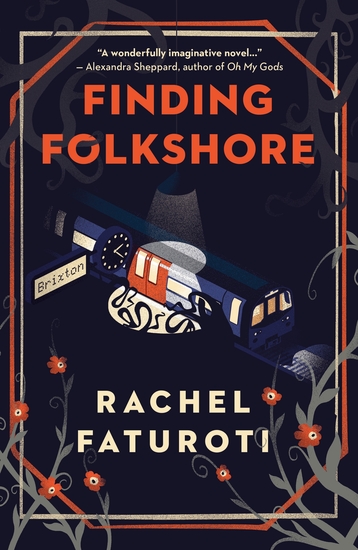
Finding Folkshore - cover

Finding Folkshore

Rachel Faturoti

Editorial: Jacaranda Books

  • 0
  • 0
  • 0

Sinopsis

16-year-old Fola Oduwole is scared. She's scared of disappointing her parents, she's scared of not being able to follow her dreams, but most of all she's scared for her brother. He has cancer and his surgery's coming up soon, it could leave him paralysed, or worse. Fola deserves a break, and she gets her wish when she takes the Victoria line one stop too far and is transported to Folkshore, a magical, hidden part of London.

Now she's scared of the talking animals, the mythical Shriekers and not being there when her brother wakes up. Fola wants to go back, but a thunderstorm destroys Folkshore station. As she looks for another way out, Fola stumbles on the local Assembly's nefarious plans. She realises that the only way back to her brother is to help her new friends as they resist the pugnacious police pigs and the authoritarian assembly.

If she fails, the community she's come to love could be destroyed forever and she may never find her way home.
Disponible desde: 06/04/2023.
Longitud de impresión: 304 páginas.

Otros libros que te pueden interesar

  • The Hindsight Bias - The Illusion of Foreseeing Outcomes After They Occur - cover

    The Hindsight Bias - The...

    William Rands

    • 0
    • 0
    • 0
    Hindsight bias, often referred to as the "knew-it-all-along" effect, is the cognitive phenomenon in which people perceive past events as having been more predictable than they actually were. After an event has occurred, individuals tend to believe they foresaw the outcome, even though there was no reasonable way to predict it at the time. This bias can distort our memories, judgments, and perceptions, leading us to think that we knew the outcome of a situation from the very beginning, even though the reality is quite different. 
    At its core, hindsight bias is rooted in how our brains process information. Once an event unfolds and its outcome is known, our minds tend to reconstruct our memories of the past to fit that outcome, making it appear as though we were more certain of the result all along. This creates a false sense of understanding and control, making it easier for us to believe that we could have anticipated the event, despite evidence to the contrary. It is a natural byproduct of how we seek coherence and meaning in our experiences, often bending the facts to align with our current understanding. 
    The implications of hindsight bias are vast and far-reaching, impacting a wide range of areas, including decision-making, learning, and judgment. In personal and professional contexts, it can lead to overconfidence, as individuals feel that they are more skilled at predicting outcomes than they truly are. This overconfidence can cloud judgment and hinder growth, as it prevents people from acknowledging mistakes or learning from their missteps. In legal contexts, it can distort the perception of whether certain decisions or actions were reasonable at the time they were made, often leading to unjust conclusions and unfair blame.
    Ver libro
  • Habsburgs The: An Enthralling Overview of One of The Most Important Dynasties in European History - cover

    Habsburgs The: An Enthralling...

    Billy Wellman

    • 0
    • 0
    • 0
    The Habsburgs: A Dynastic Journey through European History 
    If you want to witness the rise and fall of a dynasty that shaped Europe without the dryness of textbooks, then keep reading... 
    Why This Audiobook? 
    Delve into the sprawling saga of the Habsburg dynasty, whose influence was felt across Europe for over six centuries. From their humble beginnings to their dramatic decline during World War I, this audiobook provides a captivating look at the rulers who sat at the heart of European power and intrigue. 
    What Sets This Audiobook Apart:Cultural Influence: Explore how the Habsburgs were patrons of the arts, turning Vienna into a cultural powerhouse during the Renaissance.Diplomatic Mastery: Unravel the web of strategic marriages that extended their power across Europe, ensuring their dominance through shrewd alliances.Military and Religious Might: From the battlefields of the Thirty Years’ War to their staunch defense of Catholicism, discover the dual pillars of their power.Dynastic Marriages: Understand why matrimony was not merely a matter of the heart but a cornerstone of their political strategy.Global Empire: Marvel at the vast Habsburg realm, from the Americas to the Far East, illustrating their unprecedented influence. 
    Why You Can't Miss This Journey: 
    Through engaging narrative and vivid detail, this audiobook doesn’t just recount facts but brings the personalities and dramatic events of the Habsburg era to life. Witness the complex interplay of relationships and rivalries that dictated the political landscape of an entire continent. 
    Discover the legacy of one of history’s most formidable and influential dynasties. Add this enthralling audiobook to your collection and unlock the secrets of the Habsburgs.
    Ver libro
  • May We Forever Stand - A History of the Black National Anthem - cover

    May We Forever Stand - A History...

    Imani Perry

    • 0
    • 0
    • 0
    The twin acts of singing and fighting for freedom have been inseparable in African American history. May We Forever Stand tells an essential part of that story. With lyrics penned by James Weldon Johnson and music composed by his brother Rosamond, “Lift Every Voice and Sing” was embraced almost immediately as an anthem that captured the story and the aspirations of black Americans. Since the song’s creation, it has been adopted by the NAACP and performed by countless artists in times of both crisis and celebration, cementing its place in African American life up through the present day. 
     
    In this rich, poignant, and readable work, Imani Perry tells the story of the Black National Anthem as it traveled from South to North, from civil rights to black power, and from countless family reunions to Carnegie Hall and the Oval Office. Drawing on a wide array of sources, Perry uses “Lift Every Voice and Sing” as a window on the powerful ways African Americans have used music and culture to organize, mourn, challenge, and celebrate for more than a century.
    Ver libro
  • Our Business Civilization - cover

    Our Business Civilization

    James Truslow Adams

    • 0
    • 0
    • 0
    In Our Business Civilization, Pulitzer Prize-winning historian James Truslow Adams delivers a sharp and thoughtful critique of early 20th-century American society. With incisive essays first published in leading magazines of the 1920s, Adams explores how business values and the pursuit of profit came to dominate nearly every aspect of American life—shaping its ethics, culture, and intellectual priorities. He contrasts the American experience with that of Europe, where older institutions such as the aristocracy, church, and professions balanced economic ambitions with cultural depth. 
    Adams raises urgent questions about materialism, the erosion of ethical standards, and the narrowing of social values in a business-dominated culture. This work remains strikingly relevant today, offering listeners a historical lens through which to consider the persistent tensions between commerce, culture, and the human spirit.
    Ver libro
  • A Concise History of Florida - cover

    A Concise History of Florida

    James C. Clark

    • 0
    • 0
    • 0
    A quick overview of the Sunshine State's fascinating past. 


    In 1513, Spanish explorer Juan Ponce de León first set foot on Florida's east coast. The land he discovered was a geographic anomaly so distinctive that one day, centuries later, astronaut Neil Armstrong would say that Florida was the first shape on earth he recognized on his return from a visit to the moon. 


    This unique state has witnessed such momentous events as the 1959 arrival of the first Cuban exiles under Fidel Castro and the 1981 launch of the Columbia—the first space shuttle. Join historian James C. Clark as he chronicles the surprising history of the Sunshine State in this concise and captivating book.
    Ver libro
  • First Crusade The: The History of the Christian Church’s Initial Campaign in the Holy Land - cover

    First Crusade The: The History...

    Charles River Editors

    • 0
    • 0
    • 0
    Of the many campaigns during the Middle Ages, few are as remarkable or seemingly impossible to win at the start as the First Crusade (1095-99), and the true crowning achievement of that crusade, which resulted in two centuries of Western European Christian states in the Middle East and the permanent firing of the European imagination, was the conquest of Jerusalem on July 15, 1099 after three weeks of siege. That victorious siege came four years after the call for a crusade first went out, and had the Crusaders not taken Jerusalem, the First Crusade would not likely have been followed by any more and the campaign might have been no more than an historical footnote of what could have been.  
    	As it turned out, the siege of Jerusalem and the crusade as a whole says much about the first major clash of Western and Eastern military tactics after the fall of the Roman Empire, as well as the power of faith and even fanaticism to motivate people beyond ordinary human endurance. For better and worse, the siege and fall of Jerusalem to the Crusaders has become a fundamental piece in the current view of the West in that part of the world. Indeed, to this day, the First Crusade remains a polarizing event, even among modern historians. For some, the Crusaders were heroes and saints, and for others they were devils who disrupted the peaceful local sects of Muslims, Jews, and Christians, establishing an alien colony that heralded modern European imperialism. In fact, the First Crusade is a good example of why it is unwise to choose sides in history, because neither side was correct and the situation was highly complex. 
    Though it went largely unremarked in the Islamic world at the time, the First Crusade has since become a contentious symbol of European imperialism in the Middle East. Debate over whether the Crusades can truly be perceived as an early example of European colonialism continues in medieval historiography, though the evidence for this is thin.
    Ver libro