Join us on a literary world trip!
Add this book to bookshelf
Grey
Write a new comment Default profile 50px
Grey
Subscribe to read the full book or read the first pages for free!
All characters reduced
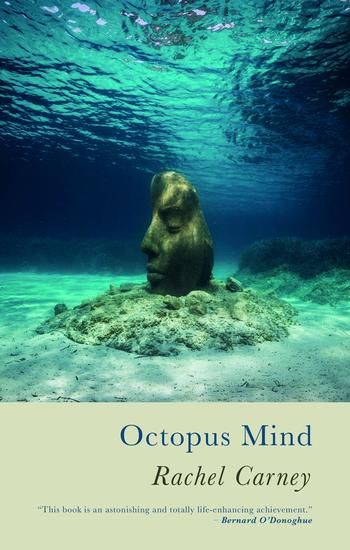
Octopus Mind - cover

Octopus Mind

Rachel Carney

Publisher: Seren

  • 0
  • 0
  • 0

Summary

Octopus Mind plays with an array of rich and original metaphors to explore the intricacies of neurodiversity, perception and the human mind. These poems articulate the desire to understand and be understood by oneself and others in a complex world. They observe the nuances of creativity, art, relationships, and self-expression through the lens of neurodiversity, reflecting on the poet's experience of being diagnosed with dyspraxia as an adult. They delve into the challenges of neurodiversity, but also reveal its gifts.
Poems respond to visual artists like Gwen John, whose paintings break new ground for women representing their own visions of themselves. Other poems suggest that this can be a struggle however, as Pablo Picasso paints not a woman but his own despair in 'Blue Nude', while Elizabeth Siddal reflects on her own image, fetishized by the Pre-Raphaelite painters, and Henri Rousseau's painting becomes an outlet for self-deception and frustration. 
Some of the most stunning poems in this collection perform a kind of magic or sleight of hand, as dyspraxia is explored through unique and remarkable metaphors, including a series of artefacts in a museum, a walk along the seashore, and a swaying tree. The 'Octopus Mind' evokes the possibilities of what it means to be human, through obsession, self-deception, realisation, and acceptance.
The speaker in Octopus Mind is endearingly humble and we journey with them beyond self-criticism to reclaiming the self. In 'Growing', the narrator declares 'I will grow // into myself, climbing, steady, / grip by grip, leaf by leaf'. In 'Understood' the narrator describes the complex process of re-imagining one's place in the world, armed with new knowledge: 'Slowly, we adjust / our own soft ignorance / unroll our prejudice / in gentle waves.' 
"A poet of multiple uncanny self-portraits, of the 'octopus mind', who explores the gaps between mind and body, and body and world, with deft, diverse diagnoses."Damian Walford Davies
"Extraordinary poems of self-encounter, of divergence, of bruised bodies out of balance with themselves, laid bare – and of new-found identities, and joyous release." Richard Marggraf Turley 
"Rachel Carney's debut collection delights in its curiosity and surrealism. This is a collection that 'swims out into deep ocean currents' to explore the workings of the mind and the impacts of this on the self." Katherine Stansfield
Available since: 07/01/2023.
Print length: 72 pages.


Other books that might interest you

  • Poetry Book Society Spring 2023 Bulletin - cover

    Poetry Book Society Spring 2023...

    Alice Kate Mullen

    • 0
    • 0
    • 0
    The quarterly poetry magazine of the Poetry Book Society, founded by T.S. Eliot, featuring poems and exclusive interviews from Jason Allen Paisant, Arji Manuelpillai, Sarala Estruch, Carole Satyamurti, Will Harris, Peter Bennet, Agnès Agboton, Lawrence Schimel, Ellora Sutton, and more.
    Show book
  • Born in England – Exploring English Poetry - The Lords Knights & Gentlemen of the Realm - A celebration of English poems - cover

    Born in England – Exploring...

    Sir Philip Sidney, Sir Thomas...

    • 0
    • 0
    • 0
    Poetry. A form of words that seems so elegantly simple in one verse and so cleverly complex in another.  Each poet has a particular style, an individual and unique way with words and yet each of us seems to recognise the path and destination of where the verses lead, even if sometimes the full comprehension may be a little beyond us. 
     
    Through the centuries every culture has produced verse to symbolize and to describe everything from everyday life, natural wonders, the human condition and even in its more hubristic moments, the crushing triumph of an enemy. 
     
    In the volumes of this series, we take a look at poetry through the prism of individual regions of England, or sometimes more quaintly known as ‘Albion’, or ‘Blighty’, through the centuries of its gloried history. 
     
    England, despite its perception of reserve and under-statement has, in reality, strode the global stage at various time in many things, both good and bad, from Empire to long distance running. Here our focus in on its literature.  Famed for its fiction and dramas, it is equally admired for its plethora of gifted poets and the dazzling verse which has added so much to its artistic legacy.  These classic poets are wonders of their age and of their art.  Genius is written in their names. 
     
    In this volume we explore through many centuries the poetry written by the Nobility of England.  Their titles may be inherited and reek of undeserved privilege but their verse is the inheritance of us all.  Our poets include Sir Thomas Wyatt, W S Gilbert, Sir John Beaumont, Sir John Suckling and many others.  Genius is written in their names.
    Show book
  • Alan Seeger: The Selected Poetry - cover

    Alan Seeger: The Selected Poetry

    Alan Seeger

    • 0
    • 0
    • 0
    'I have a rendezvous with Death / At midnight in some flaming town … It may be he shall take my hand / And lead me into his dark land.'
    
    This stunning collection of poetry features Alan Seeger's most notable works, illustrating his talent for vivid, lyrical verse and his deeply moving explorations of love, war and morality.
    
    Seeger, who enlisted in the French Foreign Legion in World War I, was renowned for his patriotic and idealistic war poems. His selected poetry features some of his most famous works such as 'I Have a Rendezvous with Death' and 'Do You Remember Once…'. Through poignant meditations on death and the fragility of life, Seegar affectingly captures the beauty of living, elegantly balancing it with the grim realities of war. His words are imbued with a youthful optimism, even in the darkest of experiences, appealing not only to individual struggle but a collective human spirit. Offering a raw, unfiltered glimpse into the hearts of a generation who endured the war, Seeger's poems soar with grace, courage and an unwavering sense of purpose. This audiobook edition is beautifully narrated by Nathan Osgood.
    Alan Seeger (1888 – 1916) was an American poet, best known for his writing during World War I. He fought and died in the Battle of the Somme at just twenty years old. Today, he is lauded for the poem 'I Have a Rendezvous with Death', which is regarded as an American war classic.
    Show book
  • Poems from the Wilderness - cover

    Poems from the Wilderness

    Jack Mayer

    • 0
    • 0
    • 0
    Wilderness inspired poems composed on the trail by an American doctor/poet, sharing his love of the backcountry, trail-walking, camping, and the “wilderness effect,” a unique sensation of aliveness and deep connection. Mayer’s poetry explores our human experience of the natural world, our intimate and mysterious connections to flora and fauna. It proclaims the opportunity that walking mindfully in the wilderness offers to experience the divine. The uniqueness and intensity of these musings lead his poems to attempt reconciliation of our lived experience with physics, spirit, and music, the latter manifested in his experience of singing to the dying; the wisdom of nature rendered in music and consolation. A few poems are inspired by Mayer’s medical practice. Some spring from his ordinary life and reflections on his childhood and family, which have followed him into the woods. 
    “Ever since Emerson sent American poets into the woods to discover their souls, the connections between language and spirit have been steadily forged on this continent. Jack Mayer is a writer I've long admired, and in these bright, sensuous, deeply reflective poems we encounter a wilderness that exists on many levels: the Vermont trails that he loves, walks and dreams, and the contours of his own expansive spirit. I read these poems with increasing pleasure, and plan to return to them again and again. Mayer is a fine, fresh voice in American poetry.” —Jay Parini, author of New and Collected Poems, 1975-2015 
    “These poems...recall such earlier wilderness poets as Han Shan and Gary Snyder. Like those ancestors’ dispatches from the heights, they combine reflections on time and reality with the glow of physical exertion in the open air. Mayer’s humor also bubbles up in ways that make his voice a distinctive and delightful addition to this lineage.”—John Elder, author of Reading the Mountains of Home
    Show book
  • The Poet And His Book and Other Poems - Including Analyses and Piano Underscore for each poem - cover

    The Poet And His Book and Other...

    Edna St. Vincent Millay, A. M. Bly

    • 0
    • 0
    • 0
    This audiobook is narrated by an AI Voice.   
    Step into the fierce lyric beauty of Edna St. Vincent Millay in this immersive audiobook collection featuring 20 of her most compelling poems. Each poem is brought vividly to life through a sensitive narration, followed by a thoughtful literary analysis that illuminates Millay’s themes of love, defiance, mortality, and artistic independence. 
    Enhancing the experience is an original piano underscore composed specifically for each poem, weaving music and meaning into a unified emotional landscape. The piano does not merely accompany the verse; it listens, responds, and deepens the poem’s inner life, echoing shifts in mood, rhythm, and voice. 
    Designed for both longtime admirers and new readers, this audiobook invites you to hear Millay as she demands to be heard—passionate, incisive, and unmistakably modern. Whether encountered for study, reflection, or pure enjoyment, this collection offers a richly layered encounter with one of America’s great poetic voices, where word, insight, and music converge.
    Show book
  • Modern Poetry - Poems - cover

    Modern Poetry - Poems

    Diane Seuss

    • 0
    • 0
    • 0
    Diane Seuss's signature voice—audacious in its honesty, virtuosic in its artistry, outsider in its attitude—has become one of the most original in contemporary poetry. Her latest collection takes its title, Modern Poetry, from the first textbook Seuss encountered as a child and the first poetry course she took in college, as an enrapt but ill-equipped student, one who felt poetry was beyond her reach. Many of the poems make use of the forms and terms of musical and poetic craft—ballad, fugue, aria, refrain, coda—and contend with the works of writers overrepresented in textbooks and anthologies and those too often underrepresented. Seuss provides a moving account of her picaresque years and their uncertainties, and in the process, she enters the realm between Modernism and Romanticism, between romance and objectivity, with Keats as ghost, lover, and interlocutor. 


    In poems of rangy curiosity, sharp humor, and illuminating self-scrutiny, Modern Poetry investigates our time's deep isolation and divisiveness and asks: What can poetry be now? Do poems still have the capacity to mean? "It seems wrong / to curl now within the confines / of a poem," Seuss writes. "You can't hide / from what you made / inside what you made." What she finds there, finally, is a surprising but unmistakable love.
    Show book