Join us on a literary world trip!
Add this book to bookshelf
Grey
Write a new comment Default profile 50px
Grey
Subscribe to read the full book or read the first pages for free!
All characters reduced
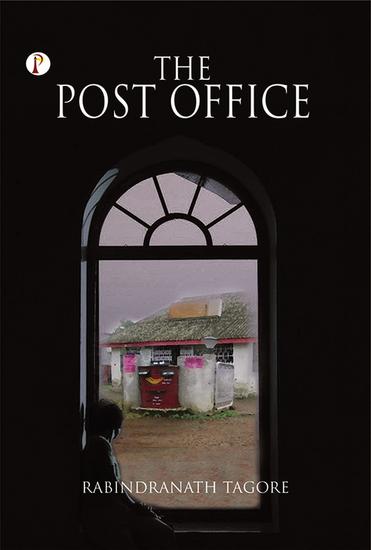
The Post Office - cover

The Post Office

Rabindranath Tagore

Publisher: Pharos Books

  • 0
  • 0
  • 0

Summary

The Post Office is a 1912 play by Rabindranath Tagore. Rabindranath Tagore was the first non-European writer to win the renowned Nobel Prize in literature. Today, he continues to be one of the most important and influential voices in World literature. The play revolves around the life of a child, Amal who is confined to his adoptive uncle's home by an incurable disease. The construction of a new post office nearby prompts the imaginative Amal to fantasize about receiving a letter from the King or being his postman. The village headman mocks Amal, and pretends the illiterate child has received a letter from the king promising that his royal physician will come to attend him. Will the physician arrive? Is Amal going to keep waiting? Read this beautiful heart-warming piece and find out for yourself.
Available since: 11/01/2026.
Print length: 25 pages.
Other books that might interest you

  • The Metamorphosis - cover

    The Metamorphosis

    Franz Kafka

    • 0
    • 0
    • 0
    Gregor Samsa awakens to find himself transformed into a monstrous vermin. As his mother, father, sister and employer each learn of this in their turn, the dim world of Gregor Samsa comes more into focus.¶ Fantasy and reality are interwoven in Kafka's classic tale of introspection and misunderstanding.
    Show book
  • The Gipsy Prophecy - cover

    The Gipsy Prophecy

    Bram Stoker

    • 0
    • 0
    • 0
    The Gipsy Prophecy by Bram Stoker is a mysterious and atmospheric tale that weaves together themes of fate, superstition, and the supernatural. The story revolves around a prophecy delivered by a gipsy woman, foretelling the future of a man whose life is dramatically shaped by her ominous words. As the narrative unfolds, Stoker explores the tension between destiny and free will, as well as the psychological impact of believing in foreseen events. With his signature suspenseful style, Stoker crafts a gripping and thought-provoking tale that keeps readers on edge, questioning whether the prophecy will come to pass.
    Show book
  • The Big Four - An Adventure of Hercule Poirot - cover

    The Big Four - An Adventure of...

    Agatha Christie

    • 0
    • 0
    • 0
    Complete and unabridged, with 60 full-page plates by Thomas Hill, Marianne North and Robert Hughes. Poirot is packing for South America when a mud-caked stranger walks into his flat, writes the figure 4 on a sheet of paper, and dies. Christie assembled the book from twelve magazine stories during the worst year of her life — her mother dead, her marriage ending, her own eleven-day disappearance still to come — and turned Poirot loose against an international conspiracy rather than a country house. It is the strangest thing she wrote. Sixty plates of portraiture and place from 1850 to 1929, among them self-portraits and a Welsh factory scene, echo the novel's cast of doubled identities and shifting ground.
    Show book
  • 3 Stories - Success at What Cost - A trio of classic tales perfect for a commute walk or quiet night in - cover

    3 Stories - Success at What Cost...

    Leo Tolstoy, Anthony Hope, Amy Levy

    • 0
    • 0
    • 0
    There is something about the number 3.    
     
    The Ancient Greeks believed 3 was the perfect number, and in China 3 has always been a lucky number, and they know a thing or two.   
     
    Most religions also have 3 this and 3 that and, of course, in these more modern times, three’s a crowd may be too many, except when it’s a ménage à trois.  It seems good things usually come in threes. 
     
    Whatever history and culture says WE think 3, a hat-trick of stories, is a great number to explore themes and literary avenues that classic authors were so adept at creating. 
     
    From their pens to your your ears.  
     
    01 - 3 Stories - Success At What Cost 
    02 - How Much Land Does A Man Need by Leo Tolstoy 
    03 - Cohen of Trinity by Amy Levy 
    04 - A Sucessful Rehearsal by Anthony Hope
    Show book
  • Candida - cover

    Candida

    George Bernard Shaw

    • 0
    • 0
    • 0
    Candida, a comedy by playwright George Bernard Shaw, was written in 1894 and first published in 1898, as part of his Plays Pleasant. The central characters are clergyman James Morell, his wife Candida and a youthful poet, Eugene Marchbanks, who tries to win Candida's affections. The play questions Victorian notions of love and marriage, asking what a woman really desires from her husband. The cleric is a Christian Socialist, allowing Shaw—himself a Fabian Socialist—to weave political issues, current at the time, into the story. George Bernard Shaw (26 July 1856 – 2 November 1950), known at his insistence simply as Bernard Shaw, was an Irish playwright, critic, polemicist and political activist. His influence on Western theatre, culture and politics extended from the 1880s to his death and beyond. He wrote more than sixty plays, including major works such as Man and Superman (1902), Pygmalion (1913) and Saint Joan (1923). With a range incorporating both contemporary satire and historical allegory, Shaw became the leading dramatist of his generation, and in 1925 was awarded the Nobel Prize in Literature.
    Show book
  • The Exploits of Brigadier Gerard - cover

    The Exploits of Brigadier Gerard

    Arthur Conan Doyle

    • 0
    • 0
    • 0
    Originally published in the Strand Magazine between December 1894 and September 1903. The Exploits of Brigadier Gerard by Arthur Conan Doyle, the celebrated author of Sherlock Holmes and the Lost, follows the adventures of Brigadier Etienne Gerard, a courageous soldier in the service of Napoleon. From a sleepy cafe in Paris, he whiles away the hours recounting his glories in the service of France.  
    From his victory over the Count of the Castle of Gloom, the mysterious affair of the Ajaccio Brothers and his daring escape from Dartmoor Prison to his brush with the dastardly Marshal Millefleurs and his successful conveying of the Emperors own despatches through the enemy held towns of Soison and Senlis. Gerard never wavers in his dedication to the Emperor, or his convictions that he is the finest soldier in all of france, and therefore, the world.  
    Adapted into several films and radio dramas across the years, George McDonald Fraser once cited Brigadier Gerard as a major inspiration for his own fictional comedic adventurer Harry Flashman.  
    Narrated by Michael Ward.
    Show book