Join us on a literary world trip!
Add this book to bookshelf
Grey
Write a new comment Default profile 50px
Grey
Subscribe to read the full book or read the first pages for free!
All characters reduced
Nationalism - cover

Nationalism

Rabindranath Tagore

Publisher: Interactive Media

  • 0
  • 0
  • 0

Summary

Nationalism, a form of patriotism for one's country, is often the result of a belief in the superiority of one's nation and its culture. This may lead to prejudice against other nations and cultures. Tagore was an Indian nationalist who looked back on his homeland with fondness while also favoring more connections with Britain. He believed there were many ways to grow Indian independence without rejecting British ties.
Available since: 01/17/2022.
Print length: 74 pages.

Other books that might interest you

  • The Vision of Aridaeus - cover

    The Vision of Aridaeus

    G. R. S. Mead

    • 0
    • 0
    • 0
    The Vision of Aridaeus, is a philosophical and spiritual treatise that offers an in-depth exploration of the nature of reality as it relates to the concept of self-consciousness. Through his use of dialogic discourse, Mead illuminates the complexity and depth of this subject matter, examining the notions of egoism and its potential to transcend both physical and mental boundaries. Read in English, unabridged.
    Show book
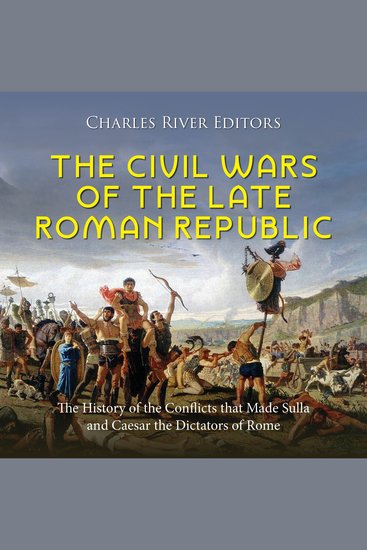
  • Civil Wars of the Late Roman Republic The: The History of the Conflicts that Made Sulla and Caesar the Dictators of Rome - cover

    Civil Wars of the Late Roman...

    Editors Charles River

    • 0
    • 0
    • 0
    Julius Caesar is still remembered for winning a civil war and helping bring about the end of the Roman Republic, leaving a line of emperors in its place, but it’s quite possible that none of what Caesar did would’ve happened without the template for such actions being set 40 years earlier. At the time, when Caesar was in his teens, war was being waged both on the Italian peninsula and abroad, with domestic politics pitting the conservative, aristocratic optimates against the populist, reformist populares, and this tension ultimately escalated into an all-out war. One of the leading populares was Caesar’s uncle, Gaius Marius, a military visionary who had restructured the legions and extended the privileges of land ownership and citizenship to legionaries on condition of successful completion of a fixed term of service. In the late 2nd century B.C., Marius had waged a successful campaign against several Germanic tribes, and after earning eternal fame in the Eternal City, Marius was appointed a consul several times. In 88 B.C., he entered into conflict with his erstwhile protégé, the optimate Sulla, over command of the army to be dispatched against Mithridates VI of Pontus, a long-time enemy of Rome and its Greek allies.   
    Ironically, Marius’s reforms had made the legions fiercely loyal to their individual generals rather than the state, which allowed Sulla to march his army against Rome and force Marius into exile. With that, Rome’s first civil war was officially underway, but Sulla’s triumph proved short-lived. Just as Sulla departed for a campaign, Marius returned at the head of a scratch army of veterans and mercenaries, taking over the city and purging it of Sulla’s optimate supporters, and though Marius died in 86 B.C., his party remained in power. 
    Show book

  • Self Reliance - cover

    Self Reliance

    Ralph Waldo Emerson

    • 0
    • 0
    • 0
    When Ralph Waldo Emerson published his seminal essay on self-reliance in 1841, the United States was still reeling from the effects of a calamitous financial collapse four years earlier.
    
    His positive vision for the power of individualism and personal responsibility was issued in a climate of panic and uncertainty, at a time when the values of society and humanity were shifting. Emerson's call to independence remains as relevant and energizing as ever.
    Show book
  • Toxic Success: How to Break Free from Burnout Culture - "Elevate your journey with 'Toxic Success'—captivating audio lessons to conquer burnout and thrive!" - cover

    Toxic Success: How to Break Free...

    Leander Ashcroft

    • 0
    • 0
    • 0
    Toxic Success: How to Break Free from Burnout Culture 
    ⭐⭐ Simplified Guide & Explanations Included⭐⭐   
    Are you striving to advance in your career and enrich your understanding while overcoming the pitfalls of a damaging burnout culture?   
    Looking for an all-encompassing resource that equips you with everything you need to escape the cycle of toxic success?   
    Your quest ends here!   
    This guide is your essential ally for enhancing your knowledge, practicing your skills, and engaging in practical exercises. With this resource, you are set for triumph.   
    Updated for the current insight into breaking free from burnout culture.   
    Key features of this enhanced guide: 
    - In-depth understanding of how to transform your life by escaping burnout's destructive cycle.   
    - Comprehensive explanations on key concepts related to overcoming burnout.   
    - Effective strategies for personal growth and navigating challenges.   
    Our guide stands out by offering thorough coverage, which is crucial for your personal victory. We don’t just touch the surface; we explore each concept in detail.   
    Structured with clarity and accessible language, our guide ensures seamless transitions between topics. Say goodbye to complex jargon and embrace straightforward, precise, and accurate content.   
    So, why hesitate? Click the BUY NOW button to grab your guide and start your path to a life free from the shackles of burnout culture!
    Show book
  • The Shocking Truth about Relationships and Happiness - cover

    The Shocking Truth about...

    Zoey Fraisers

    • 0
    • 0
    • 0
    Relationships and happiness are two of the most talked-about and sought-after aspects of human existence. From fairy tales to modern social media trends, we are inundated with messages about what they should look like and how they should feel. Yet, despite this overwhelming focus, countless people find themselves dissatisfied, confused, or even heartbroken in their pursuit of meaningful connections and lasting joy. Why is it that something so fundamental to our lives feels so elusive?   
      
    The truth is, much of what we believe about relationships and happiness is rooted in myths, misconceptions, and societal expectations that don’t align with reality. We’re told that finding "the one" will complete us or that a perfect relationship will make all our troubles disappear. We chase milestones, like getting married or achieving career success, believing they will finally bring us happiness. But what happens when the dream doesn’t match reality? What if the problem isn’t with us, but with the stories we’ve been told?  
      
    This book was born out of a desire to unravel these myths and uncover the shocking truths about relationships and happiness. It’s not about pointing fingers or assigning blame but about understanding why we often fall short of the fulfillment we seek. It’s about looking at relationships—whether romantic, platonic, or familial—not as the sole key to happiness but as one piece of a much larger puzzle. It’s about redefining happiness itself, shifting away from fleeting moments of pleasure toward a deeper, more sustainable sense of contentment. 
    Show book
  • Asperger’s Syndrome - Navigating Social Dynamics and Celebrating Neurodiversity - cover

    Asperger’s Syndrome - Navigating...

    Coral Nunez

    • 0
    • 0
    • 0
    Asperger’s Syndrome, a form of autism spectrum disorder (ASD), is often misunderstood, yet it is a part of the broader spectrum of human neurodiversity. Individuals with Asperger’s Syndrome experience the world in unique ways, often exhibiting strengths in specific areas while facing challenges in social communication and sensory processing. The aim of this book is to provide a deeper understanding of Asperger’s Syndrome, exploring the characteristics, challenges, and strengths that come with it, while promoting acceptance and celebration of neurodiversity. 
      
    Neurodiversity is the concept that neurological differences, including those seen in Asperger’s Syndrome, are a natural variation of human diversity. Instead of viewing these differences as deficits or disorders, neurodiversity encourages us to appreciate the value these variations bring to society. It emphasizes that individuals with Asperger’s Syndrome and other neurodivergent conditions offer unique perspectives, skills, and talents that are often overlooked or underappreciated in traditional settings. 
      
    Asperger’s Syndrome, in particular, is characterized by challenges in social interactions, communication, and the presence of restricted, repetitive behaviors or interests. However, these traits do not define the person as a whole. Many individuals with Asperger’s Syndrome possess exceptional abilities in fields such as mathematics, technology, music, and art. They may also demonstrate a deep, intense focus on subjects they are passionate about, allowing them to become experts in their areas of interest.
    Show book