Join us on a literary world trip!
Add this book to bookshelf
Grey
Write a new comment Default profile 50px
Grey
Subscribe to read the full book or read the first pages for free!
All characters reduced
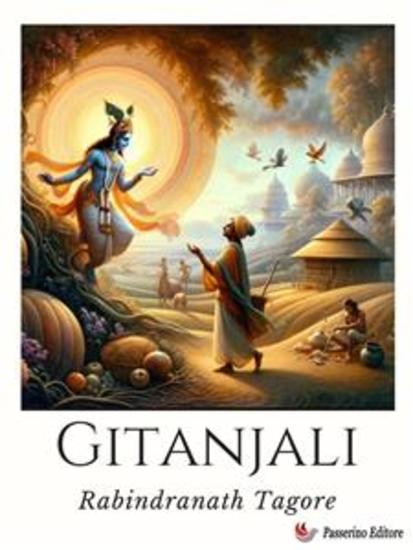
Gitanjali - cover

Gitanjali

Rabindranath Tagore

Publisher: Passerino

  • 0
  • 0
  • 0

Summary

Gitanjali meaning song offerings in Bengali, is a collection of poems by the renowned Indian poet Rabindranath Tagore. It was first published in 1910 and won Tagore the Nobel Prize in Literature in 1913, making him the first non-European to win the prestigious award. The poems are written in lyrical prose, expressing themes of love, devotion, longing, and the quest for spiritual enlightenment. The collection is deeply rooted in Tagore's own spiritual journey and reflects his belief in the unity of all religions and the universal essence of humanity. 

Rabindranath Tagore (1861–1941) was a multifaceted genius and one of the most prominent figures in Indian literature, art, and culture. He was born in Calcutta (now Kolkata), India, into a prominent Bengali family known for its contributions to literature, music, and social reform.
Available since: 02/08/2024.

Other books that might interest you

  • Moments We Stand The: Silence Breaks - cover

    Moments We Stand The: Silence...

    Ashlee Boyson

    • 0
    • 0
    • 0
    My name is Ashlee. I am a victim of murder. Through a series of events and by two shots of a gun, I was made a widow at the age of 28, with my youngest child just six weeks old. I am a victim of infidelity. I have felt unlovable. I have felt rejected. I have had days in my life when I wasn’t sure if I would ever take a breath again, let alone be able to raise my five children by myself. I have lived in fear. I have felt much heartache. I have felt truly broken to my core. I have carried some heavy burdens...not only of my own, but burdens put upon my shoulders by the death of my husband. I have felt alone. I have felt humiliated. I have been humbled to my knees. I have searched my soul to find my worth in this world, and in the life that was left for me. My world has been totally shattered. I have faced realities I never knew were possible, and found strength within myself to keep up the fight and live every day as if it was on purpose. I have been carried by Angels...both earthly beings and those unseen. I have found that being a “victim” doesn’t mean we have an excuse to stop living. Being a victim means finding a reason for seeking a higher road. I have picked up the pieces left and carried on. I am a mother. We are survivors. In one way or another, we are all victims. There are times in our lives when we are forced to question who we are at our core. This is my story...the defining moments that have truly brought me to my knees, the times when I’ve questioned to my core my very existence, and the experiences I’ve had that have shown me who I really am and who my Heavenly Father still needs me to become. The night of my husband’s death was my darkest hour, but also the very moment when I saw firsthand that my Heavenly Father sent Angels on errands for me. He carried me. It was the hour when all my fears and all the pain of this world collided together and He was there...putting back together all the pieces, one step at a time.
    Show book
  • The Earth-Child in the Grass and Other Poems - Including Analyses and Piano Underscore for each poem - cover

    The Earth-Child in the Grass and...

    Katherine Mansfield, A. M. Bly

    • 0
    • 0
    • 0
    This audiobook is narrated by an AI Voice.   
    The Earth-Child in the Grass and Other Poems presents twenty of Katherine Mansfield’s most luminous and intimate poems in a carefully crafted audio edition that honors both their lyric delicacy and emotional depth. Written with Mansfield’s characteristic sensitivity to childhood, memory, solitude, and fleeting moments of perception, these poems reveal a lesser-known but deeply resonant side of one of modernism’s most beloved writers. 
    This collection includes A Little Girl’s Prayer, The Lonesome Child, Very Early Spring, When I Was a Bird, The Quarrel, The Earth-Child in the Grass, and fourteen other poems that trace the inner landscapes of innocence, longing, and quiet wonder. Mansfield’s poetic voice—simple on the surface, profound beneath—comes alive through attentive narration and thoughtful interpretation. 
    Each poem is accompanied by an original spoken analysis, offering insight into Mansfield’s imagery, themes, and emotional nuance, while preserving the subtlety of her art. The poems are narrated by AI Voice Willow, whose clear, gentle delivery reflects the intimacy and restraint of Mansfield’s verse. The project is directed by A. M. Bly, who also composed and performed the original piano underscore for each poem. The music does not intrude but moves alongside the poetry, enhancing mood and atmosphere with restraint and grace. 
    Designed for listeners who cherish literary depth and reflective listening, this audiobook offers a contemplative experience in which poetry, analysis, and music are woven into a unified whole—an invitation to listen closely, linger, and rediscover the quiet power of Katherine Mansfield’s poetry.
    Show book
  • Gandamak's Fury: The Road from Kabul - cover

    Gandamak's Fury: The Road from...

    Gaurav Garg

    • 0
    • 0
    • 0
    This audiobook is narrated by an AI Voice.   
    The year is 1842. The British Empire’s bold venture into Afghanistan has dissolved into a horrific nightmare. After installing the unpopular Shah Shuja Durrani on the throne in Kabul, the occupying forces under the inept command of General Elphinstone find themselves besieged, their political envoy Sir William Macnaghten brutally murdered by Wazir Akbar Khan, leader of the Afghan resistance. 
    Forced into a humiliating capitulation, the sixteen thousand souls of the British column – soldiers, sepoys, and a vast multitude of civilian camp followers – begin their infamous winter retreat. "Gandamak's Fury: The Road from Kabul" charts this catastrophic journey, a ninety-mile exodus from the Afghan capital towards the distant hope of Jalalabad, a path that would become a byword for military disaster. 
    "Gandamak's Fury: The Road from Kabul" is an unflinching, epic portrayal of one of history’s most harrowing military retreats. It explores the catastrophic consequences of imperial hubris, the brutal realities o
    Show book
  • King Lear - cover

    King Lear

    William Shakespeare

    • 0
    • 0
    • 0
    I am a man more sinned against than sinning. 
    A Shakespeare Society Production. 
    The complete play in five acts.
    Show book
  • Paradise Lost - cover

    Paradise Lost

    John Milton

    • 0
    • 0
    • 0
    "Better to reign in Hell, than serve in Heaven."
    
    In the wake of a failed cosmic rebellion, the fallen archangel Satan awakens on a burning lake of fire. Undefeated in spirit, he rallies his legions of demons to build the palace of Pandemonium and plots a subtle revenge against the Almighty. His target? God's newest and most beloved creation: Humanity. Milton's masterpiece takes us from the depths of Tartarus to the heights of the Empyrean, and finally to the lush, innocent borders of the Garden of Eden. Here, we witness the tragic temptation of Adam and Eve, a choice that changes the course of human history forever.
    
    The Greatest Antagonist in Literature: Milton's Satan is a character of terrifying complexity. He is a charismatic leader, a tormented intellectual, and a "tragic hero" whose pride leads to his inevitable ruin. His journey from a shining angel to a crawling serpent is one of the most powerful character arcs ever written, influencing centuries of "Byronic heroes" and anti-heroes.
    
    The Beauty of the Fall: While Satan's rebellion provides the spectacle, the emotional heart of the poem lies in Book IX, where Adam and Eve face the serpent. Milton portrays their relationship with profound psychological depth, exploring themes of free will, reason, and the heavy burden of knowledge. The final lines of the poem, as the pair walks hand-in-hand out of Eden into a "subject world," are among the most moving in all of literature.
    
    The Power of Blank Verse: Discarding the "bondage of rhyming," Milton used unrhymed iambic pentameter (blank verse) to create a sense of vast, architectural scale. The language is dense, musical, and filled with classical allusions, creating a reading experience that feels truly "epic."
    
    Step into the cosmic theater. Purchase "Paradise Lost" today and witness the struggle for the soul of the world.
    Show book
  • Traveling Salesman's Son - cover

    Traveling Salesman's Son

    William Bernhardt

    • 0
    • 0
    • 0
    In his latest collection, William Bernhardt again demonstrates that he is a true poet, one whose work accomplishes the difficult task of being both accessible and profound. He communicates with grace and illumination, avoiding the obscurity and obfuscation that sometimes causes readers to avoid modern poetry. He writes about the subjects that matter most: personal relationships, family, children, and the challenges of everyday life. Bernhardt is a poet who appeals even to those who think they don't like poetry and is cherished by those who do. 
    While addressing subjects of everlasting import, Bernhardt's poems are engaging, relevant, and sometimes playful, reminiscent of beloved predecessors such as Billy Collins and Robert Frost. Readers will be struck by the versatility of the poems and the wide range of form. Smart, lyrical, observant, and textured, these poems explain why Rilla Askew (Kind of Kin) called Bernhardt "a compelling new voice in American poetry" and R.C. Davis-Undiamo (World Literature Today) named him one of "the nation's literary treasures." 
    "William Bernhardt writes with warmth, wit, and a clear desire to commune with his reader. Whether he is working in free verse or in meter and rhyme, Bernhardt makes of poetry a way of connecting person to person. Like Montaigne, Bernhardt is a man consubstantial with his book, and the full range of human feeling is on display in these poems with great honesty and ardent empathy." —Benjamin Meyers, OK Poet Laureate, Crouch-Mathis Professor of Literature, OBU
    Show book