Join us on a literary world trip!
Add this book to bookshelf
Grey
Write a new comment Default profile 50px
Grey
Subscribe to read the full book or read the first pages for free!
All characters reduced
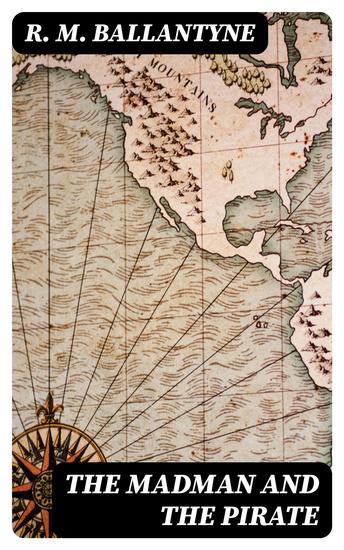
The Madman and the Pirate - cover

The Madman and the Pirate

R. M. Ballantyne

Publisher: DigiCat

  • 0
  • 0
  • 0

Summary

R. M. Ballantyne's "The Madman and the Pirate" is a captivating adventure novel that showcases the thrilling escapades of its protagonists against a richly woven backdrop of the 19th-century maritime world. Characterized by Ballantyne's vivid descriptions and an intricate plot, the narrative unfolds the tale of escape, survival, and moral dilemmas faced by those ensnared in the lawless environments of piracy and madness. The alternating perspectives in the storytelling amplify suspense and delve into the psychological complexities of fear and bravery, making it not just an adventure tale but a profound commentary on the human condition. R. M. Ballantyne, a celebrated figure in juvenile literature, drew inspiration from his own experiences as a young man in the Scottish Highlands and later in service with the Hudson's Bay Company. His extensive travels and fascination with the great outdoors illuminated his writing, often infused with themes of adventure, exploration, and real-life challenges faced by young men. This particular novel reflects Ballantyne's commitment to moral lessons and the consequences of one's choices, resonating with the Victorian thirst for both adventure and morality. This book is highly recommended for readers who appreciate classic adventure literature and are looking for a deeper exploration of character and morality. Ballantyne's skillful storytelling engages readers of all ages, combining thrilling escapades with meaningful reflections on courage and conscience. "The Madman and the Pirate" is not merely a tale of high seas and daring exploits; it is a rich, layered narrative that invites readers to reflect on their own ethical journeys.
Available since: 10/11/2022.
Print length: 1140 pages.

Other books that might interest you

  • Titans of War - The thrilling bestselling new Ancient-Egyptian epic from the Master of Adventure - cover

    Titans of War - The thrilling...

    Wilbur Smith, Mark Chadbourn

    • 0
    • 0
    • 0
    Global bestselling author of River God and The New Kingdom, Wilbur Smith, returns with the next epic book in his brand-new Ancient Egyptian series.A RUTHLESS ENEMY. A CIVILISATION IN RUINS. A QUEST FOR SALVATION.For over fifty years Egypt has known nothing but war and devastation at the hands of the Hyksos, a bloodthirsty barbarian people from the distant east who continue to advance, crushing armies in their wake. Times are desperate, but throughout the conflict, a brave resistance fights on under the great Taita, a slave who has risen far beyond his ranks. Piay, entrusted into Taita's care by his parents at the age of just five, has been trained to become a great spy, unmatched by any other. Determined to prove his worth, he embarks on a dangerous mission to the north - to Mycenae and through the heart of Hyksos land and across the great sea - to find allies to help defend Egypt. As the situation becomes increasingly precarious, and the fate of the kingdom is hanging in the balance, can Piay succeed in his quest or will this mean the end of the glory that is Egypt once and for all?
    Show book
  • Forgotten Authors The - Volume 10 - Gertrude Barrows Bennett to Francis Brett Young - cover

    Forgotten Authors The - Volume...

    Josephine Tey, Hesba Stretton,...

    • 0
    • 0
    • 0
    Throughout the long centuries of human history is the want, and the need, to share information, to exchange ideas and for that knowledge and experience, for curiosity and learning, to be the basis of a civil society. 
    In literature the ambition is much narrower.  In order to be known, to be popular, you had to be published.  And for that people had to know you existed and your ideas worth reading.  Obviously for most of humanity’s time people couldn’t read and texts couldn’t be published in any great number. 
    In the 15th Century Gutenberg’s printing press began the revolution to address the second and by the 19th century had gathered pace with startling speed and mass distribution.  Education for the many was brought in to help people understand more of their world and, with new skills, how to have a better place within it.  Now, if the powers that owned the presses and means of distribution agreed an audience would now be able to avail themselves of your ideas, your printed words.  
    Sadly, in the thirst for the new, the recent and the past fell from sight, relegated to dark corners and dusty shelves.   
    But the printed word is rarely without someone, somewhere busying themselves through piles of papers and books rediscovering what a good story is, whatever its age. 
    Sadly, in the thirst for the new, the recent and the past fell from sight, relegated to dark corners and dusty shelves.    
    But the printed word is rarely without someone, somewhere busying themselves through piles of papers and books rediscovering what a good story is, whatever its age. 
    In this volume we offer up a small selection of those talents whose time has now come again.
    Show book
  • Elective Affinities - cover

    Elective Affinities

    Johan Wolfgang Von Goethe

    • 0
    • 0
    • 0
    Goethe as a novelist is best known for two earlier novels, The Sorrows of Young Werther (1774) and Wilhelm Meister’s Apprenticeship (1796). But Elective Affinities, which was published in 1809, is widely regarded as his mature masterpiece, not least because of its unusual provenance, which brings together Goethe the scientist as well as Goethe the writer. Baron Eduard and his second wife Charlotte enjoy a quiet, humdrum existence in their opulent castle, but when he invites his friend the Captain and she invites her niece Ottilie to stay with them, their lives are turned inside out as both hosts begin to feel attracted to their guests. Using one of the chemistry theories of the time (the term ‘elective affinities’ was used by Robert Boyle and Isaac Newton) as a metaphor throughout the novel, Goethe juxtaposes social interactions with scientific principles, while illustrating the typically Romantic concern of the individual coming to terms with society. Controversial when first published and still much critically debated today, Goethe s Elective Affinities is an early model for the modern novel.
    Show book
  • A Thief's Justice - cover

    A Thief's Justice

    Douglas Skelton

    • 0
    • 0
    • 0
    The city is caught in the vice-like grip of a savage winter. Even the Thames has frozen over. But for Jonas Flynt – thief, gambler, killer – the chilling elements are the least of his worries… 
     
    Justice Geoffrey Dumont has been found dead at the base of St Paul’s cathedral, and a young male sex-worker, Sam Yates, has been taken into custody for the murder. Yates denies all charges, claiming he had received a message to meet the judge at the exact time of death. 
     
    The young man is a friend of courtesan Belle St Clair, and she asks Flynt to investigate. As Sam endures the horrors of Newgate prison, they must do everything in their power to uncover the truth and save an innocent life, before the bodies begin to pile up. 
     
    But time is running out. And the gallows are beckoning...
    Show book
  • War in the West - Border Knight Book 10 - cover

    War in the West - Border Knight...

    Griff Hosker

    • 0
    • 0
    • 0
    King Henry has need of a sword to help him recover land taken by the Prince of Wales! And he looks to the north and the border knights who have served him so well. Now that Sir Thomas is becoming too old for war Sir William is chosen to lead the knights of the Tees south to the wild lands of Gwynedd. This time Sir William finds himself the target of enemies as yet unknown and he and his son, Dick, are placed in the greatest of danger as they seek to complete a clandestine mission for King Henry. After the King suffers a humiliating defeat it is left to young Sir Henry Samuel to save the beleaguered English army from complete disaster but it is not with a cost and as usual it is the men of the north who pay the price for a King’s mistakes.
    Show book
  • Journey Far A: Ibere - Beginnings - cover

    Journey Far A: Ibere - Beginnings

    AJ Sam

    • 0
    • 0
    • 0
    Imagine living in a world where every facet of your existence is beyond your control. 
    Imagine living in a world where your God-given physical traits are resented and reviled. 
    Imagine living in a world where your humanity is subject to judicial and legal debate. 
    Imagine living in a world where the government of the people, by the people, and for the people is explicit and implicit in denying you the most basic of human rights - life, liberty, and the pursuit of happiness. 
    For James Scott, this isn’t imagination, but a horrifically callous reality. Despite the odds stacked against him, despite the laws that hindered his future, despite the obstacles that challenged his resolve, this African American not only survived, but thrived during his journey through 19th century America. 
    A Journey Far: Ibere (Beginnings) starts with James being sold into bondage before his 6th birthday in the 1840s antebellum South and ends in 1860s New York City as the Confederate attack on Ft. Sumter, South Carolina precipitates the U. S. Civil War. 
    In this work of Historical Fiction - an epic along the lines of Alex Haley’s, Roots - James reacts to and interacts with historical people and events, a dramatic analogy to the movie, Forest Gump. James’ journey takes him far from his brutal beginnings, through a life of malicious prejudice, and toward a future rife with hopes of freedom, promises of equality, and revelations of self.
    Show book