Join us on a literary world trip!
Add this book to bookshelf
Grey
Write a new comment Default profile 50px
Grey
Subscribe to read the full book or read the first pages for free!
All characters reduced
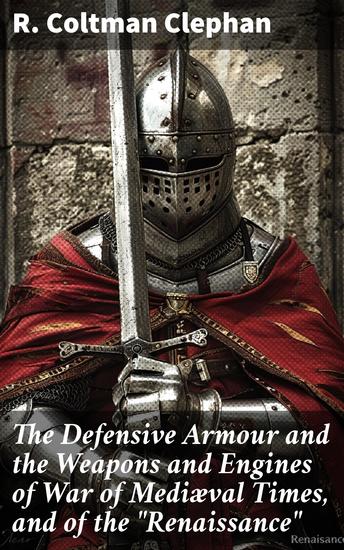
The Defensive Armour and the Weapons and Engines of War of Mediæval Times and of the "Renaissance" - Unveiling the Arsenal of Medieval and Renaissance Warfare - cover

The Defensive Armour and the Weapons and Engines of War of Mediæval Times and of the "Renaissance" - Unveiling the Arsenal of Medieval and Renaissance Warfare

R. Coltman Clephan

Publisher: Good Press

  • 0
  • 0
  • 0

Summary

In 'The Defensive Armour and the Weapons and Engines of War of Medi√¶val Times, and of the Renaissance,' R. Coltman Clephan offers an exhaustive examination of the evolution of military technology from the Middle Ages through the Renaissance. Employing a meticulous descriptive style, Clephan delves into the intricacies of armor, weaponry, and siege engines, contextualizing their development within the broader frameworks of social and military history. The narrative illuminates the intersection of artistry and utility, effectively showcasing advancements in metallurgical techniques and design that defined an era. Clephan's work is a valuable resource not only for historians but for enthusiasts of material culture, wrapped in a scholarly yet engaging prose that invites readers into the past. R. Coltman Clephan, a noted antiquarian and military historian, drew from his extensive background in arms and armory to pen this seminal work. His firsthand involvement with historical military artifacts, alongside his deep appreciation for historical accuracy and authenticity, informs every page of this book. Clephan'Äôs expertise offers readers critical insights into the functional and symbolic roles of weaponry during tumultuous periods of history, underscoring the importance of understanding the physical tools of war. I recommend this profound work to anyone interested in the rich tapestry of military history, as it not only underscores the technological prowess of the past but also the socio-political implications of warfare. Clephan'Äôs extensive research serves as both a comprehensive reference and an engaging narrative, making it indispensable for historians, collectors, and history enthusiasts alike.
Available since: 11/14/2023.
Print length: 216 pages.


Other books that might interest you

  • Montesquieu & the Despotic Ideas of Europe - An Interpretation of The Spirit of the Laws - cover

    Montesquieu & the Despotic Ideas...

    Vickie B. Sullivan

    • 0
    • 0
    • 0
    Montesquieu is rightly famous as a tireless critic of despotism, which he associates in his writings overtly with Asia and the Middle East and not with the apparently more moderate Western models of governance found throughout Europe. However, a careful reading of Montesquieu reveals that he recognizes a susceptibility to despotic practices in the West—and that the threat emanates not from the East, but from certain despotic ideas that inform such Western institutions as the French monarchy and the Roman Catholic Church.             Nowhere is Montesquieu’s critique of the despotic ideas of Europe more powerful than in his enormously influential The Spirit of the Laws, and Vickie B. Sullivan guides readers through Montesquieu’s sometimes veiled, yet sharply critical accounts of Machiavelli, Hobbes, Aristotle, and Plato, as well as various Christian thinkers. He finds deleterious consequences, for example, in brutal Machiavellianism, in Hobbes’s justifications for the rule of one, in Plato’s reasoning that denied slaves the right of natural defense, and in the Christian teachings that equated heresy with treason and informed the Inquisition. In this new reading of Montesquieu’s masterwork, Sullivan corrects the misconception that it offers simple, objective observations, showing it instead to be a powerful critique of European politics that would become remarkably and regrettably prescient after Montesquieu’s death when despotism wound its way through Europe.  
    Show book
  • The Russian Famine of 1921-1922 - Aftermath of War and Revolution - cover

    The Russian Famine of 1921-1922...

    Sarah Willards

    • 0
    • 0
    • 0
    The Russian Famine of 1921-1922 did not occur in isolation; it was the result of a complex set of conditions that had been building over several years, particularly following the immense strain caused by World War I and the subsequent Russian Revolution. In the years leading up to the famine, the Russian Empire had been subjected to a series of crises, both external and internal, that would lead to an agricultural disaster of unprecedented proportions. 
    World War I, which had raged from 1914 to 1918, devastated Russia. The country’s military and civilian populations were ravaged by the conflict, and the war placed immense pressure on the economy. Agriculture, which was the backbone of Russia’s economy, was particularly affected. Many of the country’s able-bodied men had been conscripted into the army, leaving the fields untended and the production of food drastically reduced. Additionally, the war led to widespread shortages of basic supplies such as fuel, equipment, and fertilizers. The agricultural sector, already fragile, was further crippled by the lack of resources, leaving the country’s population vulnerable to the consequences of famine. 
    The Russian Revolution of 1917, which brought the Bolsheviks to power, intensified the situation. The overthrow of the Romanov dynasty and the subsequent civil war between the Red and White factions created further instability. The Bolsheviks, under the leadership of Vladimir Lenin, implemented policies that would have significant implications for food production. War Communism, introduced as an emergency measure, included grain requisitioning from the peasantry to supply the Red Army and urban centers. However, these policies were deeply unpopular and led to widespread resentment. The forced seizure of grain and foodstuffs left many rural areas without enough resources to sustain their own populations, further exacerbating food shortages.
    Show book
  • We All Feel - Understanding Animal Grief & Love - cover

    We All Feel - Understanding...

    Barbara J. King

    • 0
    • 0
    • 0
    From the time of our earliest childhood encounters with animals, we casually ascribe familiar emotions to them, though scientists have long cautioned against such anthropomorphizing. Recently, however, things have begun to shift in the other direction, and anthropologist Barbara J. King is at the forefront of that movement, arguing strenuously that we can—and should—attend to animal emotions. In the stories she tells here, King relays how some farm animals—horses, goats, chickens, and ducks—bond with others and engage in mourning when their friends die. Here, too, dolphins and whales exhibit striking signs of suffering over the loss of babies and companions: a mother dolphin will not give up her dead baby, and whales risk stranding themselves in small groups rather than abandon kin. As part of a larger web of life, death, love, and loss, King calls our attention to emotions—both our own and those of our companion species.
    Show book
  • Without Exception - Reclaiming Abortion Personhood and Freedom - cover

    Without Exception - Reclaiming...

    Pam Houston

    • 0
    • 0
    • 0
    Without Exception is an unflinching call for freedom by way of abortion rights. 


    "A story told with honesty. I thank Pam Houston for this timely and timeless book" —CAMILLE T. DUNGY, Soil: The Story of a Black Mother's Garden 


    Written with equal parts candor and lyricism, Pam Houston illuminates the interconnected histories of abortion in the United States and in her own life during the decades when Roe v. Wade was the law of the land. Houston guides us through the shifting landscapes of politics, the law, and self-determination in a country where access to medical care and the power to determine your own destiny are increasingly—and once again—dependent on geography and circumstance.
    Show book
  • The Little Book of Sex Facts - Tantalizing Trivia to Blow Your Minds - cover

    The Little Book of Sex Facts -...

    Sadie Cayman

    • 0
    • 0
    • 0
    Show off your sexpertise with this little book of titillating truths. 


    Having sex is great, and learning about it is too! 


    Discover everything you wished you knew about sex with this cum-pendium of mind-blowing facts. Whether you want to impress your friends or learn some new moves, this book equips you with everything you need to become a certified sexpert. 


    Sex is often discussed in hushed tones, but this candid collection of facts pulls no punches. So prepare yourself for a wild ride as this no-holds-barred book answers all the questions you were too afraid to ask. Discover all this and much more! From funny to filthy, this book contains hundreds of jaw-dropping facts that will leave you shocked and amazed. 


    Contains mature themes.
    Show book
  • The Substance of Style - How the Rise of Aesthetic Value Is Remaking Commerce Culture and Consciousness - cover

    The Substance of Style - How the...

    Virginia Postrel

    • 0
    • 0
    • 0
    Whether it's sleek leather pants, a shiny new Apple computer, or a designer toaster, we make important decisions as consumers every day based on our sensory experience. Sensory appeals are everywhere, and they are intensifying, radically changing how Americans live and work. The twenty-first century has become the age of aesthetics, and whether we realize it or not, this influence has taken over the marketplace, and much more.In this penetrating, keenly observed book, Virginia Postrel makes the argument that appearance counts, that aesthetic value is real.  Drawing from fields as diverse as fashion, real estate, politics, design, and economics, Postrel deftly chronicles our culture's aesthetic imperative and argues persuasively that it is a vital component of a healthy, forward-looking society.Intelligent, incisive, and thought-provoking, The Substance of Style is a groundbreaking portrait of the democratization of taste and a brilliant examination of the way we live now.
    Show book