Junte-se a nós em uma viagem ao mundo dos livros!
Adicionar este livro à prateleira
Grey
Deixe um novo comentário Default profile 50px
Grey
Assine para ler o livro completo ou leia as primeiras páginas de graça!
All characters reduced
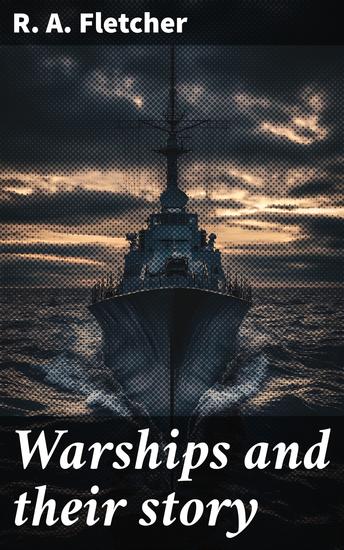
Warships and their story - cover
LER

Warships and their story

R. A. Fletcher

Editora: Good Press

  • 0
  • 0
  • 0

Sinopse

In 'Warships and Their Story,' R. A. Fletcher meticulously chronicles the evolution of naval warfare and the pivotal role played by warships throughout history. Blending rigorous research with evocative prose, Fletcher explores key technological advancements, strategic developments, and the interpersonal narratives underpinning maritime conflict. The book is situated within a rich literary tradition that includes naval history and military strategy, inviting readers to consider both the tangible mechanics of warfare and the human stories that emerge from it. Fletcher's skillful integration of historical analysis with a narrative flair makes this work a compelling study for enthusiasts and scholars alike. R. A. Fletcher is a distinguished naval historian with extensive experience at the crossroads of military strategy and maritime studies. His scholarly pursuits have drawn him to archives around the globe, enabling him to unearth lesser-known accounts that enrich the overarching narrative of naval warfare. Fletcher's passion for history and keen analytical mind have shaped his understanding of the significance of warships, culminating in a rigorous exploration that reflects his profound respect for the complexities of maritime conflict. For readers captivated by history and the intricacies of naval warfare, 'Warships and Their Story' offers an enlightening journey through time. Fletcher's authoritative voice and vivid storytelling not only engage the intellect but also evoke a deep appreciation for the indelible impact of warships on the course of human history. This book is a must-read for scholars, historians, and any maritime enthusiast eager to explore the profound stories behind these storied vessels.
Disponível desde: 02/03/2025.
Comprimento de impressão: 140 páginas.


Outros livros que poderiam interessá-lo

  • The New Life - cover

    The New Life

    Dante Alighieri

    • 0
    • 0
    • 0
    A Vita Nuova (pronounced [la ˈviːta ˈnwɔːva]; Italian for "The New Life")  is a text by Dante Alighieri published in 1294. It is an expression of the medieval genre of courtly love in a prosimetrum style, a combination of both prose and verse.
    Ver livro
  • Revelation - The War Between Wisdom and Human Perception - cover

    Revelation - The War Between...

    Dan Desmarques

    • 0
    • 0
    • 0
    "Revelation: The War Between Wisdom and Human Perception" takes readers on a profound journey where the timeless struggle between knowledge and human understanding unfolds. Delve into the intricate dynamics that shape perception and challenge conventional wisdom. Sensitively crafted, each chapter unfolds a tapestry of thought-provoking insights that invite introspection and exploration of the nature of being. This transformative odyssey navigates through self-inquiry, revealing eternal truths etched into the depths of the soul since time immemorial. 
    Chapter by chapter, the narrative weaves through the complexities of human cognition, confronting the illusions of the ego and passionately seeking wisdom amidst the veil of ignorance. From self-discovery to personal growth, the essence of being intertwined with the divine spark within leads the reader to profound revelations. As the pages turn, philosophical reflections encourage contemplation of the enigmatic interplay between wisdom and human perception, challenging the reader to transcend the boundaries of thought and embrace enlightenment.
    Ver livro
  • CODE NAME: SPIKE - THE DAWN OF THE COLD WAR CIA & US ARMY SPECIAL FORCES - A Groundbreaking WWII Memoir - cover

    CODE NAME: SPIKE - THE DAWN OF...

    Jacek Waliszewski, Steven Bizic,...

    • 0
    • 0
    • 0
    America's first intelligence agency, the Office of Strategic Services (OSS), was forged in the fires of WWII. OSS agents carried out daring and covert operations across the world, yet their critical contributions and brave work have remained shrouded in secrecy — until now. 
    Discover the stunning true story of Steven Bizic and the men of SPIKE team as they descend into darkness, landing amidst the turmoil of a nation torn apart by civil war and years of Nazi occupation. Facing the looming threat from fascists and the insidious influence of communism, the men of SPIKE must navigate a treacherous landscape where trust is rare and betrayal lurks around every corner. Originally penned at the end of WWII, this groundbreaking tell-all has only been recently discovered, shedding incredible light on the creation of the CIA and U.S. Army Special Forces, the chaos of WWII, and the people trapped in between. 
    "CODE NAME: SPIKE is... a trove of knowledge, inspiration, and wisdom... relevant in ways few such stories can be... it offers warriors, strategists, and policymakers alike a glimpse into what the dynamics of irregular warfare are, and more importantly, what they are not." - Lieutenant General (Retired) Charles Cleveland Commanding General U.S. Army Special Operations Command, 2012-2015 
    "Captivating!... and rediscovered by a Special Forces Green Beret." - Charles Pinck, President of The OSS Society
    Ver livro
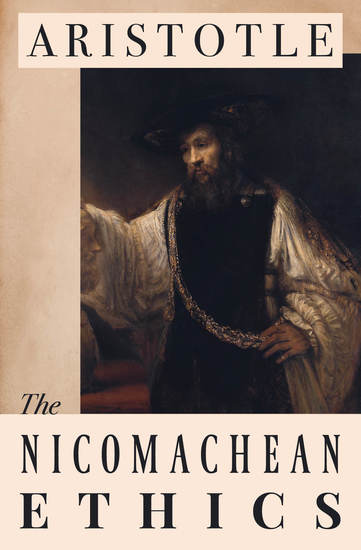
  • The Nicomachean Ethics - cover

    The Nicomachean Ethics

    Aristotle

    • 0
    • 0
    • 0
    This landmark work from the ancient Greek philosopher takes an in-depth look at the goal of life: happiness. One of Aristotle’s most widely read and influential works, The Nicomachean Ethics examines how to live well and be a good person. Aristotle explores the nature of happiness and how we achieve it. He discusses numerous moral virtues, such as courage, temperance, liberality, and magnanimity, as well as their corresponding vices. He also elucidates the concepts of pleasure, love, and friendship. The Nicomachean Ethics is considered one of the most important philosophical works in history. It influenced the Middle Ages as well as modern philosophy and European law and theology.
    Ver livro
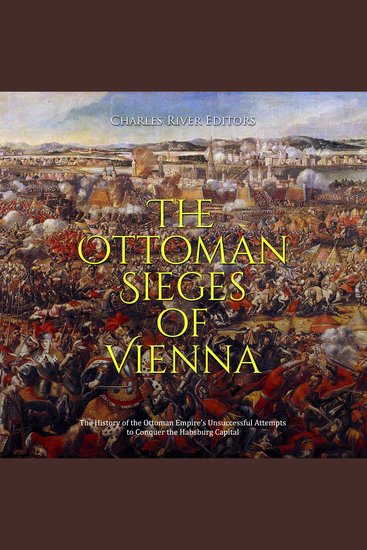
  • Ottoman Sieges of Vienna The: The History of the Ottoman Empire’s Unsuccessful Attempts to Conquer the Habsburg Capital - cover

    Ottoman Sieges of Vienna The:...

    Editors Charles River

    • 0
    • 0
    • 0
    In the wake of taking Constantinople, the Ottoman Empire would spend the next few centuries expanding its size, power, and influence, bumping up against Eastern Europe and becoming one of the world’s most important geopolitical players. It would take repeated efforts by various European coalitions to prevent a complete Ottoman takeover of the continent, and one of the most important battles among those efforts took place at Vienna in 1529. At the time, the Ottomans were led by one of their most famous sultans, Suleiman the Magnificent, and different chroniclers have analyzed Suleiman's behavior in different ways. There is a plethora of opinions as to his motives for attempting the takeover of Vienna, a well-guarded city far away from his empire's center. Had he intended to conquer the whole of the Holy Roman Empire? Had he intended to strengthen his borders? Had he acted in accordance with King Francis I’s needs in the West? No matter the reason, Suleiman did not halt in his advances, despite the fact circumstances were not favorable for the Ottomans.  
    	The long conflict between the Habsburgs and the Ottomans would finally come to a head in 1683 outside the city of Vienna, the center of Habsburg power in central Europe. It would be no exaggeration to say that the fighting around Vienna represented one of the most important battles not only in the conflict between Islam and Christendom, but in the entire history of the world. If the Habsburgs had lost that battle, it is highly likely that Islamic civilization rather than Christian would dominate much of Europe.
    Ver livro
  • The Will to Believe - cover

    The Will to Believe

    William James

    • 0
    • 0
    • 0
    "The Will to Believe" is a philosophical essay written by William James in 1896. The essay is a defense of the concept of religious faith and argues that belief can be justified even in the absence of objective evidence. 
    James argues that there are some beliefs, such as religious beliefs, that cannot be proven or disproven by empirical evidence. He contends that in cases where there is insufficient evidence to support a belief, individuals are justified in using their will to believe in order to hold on to what they consider to be important or valuable beliefs. 
    James also argues that the act of believing itself can have positive effects on an individual's life. Belief can provide a sense of meaning and purpose, as well as a framework for understanding the world. Furthermore, James contends that individuals who possess a strong will to believe are more likely to succeed in achieving their goals, as they are more motivated and focused. 
    "The Will to Believe" was a controversial work in its time, and it continues to be debated by philosophers and scholars today. While some have criticized James's arguments for promoting irrationality and dogmatism, others have praised his defense of personal autonomy and individual freedom of thought. Overall, "The Will to Believe" is an important contribution to the ongoing philosophical discourse on the nature of belief and faith.
    Ver livro