Join us on a literary world trip!
Add this book to bookshelf
Grey
Write a new comment Default profile 50px
Grey
Subscribe to read the full book or read the first pages for free!
All characters reduced
Summary of Sapiens by Yuval Noah Harari - A Brief History of Humankind | Get The Key Ideas Quickly - cover

Summary of Sapiens by Yuval Noah Harari - A Brief History of Humankind | Get The Key Ideas Quickly

Quick Reads

Publisher: Quick Reads

  • 0
  • 0
  • 0

Summary

Dive into the fascinating history of our species with this Summary of Sapiens!


Sapiens: A Brief History of Humankind' by Yuval Noah Harari is an essential read for anyone interested in understanding our past, and where we came from as a species."

In this concise and accessible summary, you'll explore the incredible journey of Homo sapiens from their humble beginnings to the dominant species on the planet today. Discover how our species developed language, culture, and technology, and learn about the key events and ideas that shaped human history. 

With vivid storytelling and expert insights, this book offers a captivating overview of the history of humankind that you won't be able to put down."

Discover the impact of language, culture, and technology on the development of humankind, and learn about the many challenges and triumphs we have faced along the way by clicking on the Buy Now button to Order your copy now!

---------
DISCLAIMER

This book is an unofficial summary and analysis of Yuval Noah Harari's book, Sapiens: A Brief History of Humankind, which should be read in conjunction with the original work, not as a substitute. This content is solely the responsibility of Quick Reads, which is not affiliated with the original author in any way.
Available since: 01/31/2023.

Other books that might interest you

  • Leadership Matters - Confronting the Hard Choices Facing Higher Education - cover

    Leadership Matters - Confronting...

    W. Joseph King, Brian C. Mitchell

    • 0
    • 0
    • 0
    During these unprecedented times, glaring internal inefficiencies, communication breakdowns, and an overriding sense of cultural inertia on many campuses are too often set against a backdrop of changing consumer preferences, high sticker prices, declining demand, massive tuition discounting, aging infrastructure, technological and pedagogical alternatives, and political pressure. Strategic leadership in such a complex environment needs to be exercised in nuanced ways that differ from those embraced by corporate cultures. In Leadership Matters, W. Joseph King and Brian C. Mitchell argue that the success of higher education institutions depends on strategic leaders who can utilize the strengths of their institutions and leaders to balance internal pressures, shifting demographics, global education needs, and workforce preparation demands beyond the college gates. Drawing on their extensive experience, the authors guide senior administration, trustees, and presidents on how to lead during immense financial, demographic, and social challenges. King and Mitchell believe that, to survive, colleges must be well run—flexible, effective, and forward thinking. The authors begin with a fundamental premise—that colleges and universities must evolve and adapt by modernizing their practices, monetizing their assets, focusing on core educational strategies, and linking explicitly to the modern world. Discussing a broad range of leadership positions, including presidents, provosts, and board chairs, Leadership Matters touches on strategic planning, management and operations, stakeholder relations, campus and community, accreditation and athletic conferences, and much more. The authors offer an optimistic assessment based upon frank and stark conclusions about what colleges must do—and must not do—to remain relevant in the coming decades.
    Show book
  • A Secure Love - What Really Makes Love Work - cover

    A Secure Love - What Really...

    Love Guru

    • 0
    • 0
    • 0
    This audiobook is narrated by an AI Voice.   
    Real love isn’t found — it’s built. 
    A Secure Love: What Really Makes Love Work reveals what healthy, lasting connection looks and feels like, based on modern attachment science and emotional intelligence. 
    In under ninety minutes, you’ll learn how to: 
    • Identify your attachment style and understand your partner’s needs. 
    • Communicate without defensiveness or withdrawal. 
    • Build emotional safety that keeps passion alive over time. 
    • Repair conflict fast and grow stronger after arguments. 
    • Create trust, intimacy, and teamwork that last a lifetime. 
    This audiobook blends relationship psychology, practical scripts, and honest stories to help you experience love that’s calm, safe, and deeply connected — not chaotic or uncertain. 
    Perfect for couples, singles, and anyone ready to understand what real security feels like in love.
    Show book
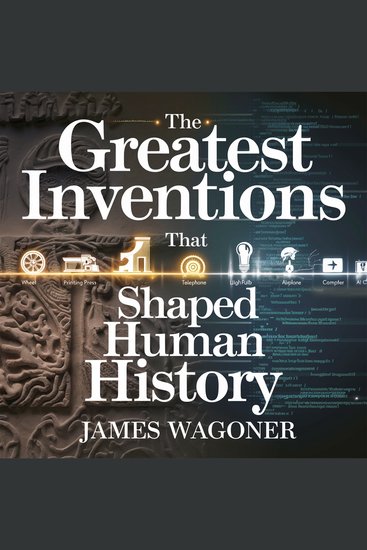
  • The Greatest Inventions That Shaped Human History - How Revolutionary Innovations Transformed Civilization - cover

    The Greatest Inventions That...

    James Wagoner

    • 0
    • 0
    • 0
    From fire to artificial intelligence, history is defined by human innovation. But which inventions changed the world the most? 
    This audiobook takes you on a journey through the most groundbreaking inventions in human history, explaining how they were created and the massive impact they had on civilization. Discover: 
    ✅ How the wheel revolutionized transportation and trade 
    ✅ The printing press and how it sparked the spread of knowledge 
    ✅ The industrial revolution’s key innovations, from steam engines to electricity 
    ✅ How modern technology like the internet and AI is shaping the future 
    ✅ The brilliant minds behind these life-changing discoveries 
    The Greatest Inventions That Shaped Human History is a must-listen for *history buffs, science enthusiasts, and anyone fascinated by the power of human ingenuity.
    Show book
  • Air-Conditioned Nation Revisited: Essays on Singapore Politics - cover

    Air-Conditioned Nation...

    Cherian George

    • 0
    • 0
    • 0
    "Think of Singapore instead as the Air-Conditioned Nation—a society with a unique blend of comfort and central control, where people have mastered their environment, but at the cost of individual autonomy, and at the risk of unsustainability." 
     
    Air-Conditioned Nation Revisited is an anthology of essays on Singapore politics by Cherian George. It draws upon his influential collection Singapore: The Air-Conditioned Nation (2000), on the country's politics of comfort and control, and from Singapore, Incomplete (2017), on its underdeveloped democracy. Updated for the impending transition to a new generation of leaders, this 20th anniversary edition of Air-Conditioned Nation offers critical reflections on continuity and change in Singapore’s unique political culture.
    Show book
  • Fighting Terrorism - How Democracies Can Defeat Domestic and International Terrorists - cover

    Fighting Terrorism - How...

    Benjamin Netanyahu

    • 0
    • 1
    • 0
    In this innovative and concise work, Israeli politician Benjamin Netanyahu offers a compelling approach to understanding and fighting the increase in domestic and international terrorism throughout the world. Citing diverse examples from around the globe, Netanyahu demonstrates that domestic terrorist groups are usually no match for an advanced technological society which can successfully roll back terror without any significant curtailment of civil liberties. But Netanyahu sees an even more potent threat from the new international terrorism which is increasingly the product of Islamic militants, who draw their inspiration and directives from Iran and its growing cadre of satellite states. The spread of fundamentalist Islamic terrorism, coupled with the possibility that Iran will acquire nuclear weapons, poses a more frightening threat from an adversary less rational and therefore less controllable than was Soviet Communism. How democracies can defend themselves against this new threat concludes this provocative book.
    Show book
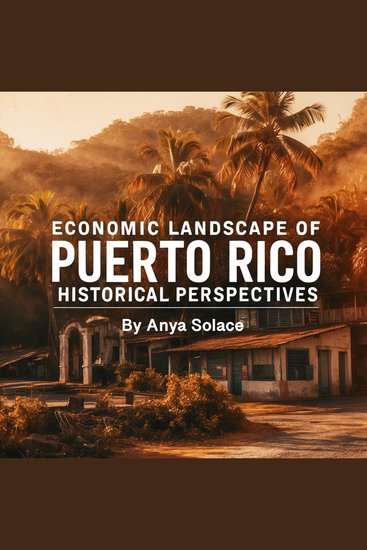
  • Economic Landscape of Puerto Rico - Historical Perspectives - cover

    Economic Landscape of Puerto...

    Anya Solace

    • 0
    • 0
    • 0
    Puerto Rico’s economic landscape has been shaped by centuries of historical, political, and social transformations. From the indigenous societies that first inhabited the island to its complex relationship with Spain and the United States, the economy has evolved in response to shifting global and regional forces. Understanding Puerto Rico’s economic foundations requires an examination of its early economic structures, the colonial period’s trade policies, and the profound effects of U.S. annexation. These key moments set the stage for the challenges and opportunities that have defined the island’s development.  
    Before European colonization, the indigenous Taíno people sustained themselves through subsistence agriculture, fishing, and trade with neighboring Caribbean islands. Their economy, though not based on large-scale commerce, was well-adapted to the island’s resources. With the arrival of the Spanish in 1493, Puerto Rico was integrated into Spain’s mercantilist system, marking the beginning of an economic transformation that would prioritize colonial extraction over local prosperity. The Spanish introduced new crops such as sugarcane and coffee, which would later become vital to the island’s economy. However, strict trade regulations limited Puerto Rico’s ability to develop independently, as it was required to conduct commerce exclusively with Spain.  
    During the 18th and 19th centuries, Puerto Rico transitioned into a plantation-based economy, with sugar and coffee emerging as dominant industries. Enslaved Africans and later immigrant laborers contributed to the agricultural boom, making the island a key supplier to European and American markets. Despite periods of growth, the economy remained vulnerable to global price fluctuations, natural disasters, and restrictive colonial policies. By the time of the Spanish-American War in 1898, Puerto Rico’s economy was still largely agrarian, with limited industrial development.
    Show book