Join us on a literary world trip!
Add this book to bookshelf
Grey
Write a new comment Default profile 50px
Grey
Subscribe to read the full book or read the first pages for free!
All characters reduced
Summary of Caste - The Origins of Our Discontents by Isabel Wilkerson | Get The Key Ideas Quickly - cover

Summary of Caste - The Origins of Our Discontents by Isabel Wilkerson | Get The Key Ideas Quickly

Quick Reads

Publisher: Quick Reads

  • 0
  • 0
  • 0

Summary

"Summary of Caste: The Origins of Our Discontents" is a powerful and thought-provoking examination of the ways in which the caste system continues to shape American society today. Written by Pulitzer Prize-winning author Isabel Wilkerson, the book traces the history of the caste system in America and its impact on issues such as race, class, and inequality. 

Drawing on extensive research and personal interviews, Wilkerson argues that the caste system is not just a relic of the past, but an insidious force that continues to shape our society in ways we may not even be aware of. 
This book is a must-read for anyone interested in understanding the root causes of America's ongoing struggles with racism and inequality and the ways in which they are deeply entwined with our nation's history.

Click the Buy Now button for instant access!

---------
DISCLAIMER

This book is an unofficial summary and analysis of Isabel Wilkerson's book, Caste: The Origins of Our Discontents, which should be read in conjunction with the original work, not as a substitute. This content is solely the responsibility of Quick Reads, which is not affiliated with the original author in any way.
Available since: 01/27/2023.

Other books that might interest you

  • A Concise History of Florida - cover

    A Concise History of Florida

    James C. Clark

    • 0
    • 0
    • 0
    A quick overview of the Sunshine State's fascinating past. 


    In 1513, Spanish explorer Juan Ponce de León first set foot on Florida's east coast. The land he discovered was a geographic anomaly so distinctive that one day, centuries later, astronaut Neil Armstrong would say that Florida was the first shape on earth he recognized on his return from a visit to the moon. 


    This unique state has witnessed such momentous events as the 1959 arrival of the first Cuban exiles under Fidel Castro and the 1981 launch of the Columbia—the first space shuttle. Join historian James C. Clark as he chronicles the surprising history of the Sunshine State in this concise and captivating book.
    Show book
  • The Hidden Holocaust - The Holodomor and Its Legacy - cover

    The Hidden Holocaust - The...

    Sarah Willards

    • 0
    • 0
    • 0
    The Holodomor, a man-made famine that devastated Ukraine between 1932 and 1933, has its roots in the policies of the Soviet Union under Joseph Stalin. While the famine itself was a tragedy of immense proportions, its causes can be traced to the larger political and economic strategies of the Soviet regime. 
    The Soviet Union, in its quest for rapid industrialization, implemented harsh agricultural policies, which included forced collectivization. The idea was to consolidate small farms into larger collective farms, thereby increasing agricultural output and facilitating the redistribution of food to feed the growing industrial centers. However, this policy had disastrous effects on Ukraine, where agriculture was the backbone of the economy. 
    Collectivization forced Ukrainian peasants, who were traditionally independent farmers, into state-run collective farms. This not only disrupted agricultural production but also led to widespread resistance, as many Ukrainians viewed this as a direct attack on their way of life. The Soviets, determined to break this resistance, responded with brutal force. Those who opposed collectivization were often punished or executed, and the fertile lands of Ukraine were systematically confiscated. 
    Stalin’s government implemented the policy of grain requisitioning, where large amounts of grain were forcibly taken from Ukraine to support other areas of the Soviet Union. Ukraine, known as the “breadbasket” of the Soviet Union, became the primary target of these requisitions. The grain was not only taken for export but also used to fuel the industrial ambitions of the Soviet state. This left the Ukrainian population without sufficient food for survival, pushing them into a state of extreme deprivation.
    Show book
  • The American Operations in WW2: Central Europe - cover

    The American Operations in WW2:...

    History U.S. Army Center of...

    • 0
    • 0
    • 0
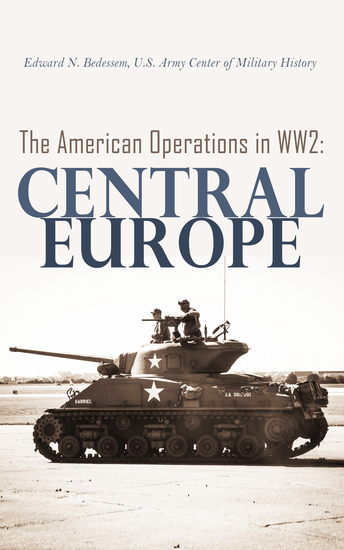
    World War II was the largest and most violent armed conflict in the history of mankind. Highly relevant today, World War II has much to teach us, not only about the profession of arms, but also about military preparedness, global strategy, and combined operations in the coalition war against fascism. This book follows military operations of the US Army in Central Europe from 22 March to 11 May 1945. 
    By the early spring of 1945 events favored the Allied forces in Europe. The Anglo-Americans had by January turned back the Germans' December counterattack in the Ardennes, in the famous Battle of the Bulge. The failure of this last great German offensive exhausted much of the Third Reich's remaining combat strength, leaving it ill-prepared to resist the final Allied campaigns in Europe. Additional losses in the Rhineland further weakened the German Army, leaving shattered remnants of units to defend the east bank of the Rhine. By mid-March the western Allies had pushed to the Rhine along most of the front, had seized an intact bridge at Remagen, and had even established a small bridgehead on the river's east bank.
    In the east the Soviets had overrun most of Poland, pushed into Hungary and eastern Czechoslovakia, and temporarily halted at the German border on the Oder-Neisse line. These rapid advances on the Eastern Front destroyed additional veteran German combat units and severely limited Hitler's ability to reinforce his Rhine defenses. Thus, as the western Allies completed their preparations for the final drive into the heart of Germany, victory seemed within sight.
    Show book
  • Witch Power - Hexing the Patriarchy with Feminist Magic - cover

    Witch Power - Hexing the...

    Emma Quilty

    • 0
    • 0
    • 0
    When most people hear the word "witch," they immediately think of crones conspiring over a cauldron, a force of dark and vindictive power. But to hundreds of thousands across the world, being a witch is a living, everyday reality, much more varied than the fairytale image. 
     
    Witch Power follows Emma Quilty—herself a witch and an anthropologist—on an immersive journey into contemporary witchcraft, from Witchcamp retreats to "red tent" menstrual events, Voodoo priestesses running ghost tours from their vans to TikTokers casting hexes on a viral scale. 
     
    Attentive to the history of witchcraft, she reveals the role power plays in how the figure of the witch has changed over time to suit the ever-present need to control and demonize women. Because to be a witch is to live in defiance of society's expectations and rules. 
     
    But while the witch is always castigated as a threat, Quilty finds that the witch is never alone: the witch is a survivor and a symbol of resistance. Ultimately, Witch Power is a provocation and an invitation to listeners to experience with the author what it means to embrace witchiness and what witchy feminism could bring to your life.
    Show book
  • People Who Lunch - On Work Leisure and Loose Living - cover

    People Who Lunch - On Work...

    Sally Olds

    • 0
    • 0
    • 0
    A riveting investigation of the utopian experiments attempting to resist the unrelenting demands of late-stage capitalism—only to end up living comfortably alongside it What do post‑work politics, the cult of crypto, clubbing, and polyamory have in common? All have spawned thriving subcultures united in their rejection of the patriarchal capitalist order: from wage labor, to the reign of the shareholder class over capital markets, to romantic relationships that feel like contractual arrangements to be negotiated, and more.People Who Lunch is about hating work and needing to work, intimacy and technology, labor and leisure, and the challenge of living our ideals in a less than ideal world. In it, Sally Olds brings her “unsparing scrutiny to bear…as she grapples with the sense of entrapment in the machinery of capitalism and remorseless logic of commodification” (ABC Arts). In one essay, Olds’s brief flirtation with post-monogamy forces her to confront the emotional prison of the “open relationship”; in another, a multi-hour viewing of a critically acclaimed performance art piece highlights how even the highest forms of culture exist to convert pleasure into capital. In the end, her forays into these colorful worlds betray a deep irony: escaping a system built on the exchange of wage labor is, quite simply, a lot of work.
    Show book
  • Multipolarity After Ukraine - Old Wine in New Bottles? - cover

    Multipolarity After Ukraine -...

    Aldo Ferrari, Eleonora Tafuro...

    • 0
    • 0
    • 0
    One year after the full-scale invasion of Ukraine, the war has exacerbated the rift between Russia and the "collective West".
    While Western governments have been steadfast in punishing Russia for the invasion, other countries around the world have been more ambiguous, at times even choosing to side with Moscow politically or economically. These dynamics have revived the idea of a shift towards
    multipolarity along an anti-Western trajectory. Are we really heading in that direction? Are we facing increasing fragmentation due to the war or a re-consolidation of longstanding alliances? What principles underlie the formation of these blocs? What are the consequences of these dynamics for global security and the global economy?
    This Report aims to shed light on these questions, while also outlining the war's possible future implications for the Russian Federation, the "West", and the international order.
    Show book