Rejoignez-nous pour un voyage dans le monde des livres!
Ajouter ce livre à l'électronique
Grey
Ecrivez un nouveau commentaire Default profile 50px
Grey
Abonnez-vous pour lire le livre complet ou lisez les premières pages gratuitement!
All characters reduced
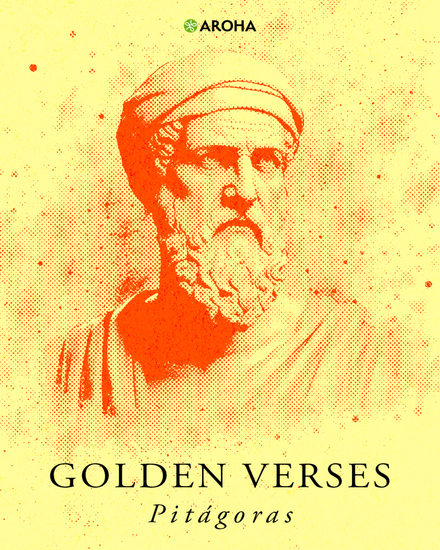
Golden Verses - cover

Golden Verses

Pythagoras

Maison d'édition: Aroha

  • 0
  • 0
  • 0

Synopsis

Golden Verses (Attributed to Pythagoras)
A collection of moral aphorisms emphasizing self-discipline, virtue, and spiritual wisdom. The Golden Verses focus on personal development, ethical behavior, and harmony with the cosmos, reflecting Pythagorean teachings on philosophy, mysticism, and the pursuit of enlightenment.
Disponible depuis: 26/03/2025.
Longueur d'impression: 400 pages.

D'autres livres qui pourraient vous intéresser

  • Democratic Delusions - How the Media Hollows Out Democracy and What We Can Do About It 1st Edition - cover

    Democratic Delusions - How the...

    Natalie Fenton

    • 0
    • 0
    • 0
    A free media is inextricably linked to a healthy democracy, but in many parts of the world liberal democracies are deemed to be dying or on the demise—a demise that many forms of media have enabled while heralding themselves as democracy's savior. The hollowing out of democracy in these ways has left many people questioning the value of (neo)liberal democratic societies. What can we do about it? 


    Democratic Delusions explores the potential of our media and tech systems to be democratic and contribute to a just and transformative democracy. This is only possible, Natalie Fenton argues, by first situating our political systems and mediated worlds within global capitalism. By interrogating different media and their relationship to seven key elements of democracy—power, participation, freedom, equality, public good, trust, and hope—the book asks: What is the response of society when the ability of news media to speak truth to power has been restricted by corporate logic? And, how do we tackle a deep-rooted market logic that shifts public debate towards private interest and marginalizes progressive perspectives? The book explores how these elements can be reimagined through newly conceived media and tech landscapes and, ultimately, what democracy might be in a future mediated world that places more power in the hands of more people.
    Voir livre
  • Disruptive Innovation - cover

    Disruptive Innovation

    Introbooks Team

    • 0
    • 0
    • 0
    The term ‘Disruptive Innovation’ was given in the year 1995 by Clayton M. Christensen and is regarded as one of the most influential and important innovations of the 21st century. Disruptive Innovation refers to the innovation which helps in creating new market and value network in place of the existing market and value network which leads to the disruption of the market-leading firms, alliances, and products that had already been established earlier. Each and every innovation cannot be regarded as a disruptive innovation even if they are bringing about change in the existing system. 
    In accordance with the ‘Theory of Disruptive Innovation’ disruptive innovation has been classified into two types- “low-end disruption” and “new-market disruption.” The low-end disruption is a type of disruption which occurs when the changes within the product take place at a higher rate than the customers are able to adapt to the changes made within the product. The new-market disruption occurs when a new product emerges in the market that has not been served earlier by any of the incumbents of the industry and which fits itself within the new or emerging market segment. 
    The process of disruptive innovation is considered important for business leaders because of the benefits that it provides to the customers of the market. A disruptive innovator provides the products at a favorable price to its customers as well as years at creating a new and improvised value of his/her product by making additional changes in the product. The process of disruptive innovation has been proven beneficial for executives also. 
    The first disruptive innovation was encountered by the human beings in around 10,000 BC in the Middle East, and since then it has continued to take place.
    Voir livre
  • Nietzsche's The Birth of Tragedy - cover

    Nietzsche's The Birth of Tragedy

    Friedrich Nietzsche

    • 0
    • 0
    • 0
    In this, his first book, he developed a way of thinking about the arts that unites the Greek gods Apollo and Dionysus as the central symbol of human existence. Although tragedy serves as the focus of this work, music, visual art, dance, and the other arts can also be viewed using Nietzsche’s analysis and integration of the Apollonian and the Dionysian.
     
    The Birth of Tragedy stands alongside Aristotle’s Poetics as essential works for all who seek to understand poetry and its relationship to human life.
    Voir livre
  • Unashamed - Notes From the Diary of a Sex Therapist - cover

    Unashamed - Notes From the Diary...

    Monaz Ranina, Neha Bhat

    • 0
    • 0
    • 0
    Dive into a transformative journey with Neha Bhat, the insightful mind behind @indiansextherapist on Instagram, as she fearlessly tackles the intricacies of sex, sexuality, trauma and shame in her groundbreaking book, Unashamed. 
    In a society that often hushes discussions on the most fundamental aspects of human existence, Neha invites readers to explore the uncharted territories of their own desires. With a unique blend of empathy, humor, reflection and unwavering expertise, she dismantles the stigma surrounding sexuality, in turn, asking readers to embrace the full spectrum of their desires without reservation. 
    Unashamed delves deep into the psychological landscape of shame, unraveling the roots that bind individuals and communities to outdated norms. Through engaging anecdotes, relatable case studies, and her own experiences as a sex therapist, Neha provides a roadmap for individuals seeking to understand, accept, and celebrate their unique sexual identities. Exercises, quizzes, and journalling prompts in the book gives readers practical tools to break free from the shackles of shame and embark on a liberating journey towards self-discovery. 
    Unashamed is a celebration of diversity, self-love, and the profound beauty of authentic human connections. Prepare to embark on a transformative journey that will leave you self-aware and empowered, paving the way for a more free and synchronized way of being in this complex world.
    Voir livre
  • Stop Fearing Rejection: The Practice of Showing Up Anyway - How to Risk Rejection Handle It and Keep Moving Forward - cover

    Stop Fearing Rejection: The...

    Rowan E. Sages

    • 0
    • 0
    • 0
    You understand the fear. Now it’s time to move through it.
     
    This audiobook is your practical guide to showing up—even when rejection feels possible.
     
    Instead of waiting to feel ready or confident, you’ll learn how to take small, meaningful steps forward while fear is still present.
     
    Inside, you’ll learn: 
     
    • How to take action without needing perfect confidence 
     
    • Practical ways to handle rejection without spiraling 
     
    • How to build emotional resilience in real-life situations 
     
    • Why courage isn’t the absence of fear—but movement with it
     
    This is not about becoming fearless. It’s about becoming someone who keeps going anyway.
     
    A grounded, supportive follow-up for anyone ready to step into action and reclaim their confidence.
     
    For deeper understanding, begin with Book 1: Why You Hold Yourself Back.
    Voir livre
  • Of Consolation - To Marcia To Helvia To Polybius - cover

    Of Consolation - To Marcia To...

    Seneca the Younger

    • 0
    • 0
    • 0
    These three ‘Consolations’, written by Seneca to his mother and two friends, have been described as ‘the crowning achievement in the canon of ‘consolation letters’. But sentimental they are not, for they emerge from the writer’s deep-seated commitment to Stoicism, where individuals are exhorted to inhabit qualities of virtue, positivity, resilience, and indifference. This recording opens with Seneca’s consolatory letter to Marcia, who, after three years, was still mourning the death of her son. He recognises her exceptional personal qualities and what benefits she has brought to her family, having rescued her father’s legacy as a historian following his death. He cites other noble Roman mothers who lost their sons, and enjoins her to adopt a more Stoic attitude of mind: we are all destined to die, he declares.  
    The second letter is to his mother sent after he had been exiled to Corsica by Emperor Caligula. He counsels Helvia not to mourn his absence – not least because he himself does not feel grief at the prospect of his own exile. He acknowledges the trials of his mother during her life, remarking ‘ill-fortune has given you no respite’. But her grief at the absence of her son may be put to one side in the knowledge that as he has ‘never trusted in Fortune,’ she can be comforted that her son is not discommoded. And history points to far harsher separations.  
    The final letter is to Polybius, Emperor Claudius’s Literary Secretary, who was mourning his brother.  Written while in exile, Seneca’s unwavering commitment to Stoic philosophy is again in evidence. One of Seneca’s principal suggestions is for Polybius to distract himself from grief by an increasing involvement in work.  
    These ‘Consolations’ have been widely admired from Classical times to the present, but are periodically questioned for their emphasis on a somewhat detached approach to grief and bereavement. Not all can manage imperturbability in such circumstances. Nevertheless, there is a steadiness and emotional calm in these missives, which Seneca himself displayed when ordered to commit suicide by Emperor Nero.
    Voir livre