Join us on a literary world trip!
Add this book to bookshelf
Grey
Write a new comment Default profile 50px
Grey
Subscribe to read the full book or read the first pages for free!
All characters reduced
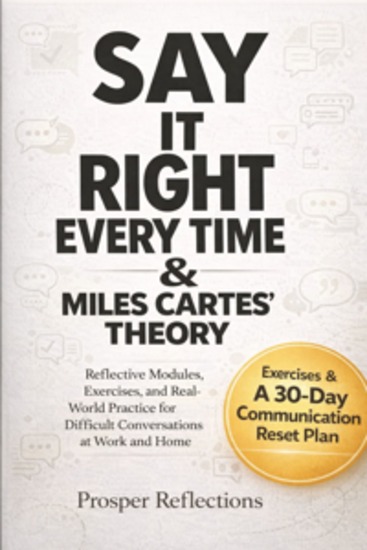
Say It Right Every Time & Miles Cartes’ Theory - Reflective Modules Exercises and Real-World Practice for Difficult Conversations at Work and Home - cover

Say It Right Every Time & Miles Cartes’ Theory - Reflective Modules Exercises and Real-World Practice for Difficult Conversations at Work and Home

Prosper Reflections

Publisher: Prosper Reflections

  • 0
  • 0
  • 0

Summary

Say It Right Every Time helps readers learn how to communicate with clarity, confidence, and empathy when conversations feel tense, emotional, or high-stakes. It breaks down why misunderstandings happen at work and at home, and shows how small shifts in language, tone, and timing can completely change outcomes.Through practical guidance, the book teaches readers:how to handle conflict,express needs,set boundaries,apologize effectively, andspeak honestly without damaging relationships.It is especially useful for anyone who knows what they want to say but struggles to say it in the moment.This companion guide builds on those lessons by giving you guided reflections, real-world practice exercises, and a structured 30-day communication reset that helps you turn the book’s ideas into confident habits you can actually use in daily conversations.Get your copy now!
Available since: 02/10/2026.
Print length: 136 pages.

Other books that might interest you

  • Innovations of World War I The: The History of the Technological Advances that Defined the Great War - cover

    Innovations of World War I The:...

    Charles River Editors

    • 0
    • 0
    • 0
    World War I, also known in its time as the “Great War” or the “War to End all Wars”, was an unprecedented holocaust in terms of its sheer scale. Fought by men who hailed from all corners of the globe, it saw millions of soldiers do battle in brutal assaults of attrition which dragged on for months with little to no respite. Tens of millions of artillery shells and untold hundreds of millions of rifle and machine gun bullets were fired in a conflict that demonstrated man’s capacity to kill each other on a heretofore unprecedented scale. 
    	Since the industrial revolution, arms and materiel output had increased by orders of magnitude, as had the quality and uniformity of the products. Several developments had already taken place in the years building up to the conflict, stepping stones towards the vast escalation in military innovation which took place immediately prior to and during World War I. Innovations included the adoption into service of the first belt-fed machine guns, predecessors of those which would wreak such slaughter in the trenches, and the development of cannon which did not roll backwards after each shot as 19th century pieces did, but remained fixed in place.  
    	The arms race before the war and the attempt to break the deadlock of the Western and Eastern Fronts by any means possible changed the face of battle in ways that would have previously been deemed unthinkable. Before 1914, flying machines were objects of public curiosity; the first flights of any account on rotor aircraft had been made less than 5 years before and were considered to be the province of daredevils and lunatics. By 1918, all the great powers were fielding squadrons of fighting aircraft armed with machine-guns and bombs, to say nothing of light reconnaissance planes. Tanks, a common feature on the battlefield by 1918, had not previously existed outside of the realm of science fiction stories written by authors like H.G. Wells.
    Show book
  • Sardar Bhagat Singh Di Nastikta Ik Parchol - Sardar Bhagat Singh Di Nastikta Ik Parchol - cover

    Sardar Bhagat Singh Di Nastikta...

    Kanwar Ajit Singh

    • 0
    • 0
    • 0
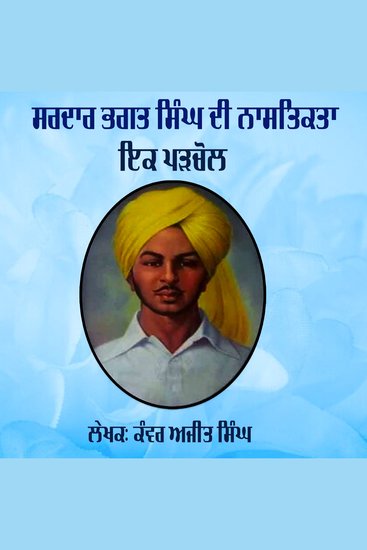
    Sardar Bhagat Singh Di Nastikta - Ik Parchol is a book authored by Kanwar Ajit Singh that delves into an essential aspect of Bhagat Singh's ideology. This book provides an in-depth analysis of Bhagat Singh's atheism and his philosophical and intellectual dimensions. The book discusses Bhagat Singh's views on religion, atheism, and social transformation, which were integral to his broader struggle. 
    You can order it from Sikh Siyasat and get it delivered anywhere in the world.
    Show book
  • Reincarnation - Conquering Repeated Birth & Death - cover

    Reincarnation - Conquering...

    Sripad Jaganantha Das

    • 0
    • 0
    • 0
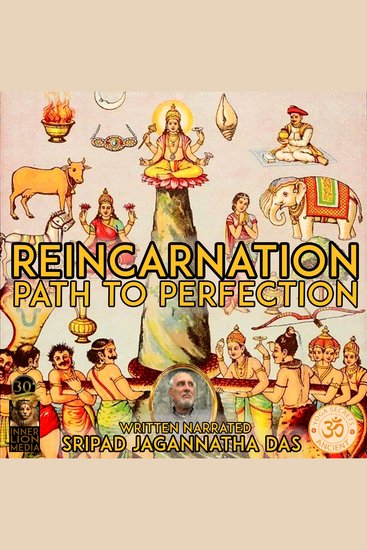
    "Transmigration is not a question of religion. It is a question of science. You are a spiritual being, but because you are materially conditioned, you are under the spell of material nature. When your body is annihilated, you are not finished. You get another body, just as you may change your coat and shirt. Eternally the spirit soul within the body remains the same." Bhaktivedanta Swami 
     
    Throughout history, some of the most thoughtful minds have advocated that life does not end with the death of our body, but continues via a process known as reincarnation. The Vedic literature advocates that the soul, or atma, gives life to the body. Life does not arise from a particular combination of material elements as some modern scientists theorize. At the time of death, we leave one body and enter a new one. That is called reincarnation. 
     
    We can observe we change from one body to another throughout our lifetime. Our body at birth is completely different from our adult body. Yet throughout the conscious self remains the same. Similarly, the self remains the same at death and transfers from one body to the next in the cycle of reincarnation. Our present body is the result of a long series of actions and reactions in previous lives. The law that governs this is known as karma. Our previous actions have produced our present body, and our current actions will determine our next body. Only in the human form can we free ourselves from the endless cycle of reincarnation, of birth, and death. As Krishna states in Bhagavad Gita “From the highest planet in the material world down to the lowest, all are places of misery wherein repeated birth and death take place. But one attains to My abode.. never takes birth again.” 
     
    Here in this unique audio work are the ancient secrets of reincarnation from a 50-year devotee of the Vedas and devotional yoga. A rare and vitally important mystical audiobook adventure.
    Show book
  • Unapologetically ADHD - A Step-By-Step Framework For Everyday Planning On Your Terms - cover

    Unapologetically ADHD - A...

    Pete D. Wright, Nikki Kinzer

    • 0
    • 0
    • 0
    Step-by-step yet flexible blueprint to plan long term goals, projects, and tasks when living with ADHD 


    Written by Nikki Kinzer and Pete D. Wright, cohosts of the hit podcast Taking Control: The ADHD Podcast with more than one million annual downloads, Unapologetically ADHD helps listeners plan for long term goals, projects, and tasks that need to get done, providing a step-by-step outline for success that still allows for plenty of individual flexibility. An interesting, accessible, and fun listen, this book is intentionally organized into clear sections within chapters. 


    Listeners get access to various coaching strategies, such as powerful questions and exercises, to help them move towards planning success on their own terms. In this book, you'll find information on: 


    ● Understanding how the ADHD mind works and how to manage "all or nothing" mode 


    ● Letting go of the shame that so many with ADHD feel and the concept of RSD (rejection sensitive dysphoria) acceptance 


    ● Using practical tips that can be applied immediately to help you feel more in control of your life
    Show book
  • Summary of Jared Diamond’s The Rise and Fall of the Third Chimpanzee - cover

    Summary of Jared Diamond’s The...

    Falcon Press

    • 0
    • 0
    • 0
    Buy now to get the main key ideas from Jared Diamond’s The Rise and Fall of the Third Chimpanzee 
      
    In The Rise and Fall of the Third Chimpanzee (1991), Jared Diamond traces the history of the human species and uncovers the ancestral origins of our social and environmental issues. Our problems have been intensifying for a long time, along with our growing numbers and powers. Even though we have managed to rise from our past animal state, we are slowly walking towards the demise of our human race, unless we can learn from our mistakes. 
     
    Show book
  • The Revival - The Biggest Turning Points in History - cover

    The Revival - The Biggest...

    Kelly Mass

    • 0
    • 0
    • 0
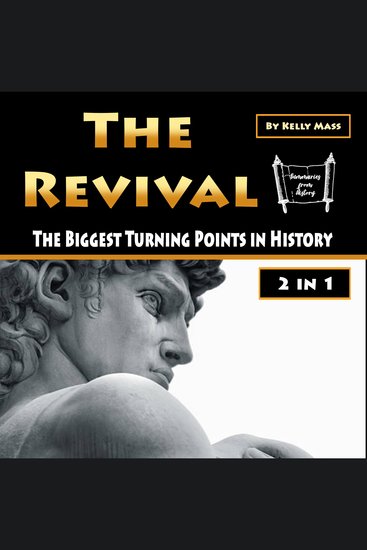
    This 2 in 1 combo contains the following titles: 
    1 - Age of Enlightenment: Finally…finally, humanity began to wake up. Finally, they decided to take science, knowledge, politics, development, multiple angles and perspectives, and the details of our everyday lives a bit more seriously. For centuries, raw and primal urges and principles had taken hold of conquerors, officials, and governments. But there was a light at the end of the tunnel. Humanity just needed to acknowledge knowledge. It needed to value the art of studying phenomena and learning, not just spiritual notions and religion. Welcome to the book about how this happened. Welcome to a glimmer of hope in humanity’s realization of what this world is and what lies in the elements yet to be discovered. 
    2 - Renaissance: When we think of the Renaissance, we often think of paintings. And indeed, many painters and sculptors were part of the artistic transformation the Renaissance caused. But there was more. The Renaissance basically formed a period of collective enlightenment and freedoms that put an end to certain tyrannies and false notions from the Middle Ages. 
    The Renaissance is a time in European history marking the shift from the Middle Ages to modernity and covering the 15th and 16th centuries, identified by an effort to restore and exceed ideas and accomplishments of classical antiquity. It happened after the crisis of the late Middle Ages and was related to great social change. Aside from the basic periodization, advocates of a "long Renaissance" might put its start in the 14th century and its end in the 17th century.
    Show book