Join us on a literary world trip!
Add this book to bookshelf
Grey
Write a new comment Default profile 50px
Grey
Subscribe to read the full book or read the first pages for free!
All characters reduced
Carmen - cover

Carmen

Prosper Mérimée

Publisher: Aeneas Press

  • 0
  • 0
  • 0

Summary

A Basque soldier meets a Gypsy woman outside a cigarette factory in Seville, lets her go, and loses everything by degrees: rank, freedom, and the ability to imagine a life without her. Mérimée's novella is drier and crueller than the opera Bizet made of it, and its narrator is an archaeologist who keeps mistaking the story for a curiosity.
Available since: 08/19/2026.
Print length: 65 pages.

Other books that might interest you

  • The Rover Boys in Camp - cover

    The Rover Boys in Camp

    ARTHUR M. WINFIELD

    • 0
    • 0
    • 0
    The Rover Boys in Camp by Arthur M. Winfield is a classic adventure novel that follows the ever-resourceful Rover brothers as they set out on an unforgettable camping expedition filled with excitement, mystery, and unexpected challenges. Surrounded by the beauty of the great outdoors, the brothers encounter thrilling adventures, test their ingenuity, and strengthen the bonds of friendship and family as they navigate every twist and turn.
    
    Arthur M. Winfield brings the wilderness to life with vivid storytelling, blending outdoor exploration, suspense, and lighthearted humor into a captivating tale that has entertained readers for generations. Along the way, the Rover brothers face daring obstacles, uncover intriguing secrets, and demonstrate the values of courage, teamwork, honesty, and perseverance.
    
    A beloved installment in the iconic Rover Boys series, The Rover Boys in Camp captures the spirit of youthful adventure and the timeless appeal of exploring the unknown. Whether you are a longtime fan of classic juvenile fiction or discovering these memorable characters for the first time, this enduring story offers an engaging journey filled with excitement, camaraderie, and the enduring thrill of outdoor adventure.
    Show book
  • The Gray Angels - A Small-Town Girl with a Great Voice - cover

    The Gray Angels - A Small-Town...

    Nalbro Bartley

    • 0
    • 0
    • 0
    A ragged, barefoot girl drives into Birge's Corners on a ramshackle wagon and offers to sing for her supper; the village recluse, Miss Abby Clergy, who has hidden herself away since a love affair of 1867, hears her and carries her off to New York to study for grand opera. Nalbro Bartley follows Thurley from the village into the studios and drawing rooms of the city, and finds a name for the people she admires: the gray angels, idealists with enough of the sinner in them to get things done. Bartley was widely serialised in the magazines of the 1910s and 1920s and wrote women who work for a living.
    Show book
  • A Tale of Two Cities - A Story of the French Revolution - cover

    A Tale of Two Cities - A Story...

    Charles Dickens

    • 0
    • 0
    • 0
    London and Paris in the years of the Revolution, a doctor released from eighteen years in the Bastille, and two men who look alike enough for one to die in the other's place. Dickens wrote it in weekly instalments and kept the chapters short and the plot tight, unlike almost everything else he published. It is often said to have sold more copies than any other novel in English.
    Show book
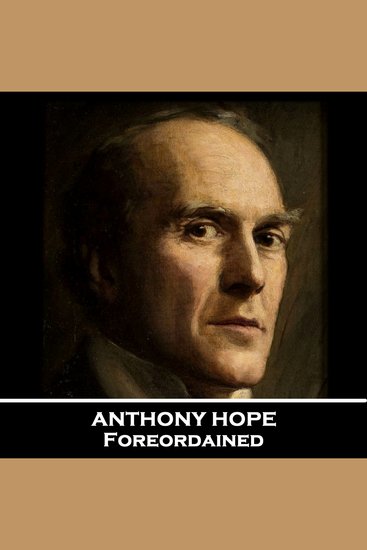
  • Foreordained - From their pens to your ears genius in every story - cover

    Foreordained - From their pens...

    Anthony Hope

    • 0
    • 0
    • 0
    Sir Anthony Hope Hawkins was born on 9th February 1863 in Clapton, London.  
    He was educated at St John's School, Leatherhead, Marlborough College and Balliol College, Oxford.  Hope trained as a lawyer and barrister and was called to the Bar by the Middle Temple in 1887. Despite what was thought to be a promising legal career he had literary ambitions and wrote in his spare time. 
    His early works appeared in various periodicals of the day but for his first book ‘A Man of Mark’ (1890), with no publisher interested, he published with his own resources.  
    More novels and short stories followed, including the mildly successful ‘Mr Witt's Widow’ in 1892. Hope even found time to run as the Liberal candidate for Wycombe in the election that same year but was unsuccessful. 
    His first major literary success came with ‘The Dolly Dialogues’, a collection of previously published magazine pieces followed very quickly by his instant classic, ‘The Prisoner of Zenda’. He now gave up the vestiges of his legal career to pursue writing full-time. 
    Despite never again reaching the same pinnacle of success he was popular and wrote prolifically across novels, plays and of course, short stories though his writing output rapidly diminished after the war. 
    In 1918 he was knighted for his contribution to propaganda efforts during World War I.  
    His short stories are delicate, mannered and often surprising with their wit, humour and interplay of characters who say one thing and usually mean another.  He was very definitely a writer of escapist rather than serious fare but they are no less enjoyable for that. 
    Anthony Hope died of throat cancer on 8th July 1933 at his country home, Heath Farm at Walton-on-the-Hill in Surrey. He was 70.
    Show book
  • Selected Short Stories - by F Scott Fitzgerald - cover

    Selected Short Stories - by F...

    F. Scott Fitzgerald

    • 0
    • 0
    • 0
    Selected Short Stories is a collection of some of F. Scott Fitzgerald's most memorable and thought-provoking works. Published in 1931, the collection includes several of his best-known stories, such as "The Diamond as Big as the Ritz," "Bernice Bobs Her Hair," and "The Curious Case of Benjamin Button." These stories explore themes of social class, love, loss, and the search for meaning in a rapidly changing world. Fitzgerald's writing style is characterized by its elegance, wit, and poetic language, making his stories both engaging and thought-provoking. 
     
    One of the recurring themes in Fitzgerald's stories is the tension between the individual and society. In many of his stories, the characters are struggling to find their place in a society that values wealth, status, and conformity. This is particularly evident in "Bernice Bobs Her Hair," in which the protagonist, Bernice, must decide whether to conform to the expectations of her wealthy cousin or to follow her own desires. Similarly, in "The Curious Case of Benjamin Button," the protagonist must come to terms with his unusual condition, which sets him apart from the rest of society. 
     
    Another important theme in Fitzgerald's stories is the fleeting nature of happiness and the inevitability of change. Many of his characters are searching for love, success, or fulfillment, but find that these things are elusive and ultimately fleeting. This is particularly evident in "The Diamond as Big as the Ritz," in which the protagonist discovers a hidden mountain of diamonds, only to realize that his wealth is meaningless in the face of the vastness of the universe. Fitzgerald's stories remind us that life is both beautiful and fragile and that the pursuit of happiness can be both exhilarating and heartbreaking. 
    Overall, Selected Short Stories is a testament to Fitzgerald's talent as a writer and his ability to capture the spirit of his time.
    Show book

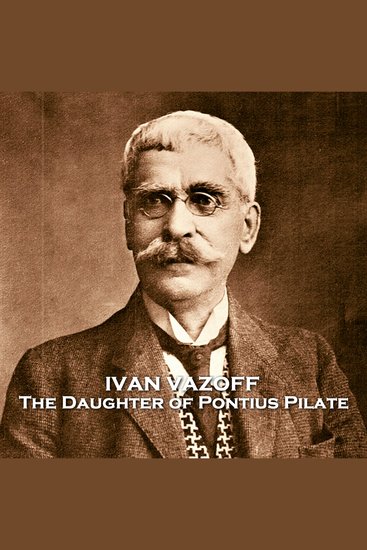
  • The Daughter of Pontius Pilate - In Ancient Roman times a rich woman tries to cure her ails - cover

    The Daughter of Pontius Pilate -...

    Ivan Vazov

    • 0
    • 0
    • 0
    Ivan Minchov Vazov was born on the 9th July 1850 (although that date is disputed) in the town of Sopot, in Bulgaria, which was then part of the Ottoman Empire.  
     
    After primary education at the local school he was sent to Kalofer to continue his studies and work as an assistant teacher.  He later spent a short time in Plodiv where he began to write poetry. 
     
    Fascinated by literature he abandoned work as an apprentice to move to Brăila, in Romania, where he lived with exiled revolutionaries and befriended the poet Hristo Botev. 
     
    By 1874, he had joined the struggle for independence from the Ottomans and returned to Sopot. After the failure of the 1876 uprising he had to flee the country, going back to Galaţi, in Romania, where most of the surviving revolutionaries were exiled. There he was appointed a secretary of the committee. 
     
    In 1876 he published his first work, ‘Priaporetz and Gusla’, followed by ‘Bulgaria's Sorrows’ in 1877. 
     
    Bulgaria regained its independence in 1878 as a result of the Russo-Turkish War and Vazov wrote the famous ‘Epic of the Forgotten’.  He now became the editor of the political reviews Science and Dawn.  
     
    Exile was forced upon him once again due to the persecution of the Russophile political faction. Later he returned to Bulgaria with his mother’s help, and started teaching and then became a civil servant. 
     
    He moved to Sofia in 1889 where he started publishing the review Dennitsa. 
     
    His 1888 novel ‘Under the Yoke’, depicting Ottoman oppression, is his most famous work and has been translated into over 30 languages. 
     
    During his life he became a prominent and widely respected figure in the social and cultural life of Bulgaria.  
     
    In 1917, he was nominated for the Nobel Prize in literature. 
     
    Ivan Vazov died on September 22nd, 1921.  He was 71.
    Show book