Join us on a literary world trip!
Add this book to bookshelf
Grey
Write a new comment Default profile 50px
Grey
Subscribe to read the full book or read the first pages for free!
All characters reduced
Oral Tradition - cover

Oral Tradition

Priya Reddy

Translator A AI

Publisher: Publifye

  • 0
  • 0
  • 0

Summary

Oral Tradition explores how cultures worldwide preserved their histories and knowledge without writing. It argues that oral traditions aren't just imperfect versions of written history, but dynamic systems for preserving, adapting, and transmitting knowledge. These traditions rely on sophisticated mnemonic devices and narrative structures. For instance, complex legal systems and intricate historical accounts were maintained across generations through storytelling, song, and ritual performance. The book examines the social roles and institutions that maintained oral knowledge, such as the training of storytellers and the function of councils of elders. It also delves into how colonialism and globalization have impacted these traditions. The book progresses by first introducing fundamental concepts, then exploring specific techniques for preserving information, and finally analyzing the impact of societal changes. By drawing on anthropological studies, linguistic analysis, and historical accounts, Oral Tradition highlights the ingenuity and resilience of oral cultures. It emphasizes the importance of recognizing and valuing the unique contributions of these cultures to our understanding of history and human cognition. It challenges conventional narratives that prioritize written records, providing a comprehensive look at these invaluable cultural resources.
Available since: 03/29/2025.
Print length: 68 pages.

Other books that might interest you

  • COLLECTION OF SONG POEMS A (90 PoeLyrics) - cover

    COLLECTION OF SONG POEMS A (90...

    Steve Dafoe

    • 0
    • 0
    • 0
    A collection of 90 Song Lyrics turned to Poems. Thereby PoeLyrics! Based on the music of Steve Dafoe.
    Show book
  • Titans of Capital - How Concentrated Wealth Threatens Humanity - cover

    Titans of Capital - How...

    Peter Phillips, Dan Kovalik

    • 0
    • 0
    • 0
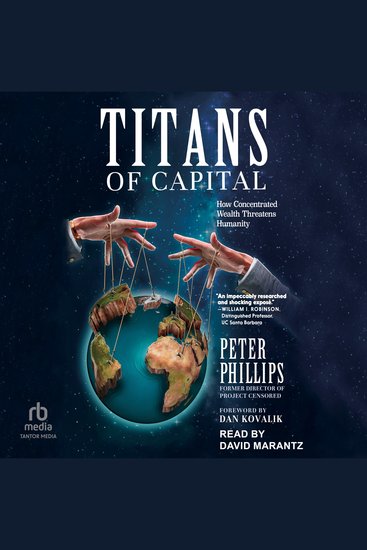
    A fascinating examination of the rapid concentration of global capital, with chapters that focus on China and Russia. 


    In Titans of Capital, Peter Phillips, a political sociologist, poses three key research questions: To what extent do the wealthy influence—or even dominate—decision making that affects all of us in society? Who are the most powerful people? And how does the accumulation of capital work? 


    Networks of wealthy individuals have evolved since the COVID-19 pandemic, and Titans of Capital shows how the financial investments of transnational elites threaten human rights and the future of the planet. Phillips warns that while continued concentration of global capital increases the profits enjoyed by the global economy's "Titans,", it also increases global inequality, starvation, and civil unrest, threatening the lives of the hundreds of millions of people living in extreme poverty. It is imperative to ask how we can reverse the concentration of Titan wealth and revitalize grassroots democracy unbridled by extreme wealth. Identifying 117 global Titans by name and exposing the networks and interests that unite them provides listeners opposed to militarism and committed to economic equality with crucial tools to directly engage the power elite who endanger life on earth.
    Show book
  • Justinian's Empire - Triumph and Tragedy - cover

    Justinian's Empire - Triumph and...

    Nick Holmes

    • 0
    • 0
    • 0
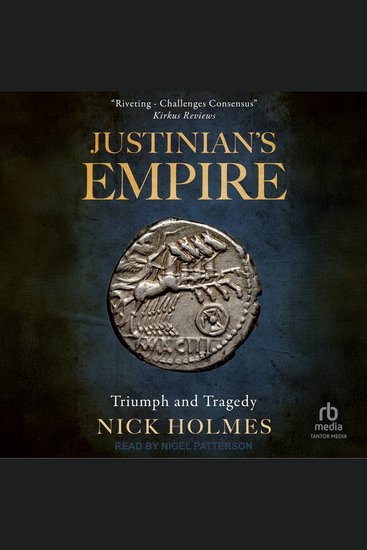
    IT WAS AN AGE OF GLORY . . . BUT ALL THAT GLITTERS IS NOT GOLD. 


    The sixth-century AD witnessed a remarkable turn-around in the Roman Empire's fortunes. Justinian's general, Belisarius, recovered North Africa and Italy from the barbarians. An impressive new law code was inaugurated that would endure to this day. Astonishing building projects rivalled the great monuments of Old Rome. 


    But rather than restoring Rome's greatness did Justinian in fact pave the way for its collapse less than a century after his death? Drawing on the contemporary sources, especially those of the chronicler Procopius, Nick Holmes reveals a darker side to Justinian—a ruthless opportunist, whose costly conquests and misguided priorities drained the empire's wealth and critically weakened its army. 


    This is the fourth volume in Nick Holmes' series on the Fall of the Roman Empire. The first three books trace the empire's story from the 'crisis of the third century', through its reinvention by Constantine as a Christian state, and then onto the fall of its western half. A fifth volume will tell of its rapid demise in the seventh century AD, when the first Islamic Caliphate became the new superpower of western Eurasia.
    Show book
  • Hate and Reconciliation - Approaches to Fostering Relationships between People and Peace - cover

    Hate and Reconciliation -...

    Guido Cuyvers

    • 0
    • 0
    • 0
    Hatred is human and current. It is an intrinsic part of what can happen between people. Personal experiences can lead people to hate someone. In society and even on a global level, hatred is again and again the motor of misunderstanding and often also of violence between people. Sometimes hate smolders almost unconsciously; at other times he is furious and serves as a flag for serious violence. 


    Hatred has many faces and seems omnipresent, that much is clear. The term "Erida complex," after the Greek goddess of hate, symbolizes the common and deeply rooted nature of hatred. After examining the nature of hate, this book focuses a wide-angle lens on its many faces, in individuals and groups as well as peoples. Facing the negativity of hatred, this book presents constructive approaches to fostering relationships between people and peace.
    Show book
  • USS Alligator The: The History of the US Navy’s First Submarine - cover

    USS Alligator The: The History...

    Charles River Editors

    • 0
    • 0
    • 0
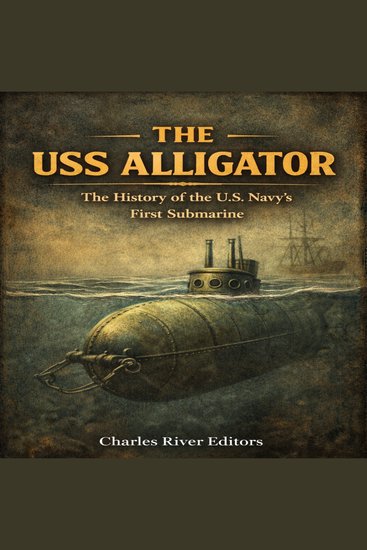
    While people often tend to think of submarines as a modern invention, inventors created several prototypes from 1580 onward, and they even attempted to use them. Some of the designs remained theoretical and never got off the drawing board, but as time went on, several Europeans built and tested primitive submarines. Most of these early subs were made of wood and often possessed an awkward shape, but a French priest first proposed the now familiar cylindrical layout in 1634. He determined that this shape would make it easier for the submarine to withstand water pressure, while likewise improving maneuverability.  
    The American Civil War witnessed new designs and prototypes of submarines appearing on American naval drawing boards. These subs had the “cigar shape” familiar throughout history from that point forward. Most of them failed for one reason or another, but one, the CSS Hunley, actually succeeded in using a “spar torpedo” to sink the USS Housatonic. It was the first time a submarine successfully sank a ship, but as historic and groundbreaking as the Hunley and its mission was, all of that was overshadowed by the lingering debate over just what happened to the Confederate submarine, which never made it back to port after the attack. 
    Although the Hunley remains the most famous submarine of the Civil War, the Union Navy attempted to create and use a submarine years before the Hunley embarked on its historic operation, and though it’s widely forgotten today, the first Union submarine, the Alligator, also had a fascinating history. 
    Show book
  • Rethinking global value chains amid geo-economic fragmentation - cover

    Rethinking global value chains...

    Matteo Bursi, Ettore Greco

    • 0
    • 0
    • 0
    The uneven recovery from the 2008 global financial crisis led to a stabilisation of international trade and capital flows. However, in the following years the surge of protectionist measures and deepening rivalries between big powers precipitated a crisis of the rule-based multilateral order. The pandemic crisis and the impact of the Russian invasion of Ukraine have boosted international economic fragmentation along geopolitical lines and may drive the global economy towards a reversal of the globalisation process that marked the second half of the 20th century.
    Mounting cross-border restrictions on the exchange of essential goods and services during the recent poly-crisis has caused big disruptions in global production networks evamping the debate on the future of global economic interdependence, and the potentialities and downsides of reshoring, nearshoring or friendshoring processes. Indeed, the reconfiguration of global value chains (GVCs) has been increasingly debated as an economic policy tool to secure the supply of critical products and establish economic security at the national level. Such defensive posturing raises concerns over how to manage emerging trade-offs between the benefits of openness (economic integration) and those of autonomy (economic security).
    The Istituto Affari Internazionali (IAI), in the framework of its partnership with Intesa Sanpaolo, launched a task force of experts to contribute to the current discussion on the implications and possible future configurations of international production networks at a time of a resurgence of national economic security. The overall research effort has involved different regional perspectives and multidisciplinary approaches to shed light on the implications of the policy-driven process of international economic fragmentation in the fields of trade, technology, labour, international finance, global public goods and other dimensions of international economic relations.
    Show book