Join us on a literary world trip!
Add this book to bookshelf
Grey
Write a new comment Default profile 50px
Grey
Subscribe to read the full book or read the first pages for free!
All characters reduced
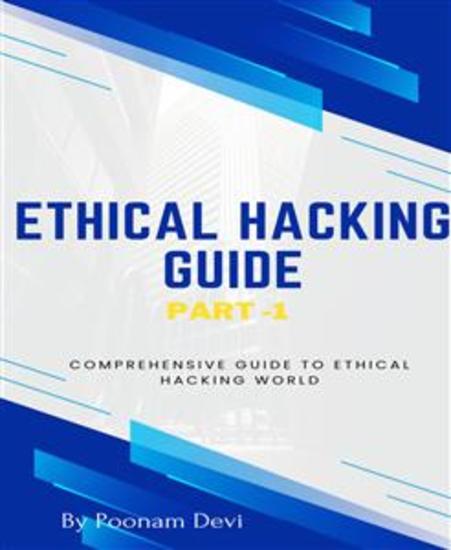
ETHICAL HACKING GUIDE-Part 1 - Comprehensive Guide to Ethical Hacking world - cover

ETHICAL HACKING GUIDE-Part 1 - Comprehensive Guide to Ethical Hacking world

POONAM DEVI

Publisher: BookRix

  • 0
  • 0
  • 0

Summary

Ethical hacking, also known as penetration testing or white-hat hacking, is a practice of deliberately probing and assessing the security of computer systems, networks, applications, and other digital environments in order to identify vulnerabilities and weaknesses that could potentially be exploited by malicious hackers. The primary goal of ethical hacking is to proactively uncover these vulnerabilities before they can be exploited by unauthorized individuals or groups, thereby helping organizations strengthen their security measures and protect their sensitive information. Key aspects of ethical hacking include: Authorization: Ethical hackers must obtain proper authorization from the owner or administrator of the system before conducting any tests. This ensures that the testing process remains within legal and ethical boundaries. Methodology: Ethical hacking involves a systematic and structured approach to identify vulnerabilities. This includes various techniques like network scanning, penetration testing, social engineering, and vulnerability assessment. Scope: The scope of an ethical hacking engagement is defined before the testing begins. It outlines the systems, applications, and networks that will be tested. Staying within the defined scope ensures that only authorized systems are tested. Information Gathering: Ethical hackers gather information about the target systems, including their architecture, software versions, and potential weak points. This information helps them plan their testing approach. Vulnerability Analysis: Ethical hackers use various tools and techniques to identify vulnerabilities, misconfigurations, and weak points in the target systems. These vulnerabilities could include software bugs, insecure configurations, or design flaws. Exploitation: In a controlled environment, ethical hackers might attempt to exploit the identified vulnerabilities to demonstrate the potential impact of a real attack. However, they stop short of causing
Available since: 12/21/2023.
Print length: 25 pages.
Other books that might interest you

  • Building Boys - Raising Great Guys in a World that Misunderstands Males - cover

    Building Boys - Raising Great...

    Jennifer L. W. Fink

    • 0
    • 0
    • 0
    We want to raise well-rounded human beings—we're just not quite sure how best to do it. Confounded by rapidly changing gender norms, today's parents are attempting to raise kind, compassionate, emotionally sensitive boys in a society that simultaneously rewards stereotypical masculinity and is increasingly hostile to boys. Teaching boys to respect others will help them in the future—but can make life awfully difficult in the here and now. Making the world a safer place for women and girls is not the only reason to rethink our boy raising practices. Current culture harms our boys too—and they need (and deserve) as much support as girls and women. 


    Building Boys is written by an in-the-trenches #boymom who intimately understands male development and the challenges currently facing boys and their families. Fink offers ten rules that parents can use to guide their parenting choices throughout their sons' lives. These rules range from emphasizing emotional intelligence to letting your son struggle and ultimately accepting him as he is. Fink explains both the science and research behind each rule as well as stories and anecdotes from families. Parents are taught how to apply the rule to a variety of common parenting challenges. They are as applicable to boys with ADHD, autism, and learning challenges are they are to neurotypical boys.
    Show book
  • The Street Clinic - 10 Young Lives on the Frontline of Gang Culture - cover

    The Street Clinic - 10 Young...

    Dorcas Gwata

    • 0
    • 0
    • 0
    This audiobook features an exclusive Q&A between reader Chipo Chung and author, Dorcas Gwata'Fascinating . . . While the rest of us are worrying about it, Dorcas Gwata is doing something about it' - Wendy Joseph, author of Unlawful KillingsThrough the lives of ten young people an award-winning nurse reveals the impact of gang culture on mental health. Dorcas Gwata is an award-winning nurse specialising in mental health. She has worked closely with vulnerable young people exposed to the knife crime, sexual exploitation, drug use and poor mental health associated with gangs. In The Street Clinic, we accompany her in her work as she meets and cares for young people on the street and on their terms.We meet Fuz, who is on trial for aggravated assault. There's Abdul, who’s exploring his sexuality and has been humiliated online. Louise's promising future is compromised by her controlling boyfriend. And there’s Zane, whose parents’ divorce opens up an emotional hole in his life that’s plugged by an ill-chosen new friendship.Drawing on her own experiences of loss and social injustice, and twenty-five years on the NHS frontline, Dorcas offers a bird’s-eye view of London: its multicultural population, wealth inequalities, tireless healthcare professionals, and an NHS that doesn’t always work for everyone. And she asks the big questions: What lies behind London’s youth violence crisis? What is its impact on the mental health of its victims? How are the families of our young people and the wider community affected?Exposing some uncomfortable truths about British society, The Street Clinic is also a powerful story of resilience, strength and, ultimately, hope.
    Show book
  • Mass Murderers - Biographies of Some of the Most Heartless Men in History - cover

    Mass Murderers - Biographies of...

    Kelly Mass

    • 0
    • 0
    • 0
    This is a special combo, including multiple titles, which are about the following subjects: 
    1 - Oliver Cromwell: The reason why people thought he was so evil, is because of his brutality against the Irish at that time. Several Irish and English scholars agree that Cromwell was too cruel in Ireland. Other academics blame him of 'ethnic cleansing,' or the systematic expulsion of a certain ethnic population from a territory. It typically entails the execution and deportation of Catholics, and that he is despised by Irish Catholics. 
    2 - Enver Pasha: It doesn’t seem like Enver Pasha was a good man. His war crimes have caused the deaths of millions of innocent citizens. Sure, during a war and a collapsing empire, you try to do what you can to stop losing, but I doubt anyone in the right mind can justify his actions, which included the slaughter of minorities in the Ottoman Empire during World War 1, and even the Armenian Genocide, which consisted of releasing prisoners upon the Armenian population to have their way and abuse, murder, rape, and pillage. Deportation of Armenians to remote areas, away from their homes, caused many to starve, drown, or become severely ill. And to this day, the Turkish government is still somewhat reluctant to acknowledge the severity of that historical atrocity. 
    3 - Benito Mussolini: Ironically, when we think of fascism, we often look at someone as brutal and influential as Adolf Hitler, but the word “fascism” originated from Italian. The ideology that was carried out in the vicious Spanish War right before World War 2, and was embraced by Nazi Germany, was actually pushed and more or less invented by the Italians during a critical time in history when many changes were made, and when fear and uncertainty were all in the air. Mussolini was efficient and influential. He was a fearless leader not to be trifled with. Let’s take a look at what he did and why.
    Show book
  • How the Paranormal Affects Mental Illness - And What Additional Therapies Apply - cover

    How the Paranormal Affects...

    Martin K. Ettington

    • 0
    • 0
    • 0
    My career was being trained as and working as an Engineer mostly for Fortune 100 companies. 
    In parallel with that I’ve also been working on spiritual enlightenment and developing my paranormal abilities for the last fifty years. 
    This unusual combination of skills has led me to my passion of writing about the paranormal and many “out of the box” concepts and topics. I’ve actually written twelve books about the paranormal based on my experiences and research into these topics. 
    One topic which has always fascinated me has been how many paranormal experiences are usually interpreted by mental health professionals as delusional and mentally ill behaviors. 
    My thinking is that most people have spiritual and paranormal abilities and these cause experiences which can overwhelm some people to make them fit the diagnosis of them having mental illnesses. 
    Certainly there are a lot of legitimate mental illnesses which cause the need for treatments by mental health professionals. 
    But what happens when persons having these experiences may be normal and stable in their other behaviors but these experiences are so far beyond the norms of society that others think they are “crazy” and therefore treat them as such? 
    I’ve heard and read a number of stories over the years where I wonder if they were real experiences which might have just caused the person who lived them to have a nervous breakdown. 
    This book is my effort to help people understand the interfaces of real paranormal experiences and mental illness and how to tell which is which. 
    Also, what additional therapies can be used to help people who may be overwhelmed by these experiences?
    Show book
  • The Antichrist - A Bold Critique of Morality Religion and Power - cover

    The Antichrist - A Bold Critique...

    Friedrich Nietzsche, Tim Zengerink

    • 0
    • 0
    • 0
    What if the moral systems that guide our lives are not the pinnacle of virtue but barriers to true freedom and greatness? 
    The Antichrist is Friedrich Nietzsche’s unapologetic critique of Christianity, traditional morality, and the societal norms that he saw as stifling human potential. This bold and revolutionary work examines the origins of religious belief, its impact on human behavior, and the need to break free from outdated systems to embrace a more empowering and life-affirming philosophy. 
    This modern translation makes Nietzsche’s challenging ideas more accessible to today’s readers while maintaining the sharpness and depth of his original work. 
    What You’ll Discover: 
    - A Radical Critique of Religion and Morality – Explore Nietzsche’s piercing analysis of Christianity and traditional ethics. 
    - The Pursuit of True Freedom – Understand Nietzsche’s philosophy of self-overcoming and the path to personal greatness. 
    - A Call to Embrace Life – Learn how to reject life-denying beliefs and adopt a philosophy of strength, vitality, and empowerment. 
    - Timeless Insights for Modern Readers – Gain inspiration to question societal norms, foster individualism, and navigate life with confidence. 
    Imagine breaking free from outdated beliefs, discovering your true potential, and embracing life with clarity and strength. The Antichrist is a timeless manifesto for personal freedom, boldness, and self-discovery. 
    Start your journey today. Get your copy now and transform the way you see the world.
    Show book
  • Autumn Time Festivals in Finland Estonia Latvia and Lithuania - cover

    Autumn Time Festivals in Finland...

    Niina Niskanen

    • 0
    • 0
    • 0
    Autumn was a magical time in Finland, Latvia, Lithuania and Estonia. Estonia and Finland belong to the same language family (Finno-Ugric languages) but the similarities of these old autumn time festivals in these four countries are strikingly similar. 
    In this course, we will touch on some of the important Finnish and Baltic gods and deities that were connected to harvest and fertility. What happened during All Hallow´s Eve, and how in all these cultures, there was a special time period that was completely dedicated to honouring the ancestors and remember those who had passed away. 
    Several of these old festivals are no longer celebrated, but some of them like Finnish Kekri and Mardipäev in Estonia, still hold certain traditions that have lived on ´till today. 
    This course can help you to build a deeper understanding of the world view of ancient Baltic and Finno-Ugric tribes and the society that was based on agriculture. 
    - You will learn about the importance of family and honouring the ancestors. 
    -Names of these festivals, and when they were celebrated. 
    -Different magical rituals and spells were performed during these holidays. 
    - You will learn why the forest was such an important place in the past and home to many myths 
    -How the spirits were invited to be part of these festivities. 
    By the end of this course, you have a better understanding of folklore and the connections that these cultures had with one another. 
    Show book