Join us on a literary world trip!
Add this book to bookshelf
Grey
Write a new comment Default profile 50px
Grey
Subscribe to read the full book or read the first pages for free!
All characters reduced
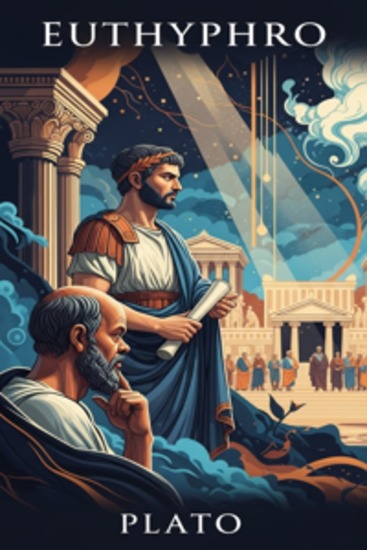
Euthyphro - cover

Euthyphro

Plato

Publisher: Bu Classics Books

  • 0
  • 0
  • 0

Summary

Witness the prelude to the trial of Socrates as he encounters a self-assured priest outside the Athenian court, sparking a profound interrogation into the definition of piety. Through a series of incisive questions, the dialogue exposes the contradictions inherent in Euthyphro's reliance on traditional religious authority and divine command. The text is a quintessential example of the Socratic method, stripping away assumptions to reveal the difficulty of defining moral concepts. It remains a foundational text for understanding the tension between religious duty and philosophical ethics.
Available since: 01/29/2026.
Print length: 27 pages.

Other books that might interest you

  • College Survival Hacks: Secrets to Thriving Through Chaos - "Unlock college success with Survival Hacks—dynamic audio lessons to excel amidst chaos and thrive in exams!" - cover

    College Survival Hacks: Secrets...

    Cyrus Hawke

    • 0
    • 0
    • 0
    College Survival Hacks: Secrets to Thriving Through Chaos 
    ⭐⭐ Simplified Audio Guide with Explanations ⭐⭐ 
    Are you eager to advance your academic journey and master the skills needed to excel in college life?  
    Are you on the lookout for a comprehensive guide that covers all the essential strategies for thriving in college? 
    Your search ends here! 
    This guide is your ultimate companion for enhancing your knowledge, honing your skills, and engaging in practical exercises, setting you up for success. 
    Updated for the 2024-2025 College Experience. 
    Highlights of this enriched guide: 
    - Key insights into essential strategies for thriving in college 
    - In-depth explanations of successful college practices 
    - Effective techniques for academic preparation and navigating challenges 
    Our guide stands out with its thorough coverage, which is critical for your academic success. Concepts are explored in detail, ensuring a solid understanding rather than superficial treatment. 
    Please note that this guide is an independent resource and is not affiliated with any official educational institution. 
    Crafted with a clear layout and straightforward language, our College Survival Hacks audiobook guarantees seamless transitions across topics. Say goodbye to complicated jargon and embrace clear, concise, and accurate content. 
    So, why wait? Click the BUY NOW button to secure your guide and embark on your journey to success in the 2024-2025 college experience! 
    Unlock the secrets to a thriving college life today!
    Show book
  • The Great Schism - How the Catholic Church Split up - cover

    The Great Schism - How the...

    Kelly Mass

    • 0
    • 0
    • 0
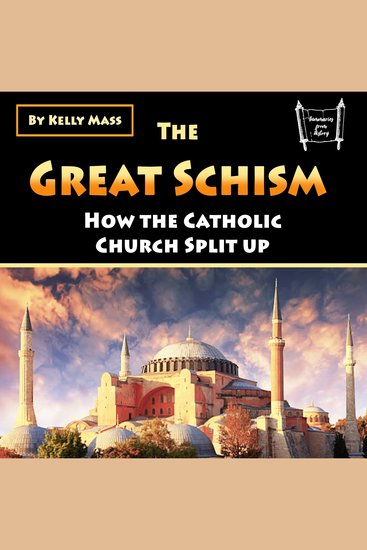
    The East–West Schism, also called the Great Schism or the Schism of 1054, was a profound and enduring rupture in communion between the Catholic Church and the Eastern Orthodox Church that took place during the 11th century. This division marked one of the most significant splits in Christian history, fundamentally shaping the religious landscape of Europe and beyond. At the time, Eastern Christianity likely accounted for a narrow majority of Christians globally, with the remainder adhering to Catholicism. The schism was the culmination of centuries of doctrinal, cultural, and political differences between the Greek-speaking East and the Latin-speaking West. 
    The definitive break in 1054 did not emerge in isolation but was preceded by a long history of ecclesiastical conflicts and theological disputes. Among the central issues were the *Filioque* clause—an addition to the Nicene Creed by the Western Church asserting that the Holy Spirit proceeds from both the Father and the Son—the use of leavened versus unleavened bread in the Eucharist, the bishop of Rome’s assertion of universal jurisdiction, and the status of the See of Constantinople in relation to the pentarchy (the five major episcopal sees of the early Church). These disagreements highlighted fundamental differences in theological perspectives, liturgical practices, and ecclesiastical authority. 
    The formal steps toward the schism began in 1053 when Greek churches in southern Italy were ordered to conform to Latin traditions, under the threat of closure if they refused. In retaliation, Michael I Cerularius, the Patriarch of Constantinople, ordered the closure of all Latin churches in Constantinople. This act escalated tensions and set the stage for the events of 1054.
    Show book
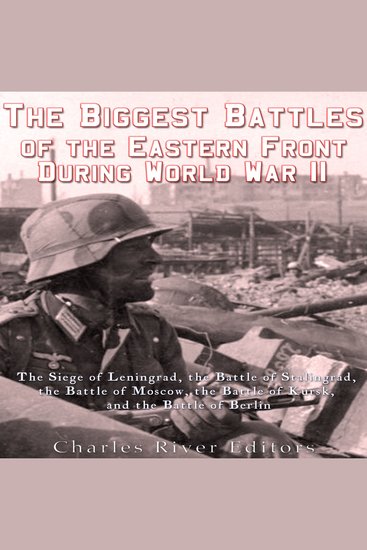
  • Biggest Battles of the Eastern Front during World War II The: The History of the Most Epic Battles Between the Soviet Union and Nazi Germany - cover

    Biggest Battles of the Eastern...

    Charles River Editors

    • 0
    • 0
    • 0
    World War II was fought on a scale unlike anything before or since in human history, and the unfathomable casualty counts are attributable in large measure to the carnage inflicted between Nazi Germany and the Soviet Union during Hitler’s invasion of Russia and Stalin’s desperate defense. The invasion came in 1941 following a nonaggression pact signed between the two in 1939, which allowed Hitler to focus his attention on the west without having to worry about an attack from the eastern front. While Germany was focusing on the west, the Soviet Union sent large contingents of troops to the border region between the two countries, and Stalin’s plan to take territory in Poland and the Baltic States angered Hitler. By 1940, Hitler viewed Stalin as a major threat and had made the decision to invade Russia: “In the course of this contest, Russia must be disposed of...Spring 1941. The quicker we smash Russia the better.”  
    Stalin knew that if he could delay an invasion through the summer of 1941, he would be safe for another year, but Hitler began to plan to invade Russia by May of 1941. Since military secrets are typically the hardest to keep, Stalin soon began to hear rumors of the invasion, but even when Winston Churchill contacted him in April of 1941 warning him that German troops seemed to be massing on Russia’s border, Stalin remained dubious. Stalin felt even more secure in his position when the Germans failed to invade the following May.   
    The Soviets were so caught by surprise at the start of the attack that the Germans were able to push several hundred miles into Russia across a front that stretched dozens of miles long, reaching the major cities of Leningrad and Sevastopol in just three months. In order to make clear his determination to win at all costs, Stalin had the three men in charge of the troops defending Minsk executed for their failure to hold their position.  
    Show book
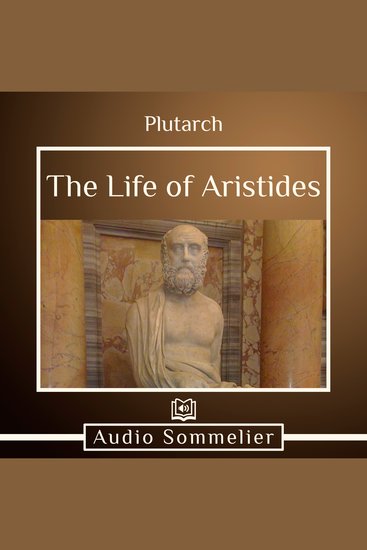
  • The Life of Aristides - cover

    The Life of Aristides

    Plutarch, Bernadotte Perrin

    • 0
    • 0
    • 0
    Not many of the people featured in Plutarch’s Parallel Lives series are honored with nicknames, but to his fellow Athenians, Aristides was known as “The Just”. A Grecian statesman, The Life of Aristides details the political rise of the man from the well-to-do family. From his career as Stratego, to his many statesman positions, his life ended in a mystery that is seemingly unbefitting the tale that Plutarch wove for him. Where or how he died, none know – but to Plutarch, his death mattered little next to his life.  
    Show book
  • In The Cold Heat of Battle - cover

    In The Cold Heat of Battle

    Mike Blake

    • 0
    • 0
    • 0
    In The Cold Heat of Battle :: This poem describes the universal feelings of a soldier in contemplation of his own mortality and impending death.The battle of forces, not just of the enemy in front of him but the battleraging from within. His self doubt and questioning why he is even on the battlefield in the first place, fighting for this war.The Universal Soldier is reflecting on his decision to be there at the pointy end of war, the vanguard of the front line. This is an anti-war Poem.Part of the War Theme Series:   https://www.amazon.com/dp/B09F73X52HFind the Author & Follow here: https://www.amazon.com.mx/stores/Mike-Blake/author/B00SG40RM8Instagram:   https://www.instagram.com/wild_poetrys
    Show book
  • On the Shortness of Life - cover

    On the Shortness of Life

    Séneca

    • 0
    • 0
    • 0
    On the Shortness of Life is a moral essay written by Seneca the Younger, a Roman Stoic philosopher, sometime around the year 49 AD, to his father-in-law Paulinus. The philosopher brings up many Stoic principles on the nature of time, namely that people waste much of it in meaningless pursuits. According to the essay, nature gives people enough time to do what is really important and the individual must allot it properly. In general, time is best used by living in the present moment in pursuit of the intentional, purposeful life. 
    Download this audio book and understand the true Stoic principles of lie!
    Show book