Join us on a literary world trip!
Add this book to bookshelf
Grey
Write a new comment Default profile 50px
Grey
Subscribe to read the full book or read the first pages for free!
All characters reduced
Symposium - cover

Symposium

Plato PlatoPlato

Publisher: Project Gutenberg

  • 1
  • 1
  • 0

Summary

The Symposium (Ancient Greek: Συμπόσιον) is a philosophical text by Plato dated c. 385–380 BCE. It concerns itself at one level with the genesis, purpose and nature of love.
Available since: 01/01/1999.

Other books that might interest you

  • Meditations by Marcus Aurelius - A soothing reading for relaxation and sleep - cover

    Meditations by Marcus Aurelius -...

    MarcusAurelius Aurelius

    • 0
    • 0
    • 0
    Dive into the ancient stoic wisdom of "Meditations" by Marcus Aurelius, narrated to promote relaxation and a restful night's sleep, presented by Slumber Studios with the calming voice of Andrew Bond. 
    "Meditations" was originally written during Aurelius' time as Roman Emperor from 161 to 180 AD. Aurelius wrote private notes to himself detailing his philosophies and personal reflections, which were later collected and published as this book. "Meditations" is one of the most popular personal development and stoic philosophy writings of all time. 
    It's the perfect book to help you relax and fall asleep. Whether you suffer from insomnia, general restlessness, or simply enjoy a calming narration to accompany you at night, our audiobooks are crafted to guide you into a deep, peaceful slumber. 
    So settle in, relax, and let Andrew Bond's tranquil narration introduce you to the profound reflections of Emperor Marcus Aurelius. Through his philosophical insights, you'll explore themes of virtue, resilience, and personal ethics that resonate as much today as they did in ancient Rome. 
    Our audiobooks are designed with your peace in mind, featuring a slower narration pace and soothing background music to ensure a smooth transition into sleep. 
    If you’re looking for a serene way to end your day and enrich your mind, you've found the perfect audiobook. Just press play, get comfortable, and let Andrew's gentle voice transport you through the timeless meditations of one of history’s greatest philosophers. Awake in the morning feeling refreshed and inspired.
    Show book
  • Drass ka Tiger - Capt Anuj Nayyar 23 Kargil Vir - cover

    Drass ka Tiger - Capt Anuj...

    Meena Nayyar, M Nayyar, S Mital,...

    • 0
    • 0
    • 0
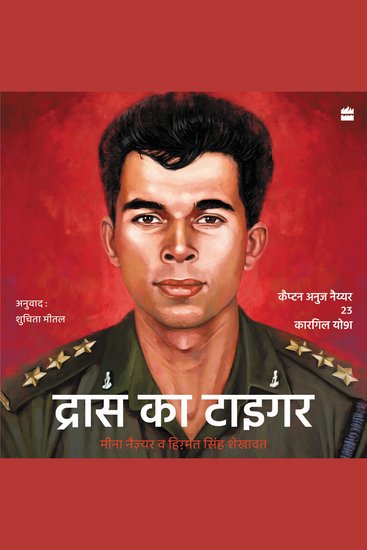
    In May 1999, the Kargil insurgency was still being viewed as a routine affair. No one quite understood the magnitude of the situation. However, it soon emerged that infiltrators had captured high-altitude posts vacated by Indian soldiers during the winter months and thus had a tactical upper hand, while the Indian Army struggled with intelligence. 
    For the next month or so, Capt. Anuj Nayyar and the men of 17 Jat went on various reconnaissance missions in the boulder-strewn Drass sector where enemy troops had set up base. They fought relentlessly in a gruesome battle for two nights in July, before securing the peak that was critical to the success of Operation Vijay and India's victory in Kargil. Amid heavy artillery and mortar fire, they destroyed four enemy bunkers and neutralized tens of infiltrators in close combat. During the attack on the fourth bunker, the twenty-three-year-old captain was hit by an enemy rocket-propelled grenade, dying instantly but saving the lives of fifteen men in the process, who eventually finished the mission and hoisted the Indian flag on the peak. 
    For motivating his command by personal example and going beyond the call of duty, Capt. Anuj Nayyar was awarded India's second-highest gallantry award, the Maha Vir Chakra, in 2000.  
    This is the Hindi translation of his story, which was a bestseller in English.
    Show book
  • Winning on My Terms: How I Changed the Rules - Unlock success with "Winning on My Terms"—audio lessons that redefine your test preparation journey! - cover

    Winning on My Terms: How I...

    Blake Thorne

    • 0
    • 0
    • 0
    Winning on My Terms: How I Changed the Rules 
    Are you aiming to advance in your career and strengthen your knowledge by embracing "Challenge the Norms and Own Your Path"? 
    Looking for a thorough guide that offers all the necessary elements to own your journey? 
    Your search ends here! 
    This guide acts as your ultimate companion for enhancing understanding, applying skills, and engaging in hands-on exercises, preparing you for success. 
    Key features of this enriched guide: 
    - Profound insights about embracing and redefining success 
    - Detailed explanation of how to challenge conventional paths 
    - Effective strategies for preparation and overcoming obstacles  
    Our guide stands out with comprehensive coverage, essential for victory. Concepts aren't just glossed over; they are explored in depth. 
    Please note that this guide is not affiliated with any official entity and is purely an independent resource for your benefit. 
    Designed with a clear structure and straightforward language, our guide ensures smooth transitions between topics. Say goodbye to dense jargon and welcome clear and precise content. 
    So, why wait? Click the BUY NOW button, secure your guide, and start your journey to success on your terms!
    Show book
  • Capitalism and Crises - How to Fix Them - cover

    Capitalism and Crises - How to...

    Colin Mayer

    • 0
    • 0
    • 0
    The world is encountering multiple crises—climate, droughts, floods, energy, food, and pandemics, to name a few. We have a problem, this is the solution. 


    Capitalism and Crises is about how capitalism can fix them—how it can solve not cause them. The reason why it has caused them is that we have misconceived the nature of our capitalist system. We have failed to understand the key institution at the heart of it—business—and as a result we have allowed it to cause as well as solve problems. This book describes why this has happened and what needs to change to address it. 


    Drawing on history, philosophy, psychology, and biology as well economics, law, and finance, Mayer describes what has gone wrong, what needs to change, and how to fix it. He sets out the big challenges that capitalism must address and how it should set about doing that, and discusses how financial institutions should be at the heart of this, and how the public sector can work with the private on a common purpose of solving problems and creating shared prosperity. Capitalism and Crises provides an inspiring and motivational roadmap of how we as practitioners, policymakers, consumers, employees, communities, students, and citizens of the world can together tackle the challenges of the twenty-first century—to flourish and survive.
    Show book

  • Splitting the Confederacy: The History of the Union Campaigns to Take the Mississippi River - cover

    Splitting the Confederacy: The...

    Editors Charles River

    • 0
    • 0
    • 0
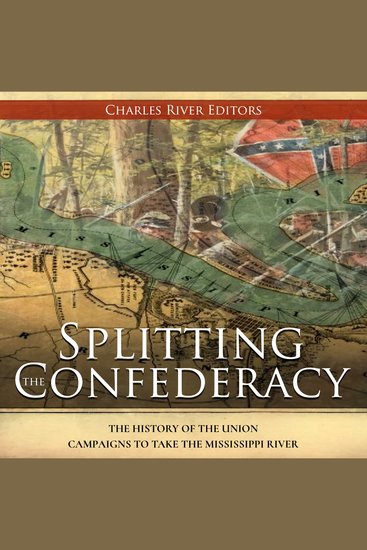
    Given its importance, it’s somewhat surprising in retrospect that the Union managed to capture New Orleans in an easier manner than places like Vicksburg and Atlanta. Admiral David Farragut’s naval forces battered their shaky Confederate counterparts and were able to get over a dozen ships upriver past a couple of crucial Confederate forts along the Mississippi. By May 1862, Union forces occupied the city and General Benjamin Butler became its military governor, leaving the last true bastion of Confederate defenses on the Mississippi at Vicksburg. 
    At the start of 1863, Robert E. Lee’s Army of Northern Virginia had been frustrating the Union in the Eastern theater for several months, but the situation in the West was completely different. The Confederates had lost control of several important states throughout 1862, and after New Orleans was taken by the Union, the North controlled almost all of the Mississippi River, which Confederate general James Longstreet called “the lungs of the Confederacy”. By taking control of that vital river, the North would virtually cut the Confederacy in two, putting the South in a dire situation. 
    The only domino left to fall was the stronghold of Vicksburg, and both sides knew it. The Union Army of the Tennessee, led by Ulysses S. Grant, would spend months trying to encircle the army and eventually force John Pemberton’s Confederate army to surrender. Grant eventually succeeded on July 4, 1863, but since it came a day after the climactic finish of the Battle of Gettysburg, Vicksburg was (and still is) frequently overlooked as one of the turning points of the Civil War. In fact, had the Confederate’s military leadership listened to Longstreet, who advocated detaching soldiers from Lee’s army to head west and help the Confederates deal with Grant or Rosecrans in that theater, the Battle of Gettysburg might never have happened.
    Show book
  • The Drive for Dollars - How Fiscal Politics Shaped Urban Freeways and Transformed American Cities - cover

    The Drive for Dollars - How...

    Eric A. Morris, Brian D. Taylor,...

    • 0
    • 0
    • 0
    The story of the interplay between finance, freeways, and urban form in the twentieth century and their enduring impact on American cities and neighborhoods in the twenty-first. 


    American cities are distinct from almost all others in the degree to which freeways and freeway travel dominate urban landscapes. In The Drive for Dollars, Brian D. Taylor, Eric A. Morris, and Jeffrey R. Brown tell the largely misunderstood story of how freeways became the centerpiece of US urban transportation systems, and the crucial, though usually overlooked, role of fiscal politics in bringing freeways about. The authors chronicle how the ways that we both raise and spend transportation revenue have shaped our transportation system and the lives of those who use it, from the era before the automobile to the present day. They focus on how the development of one revolutionary type of road—the freeway—was inextricably intertwined with money. With the nation's transportation finance system at a crossroads today, this book sheds light on how we can best fund and plan transportation in the future. The authors draw on these lessons to offer ways forward to pay for transportation more equitably, provide travelers with better mobility, and increase environmental sustainability and urban livability.
    Show book