Join us on a literary world trip!
Add this book to bookshelf
Grey
Write a new comment Default profile 50px
Grey
Subscribe to read the full book or read the first pages for free!
All characters reduced
Learn Lithuanian - Quick Easy Efficient - 2000 Key Vocabularies - cover

Learn Lithuanian - Quick Easy Efficient - 2000 Key Vocabularies

Pinhok Languages

Publisher: Pinhok Languages

  • 0
  • 0
  • 0

Summary

A curated Lithuanian word frequency listAre you looking for unconventional ways to speed up the process of learning Lithuanian? Then this book is exactly what you are looking for. Following the Pareto principle (80/20 rule), this book is built to streamline the learning process by concentrating on the core words and sentence structures that make up everyday conversations. The result is a unique vocabulary book with 2000 of the most important Lithuanian words and phrases ordered by their frequency of use.
 
Who this Lithuanian learning book is for:This book is for beginners and intermediate learners of Lithuanian who are self-motivated and willing to spend 15 to 20 minutes a day on learning vocabularies. The simple structure of this vocabulary book is the result of taking all unnecessary things out allowing the learning effort to solely be spent on the parts that help you make the biggest progress in the shortest amount of time. If you are willing to put in 20 minutes of learning every day, this book is very likely the single best investment you can make if you are at a beginner or intermediate level. You will be amazed at the speed of progress within a matter of just weeks of daily practice.
 
Who this Lithuanian frequency list is not for:This book is not for you if you are an advanced learner of Lithuanian. In this case, please go to our website or search for our Lithuanian vocabulary book which comes with more vocabularies and is grouped by topic which is ideal for advanced learners who want to improve their language capabilities in certain fields.Furthermore, if you are looking for an all in one Lithuanian learning book that guides you through the various steps of learning Lithuanian, this book is most likely also not what you are looking for. This book contains vocabularies only and we expect buyers to learn things like grammar and pronunciation either from other sources or through language courses. The strength of this book is its focus on quick acquisition of core vocabularies which comes at the expense of information many people might expect in a conventional language learning book. Please be aware of this when making the purchase.
 
How to use this Lithuanian workbook:This book is ideally used on a daily basis, reviewing a set number of pages in each session. The book is split into sections of 50 vocabularies which allows you to step by step progress through the book. Let’s for example say you are currently reviewing vocabularies 101 to 200. Once you know vocabularies 101 to 150 very well, you can start learning vocabularies 201 to 250 and on the next day skip 101-150 and continue reviewing vocabularies 151 to 250. This way, step by step, you will work your way through the book and your language skills will jump with each page you master.
 
Some final thoughts:Like many language hacking methods, this book is quite unconventional in its approach, but for a driven person that uses it correctly it can significantly speed up the learning process. Vocabulary books have been around for centuries and as with so many things that have been around for some time, they are not very fashionable and a bit boring, but they usually work quite well – and that is what counts in the end.
Available since: 11/17/2022.
Print length: 84 pages.

Other books that might interest you

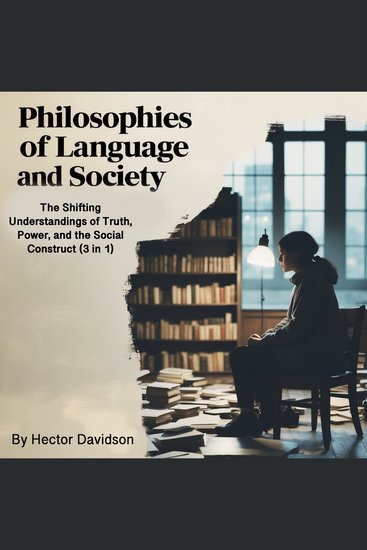
  • Philosophy of Language - Words Meaning and Reality - cover

    Philosophy of Language - Words...

    Hector Davidson

    • 0
    • 0
    • 0
    Language plays a fundamental role in human life, functioning not only as a means of communication but as a structure that shapes the way we think, perceive, and understand the world. The philosophy of language seeks to unravel the complex relationships between words, meanings, and reality, exploring how language functions, how it conveys meaning, and how it relates to the world and our experiences. This chapter serves as an introduction to these foundational issues and provides an overview of the central questions and debates within the philosophy of language. 
    At its core, language is a system of symbols—words, phrases, and sentences—that represent concepts, objects, and actions. Understanding language, however, requires more than just examining its structure. It involves questioning how words acquire meaning, how those meanings change in different contexts, and how language can both represent and distort reality. This inquiry into meaning is not limited to how words correspond to things in the world, but also explores how they function in communication, how they shape thought, and how they reflect the underlying structures of human experience. 
    The structure of language itself is another crucial aspect. Language is governed by rules—such as syntax, grammar, and semantics—that allow words to be combined in meaningful ways. Syntax provides the framework for sentence structure, while grammar dictates how words should be used within that structure. Semantics, on the other hand, deals with the meaning of words and how they combine to form meaning within a sentence. Each of these aspects must be understood in relation to each other to grasp how language functions at a deeper level.
    Show book
  • Russian for Young Learners - cover

    Russian for Young Learners

    Tatiana Orlova

    • 0
    • 0
    • 0
    This audio course is designed to help children learn essential phrases for communicating with their grandparents and connecting with their Russian heritage. Through practical and engaging lessons, kids will gain the ability to express themselves in Russian, building stronger bonds with their elders. The course focuses on simple, everyday conversations, enabling children to confidently greet their grandparents, share stories, and express affection in a meaningful way. By learning these phrases, children will deepen their connection to their family and Russian roots.
    Show book
  • The Great Dictionary English - Swedish - 60000 Entries - cover

    The Great Dictionary English -...

    Benjamin Maximilian Eisenhauer

    • 0
    • 0
    • 0
    This dictionary contains around 60,000 English terms with their Swedish translations, making it one of the most comprehensive books of its kind. It offers a wide vocabulary from all areas as well as numerous idioms. The terms are translated from English to Swedish. If you need translations from Swedish to English, then the companion volume "The Great Dictionary Swedish - English" is recommended.
    Show book
  • Classic American Detective - cover

    Classic American Detective

    Jacques Futrelle, Gelett...

    • 0
    • 0
    • 0
    "It is quite possible that the time will come when literary historians, discussing works created in English in the twentieth century, will only briefly dwell on the works of serious writers, and all attention will be focused on the extensive and diverse staging of detective stories.. And then they will have to answer first, which explains the unheard-of popularity of this genre." This, perhaps contradictory, but remarkable statement belongs to the critic of detective fiction, the famous English writer William Somerset Maugham.What could be more exciting and interesting than a well-written detective story?The audiobook is read by American actor Brent Bradley in English. Content:1. Jacques Futrelle. The Phantom Motor2. Gelett Burgess. The Denton Boudoir Mystery3. Melville Davisson Post. Naboth's Vineyard4. Jack London. The Leopard Man's Story5. Suzan Glaspell. A Jury of Her Peers
    Show book
  • INSTRUCTED - very simple spoken English - cover

    INSTRUCTED - very simple spoken...

    BARAKATH

    • 0
    • 0
    • 0
    This file contains a simple collection of imperative practice sentences, each beginning with “I instructed him to…” followed by various everyday actions, such as driving, cooking, drinking, printing, ironing, praying, and jogging. The sentences appear to be designed for English language learners to practice verb usage and sentence structure, focusing on common verbs in the infinitive form.
    Show book
  • Speaking Up without Freaking Out 3rd ed - 50 Techniques for Confident and Compelling Presenting - cover

    Speaking Up without Freaking Out...

    Matt Abrahams

    • 0
    • 0
    • 0
    The Speaking Up without Freaking Out audio book by Matt Abrahams (host of the award-winning Think Fast Talk Smart podcast) contains over 50 anxiety management techniques that are based on scientifically supported theory and evidence that will help you become a more confident and compelling communicator regardless of where you present -- on stage, in a meeting, or virtually. 
    Confident and compelling presenting involves a complicated mix of physiological and psychological factors. In the 3rd edition, this audio book provides specific guidance and opportunities to practice developing the skills you will need to feel more comfortable speaking in front of others in an engaging way. 
    This book is divided into seven chapters: 
    Chapter 1 describes speaking anxiety, how it shows itself, its negative effects, and how you can appear less nervous. 
    Chapter 2 describes the main theories about why people feel anxious when speaking and, importantly, offers you several specific techniques to reduce speaking anxiety and bolster your confidence. 
    Chapter 3 details how you can use your nonverbal presence and voice to not only appear more confident, but also feel more confident. 
    Chapter 4 how focusing on your audience’s needs and connecting your content to them can reduce your anxiety and make your presentations more compelling. 
    Chapter 5 provides techniques and guidance on how to structure your presentations to better help you and your audience remember what you present. 
    Chapter 6 teaches how to resist and stop some self-defeating beliefs and behaviors that perpetuate and exacerbate anxiety. 
    Chapter 7 addresses how to put all this information to work for you by creating your own Anxiety-Management Plan.
    Show book