¡Acompáñanos a viajar por el mundo de los libros!
Añadir este libro a la estantería
Grey
Escribe un nuevo comentario Default profile 50px
Grey
Suscríbete para leer el libro completo o lee las primeras páginas gratis.
All characters reduced
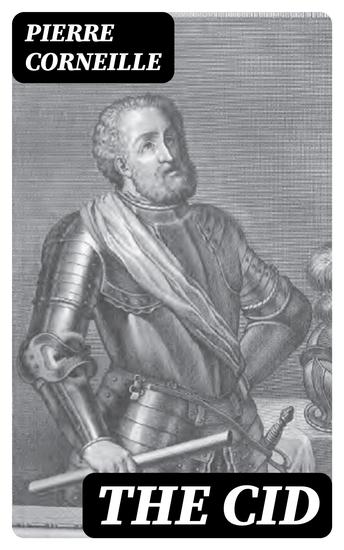
The Cid - cover

The Cid

Pierre Corneille

Traductor Roscoe Mongan

Editorial: DigiCat

  • 0
  • 0
  • 0

Sinopsis

In "The Cid," Pierre Corneille masterfully crafts a tragic tale that explores themes of honor, love, and vengeance against the backdrop of 11th-century Spain. This classic play, written in the style of French neoclassicism, intricately balances the dramatic tension of personal conflicts with rigid societal expectations. Corneille's innovative use of elevated language, coupled with profound character development, enables readers to engage deeply with the moral dilemmas faced by its central characters — particularly the young nobleman Rodrigo and his beloved Chimène — as they navigate their intertwined fates amidst familial loyalty and societal honor. Pierre Corneille, a pioneering figure of French literature, emerged during a period characterized by shifting cultural values and the rise of classical tragedy. His own conflation of personal experience and philosophical inquiry imbued his works with a sense of authentic emotional gravitas. "The Cid," often lauded for its exploration of the heroic ideal, illustrates Corneille's deep engagement with contemporary issues of honor and identity, reflecting not only his contemporary society but also his own introspections on the human experience. Corneille's "The Cid" remains an essential read for both scholars and enthusiasts of classic literature. Its timeless exploration of love and duty continues to resonate, prompting readers to reflect on their values in an ever-evolving moral landscape. This play not only enriches one's understanding of French literature but also serves as a poignant examination of the complexities of the human condition.
Disponible desde: 15/09/2022.
Longitud de impresión: 50 páginas.

Otros libros que te pueden interesar

  • Metamorphosis - cover

    Metamorphosis

    Vincetta

    • 0
    • 0
    • 0
    Metamorphosis explores generational trauma, heartbreak, shadow work, and ultimately coming to truth, self-love, and wholeness. 
    Metamorphosis is divided into three chapters, each diving deeper into a different phase of the metamorphosis. As you listen, you will go through the journey of healing with me—bearing witness to my state of mind, thoughts, and feelings. You will be submerged into my world as I transform from a caterpillar to butterfly, experiencing pain, healing, death, and rebirth. 
    My hope is that Metamorphosis can serve as a healing tool for you, as a catalyst guiding you to explore your own depths honestly and bravely so that you too can emerge anew.
    Ver libro
  • Actor's Guide To Boston-Accented English An - Master the Accent of the American Northeast - cover

    Actor's Guide To Boston-Accented...

    Oscar Stanley

    • 0
    • 0
    • 0
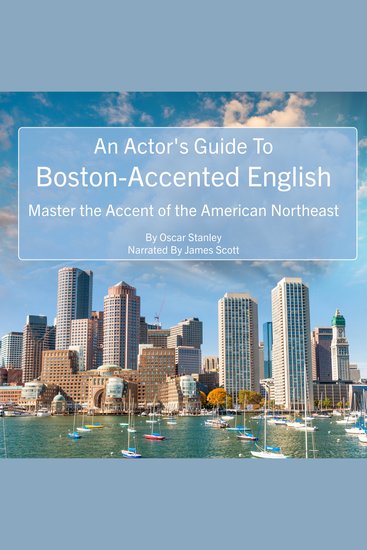
    Master the iconic Boston accent with this immersive audiobook guide! Dive into the rich linguistic heritage of New England’s most distinctive dialect, from the famous R-dropping ("pahk the cah") to the Broad-A phenomenon ("dahnce," "bahth"). Perfect for actors, voice artists, or language enthusiasts, this resource breaks down the accent’s nuances, including the Irish influence, vowel centralization, and neighborhood variations like the North End’s melodic lilt or Southie’s gritty edge.


    Learn through targeted drills—practice intrusive Rs ("vanilla-r-ice"), consonant cluster reductions ("coass" for coasts), and local slang like "wicked," "bubblah," and "frappe." Study real-world examples from classic films (Good Will Hunting, The Departed) to refine your cadence. Whether you’re prepping for a role, mastering dialects, or just love Boston’s cultural vibe, this guide delivers authentic pronunciation, historical context, and practical exercises to sound like a true local.


    Ideal for actors, linguists, and travelers, it’s your key to unlocking one of America’s most recognizable accents. Listen, repeat, and perfect the rhythm of Boston speech—from Harvard Yard to Dorchester—with expert guidance. Start speaking like a Beantown native today!
    Ver libro
  • The Ruins of Nostalgia - cover

    The Ruins of Nostalgia

    Donna Stonecipher

    • 0
    • 0
    • 0
    What is it to feel nostalgia, to be skeptical of it yet cleave intently to the complex truths of feeling and thought? In a series of 64 gorgeous, ramifying, unsettling prose poems addressing late-twentieth- and twenty-first century experience and its discontents, The Ruins of Nostalgia offers a strikingly original exploration of the misunderstood phenomenon of nostalgia as both feeling-state and historical phenomenon. Each poem, also titled The Ruins of Nostalgia, is a kind of lyrical mini-essay, playful, passionate, analytic. Some poems take a location, memory, conceit, or object as their theme. Throughout the series, the poems recognize and celebrate the nostalgias they ironize, which are in turn celebrated and then ironized again. Written often in the fictional persona of the first-person plural, The Ruins of Nostalgia explores the rich territory where individual response meets a collective phenomenon.[sample poem]The Ruins of Nostalgia 13Where once there had been a low-end stationery store minded by an elderly beauty queen, there was now a store for high-end espresso machines minded by nobody. Where once there had been an illegal beer garden in a weedy lot, there was now a complex of luxury lofts with Parisian-style ivory façades. Where once there had been a bookstore and a bike shop and a bakery, there was now a wax museum for tourists. Where once there had been an empty lot there was now a building. Where once there had been an empty lot there was now a building. Where once there had been an empty lot there was now a building. Where once there had been an empty lot there was now a building. Where once there had been farms there were now subdivisions. Where once there had been subdivisions there were now sub-subdivisions. We lived in a sub-subdivision of a subdivision. We ourselves had become subdivided—where once we had merely been of two minds. * Where once there had been a river there was now a road. A vocal local group had started a movement to break up the road and "daylight" the river, which still flowed, in the dark, underneath the road. * Could we daylight the farms, the empty lots, the stationery store, the elderly beauty queen, the city we moved to? Was it still flowing somewhere, under the luxury lofts, deliquescing in the dark, inhabited by our luxury selves, not yet subdivided, because not yet whole? * Could we daylight the ruins of nostalgia?
    Ver libro
  • Poet in the New World - Poems 1946–1953 - cover

    Poet in the New World - Poems...

    Czeslaw Milosz

    • 0
    • 0
    • 0
    A new collection of work from Nobel laureate Czeslaw Milosz that includes previously untranslated poems written during his time in Washington, D.C., and his years in Europe before and after 
    One of the most revered poets of the twentieth century, Czeslaw Milosz famously bore witness to its violence in his native Poland and in the war’s aftermath from exile in Europe and the United States. Immediately after the war, he lived in Washington, D.C., working as a diplomatic official, having left behind an old world stained by bloodshed and still in the throes of ideological conflict as he sought to find his bearings in a new world. 
    Poet in the New World gathers the poems written during these years—for the first time in English translation—and is contextualized by the poetry that came directly before and after, from poems written in Warsaw in 1945, shortly before he departed for the United States, to others written in Europe from 1951 to 1953, after his significant time away. Capturing Milosz at his existential and stylistic best, Poet in the New World is attuned to the necessity of imagination and the duty of language and is filled with wonder and skepticism. Milosz grapples with the extraordinary violence he had witnessed in Warsaw and the strange postwar United States he has inhabited, all while pondering the enduring fate of his beloved Poland. In the poem “Warsaw,” the poet asks, “How can I live in this country/Where the foot knocks against/the unburied bones of kin?” 
    Equal parts affecting and illuminating, Poet in the New World is an essential addition to the Milosz canon, in a beautifully rendered translation by Robert Hass and David Frick, that reverberates with the questions of histories past, present, and future. 
    Supplemental enhancement PDF accompanies the audiobook. 
     
    Ver libro
  • January - cover

    January

    Helen Hunt Jackson

    • 0
    • 0
    • 0
    LibriVox volunteers bring you 8 recordings of January by Helen Hunt Jackson. This was the Weekly Poetry project for January 13, 2013.Helen Maria Hunt Jackson, born Helen Fiske was an Amewrican writer and activist for the improvement of treatment of the Native Americans by the U.S. government.  Her books A Century of Dishonor and Ramona both attracted considerable attention to her cause. (Summary by David Lawrence)
    Ver libro
  • In Flanders Fields (version 2) - cover

    In Flanders Fields (version 2)

    John McCrae

    • 0
    • 0
    • 0
    Librivox volunteers bring you fifteen readings of In Flanders Fields, one of the more famous poems written during the First World War. John McCrae was a poet and physician from Guelph, Ontario. His close friend, Alexis Helmer, was killed during the battle on May 2. McCrae performed the burial service himself, at which time he noted how poppies quickly grew around the graves of those who died at Ypres. The next day, he composed the poem while sitting in the back of an ambulance.  Summary by Rachel, adapted from Wikipedia
    Ver libro