Join us on a literary world trip!
Add this book to bookshelf
Grey
Write a new comment Default profile 50px
Grey
Subscribe to read the full book or read the first pages for free!
All characters reduced
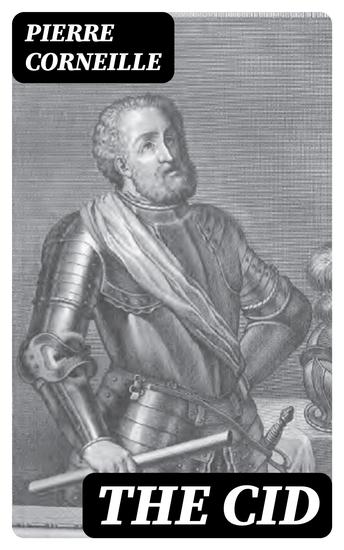
The Cid - cover

The Cid

Pierre Corneille

Translator Roscoe Mongan

Publisher: DigiCat

  • 0
  • 0
  • 0

Summary

In "The Cid," Pierre Corneille masterfully crafts a tragic tale that explores themes of honor, love, and vengeance against the backdrop of 11th-century Spain. This classic play, written in the style of French neoclassicism, intricately balances the dramatic tension of personal conflicts with rigid societal expectations. Corneille's innovative use of elevated language, coupled with profound character development, enables readers to engage deeply with the moral dilemmas faced by its central characters — particularly the young nobleman Rodrigo and his beloved Chimène — as they navigate their intertwined fates amidst familial loyalty and societal honor. Pierre Corneille, a pioneering figure of French literature, emerged during a period characterized by shifting cultural values and the rise of classical tragedy. His own conflation of personal experience and philosophical inquiry imbued his works with a sense of authentic emotional gravitas. "The Cid," often lauded for its exploration of the heroic ideal, illustrates Corneille's deep engagement with contemporary issues of honor and identity, reflecting not only his contemporary society but also his own introspections on the human experience. Corneille's "The Cid" remains an essential read for both scholars and enthusiasts of classic literature. Its timeless exploration of love and duty continues to resonate, prompting readers to reflect on their values in an ever-evolving moral landscape. This play not only enriches one's understanding of French literature but also serves as a poignant examination of the complexities of the human condition.
Available since: 09/15/2022.
Print length: 50 pages.

Other books that might interest you

  • Lacunae - New Poems - cover

    Lacunae - New Poems

    Scott Cairns

    • 0
    • 0
    • 0
    This is a book to savor slowly and return to often." —Malcolm Guite, author of Sounding the Seasons and other collections
    New poetry from Scott Cairns on containing the uncontainable
    
    Often, when speaking of what he has called the poetic operation of language, Scott Cairns has characterized that event as our "glimpsing an indeterminate, inexhaustible enormity within a discrete space." This is the poet's continuing fascination with lacunae, those spaces, those openings that offer more within than appearances can register from outside the ostensible covert of their terms. Cairns is here focused upon how an image, a word, or—in the case of the Theotokos—a womb can contain the uncontainable. As Orthodox hymnography avers, she is more spacious than the heavens. So, too, the poet suggests, in its own, modest way, the poem might give birth to more, and more, and yet more than even the poet supposes.
    Show book
  • Reflections In Autumn - cover

    Reflections In Autumn

    George Chandy

    • 0
    • 0
    • 0
    “Reflections in Autumn – Collection of Poems: Windows into Small Worlds” is about places and people, wonders of nature, complexity of emotions, and scientific discoveries. Like parables, these poems inspire contemplation about life. They are grouped into four chapters: Travel, Memories with Family and Friends, On Walks, and Musings on Science. The author, George Chandy, is a retired physician-scientist whose research focused on potassium ion channels and their role in various diseases. He was repeatedly ranked among the most highly cited scientists in the world. “Reflections in Autumn” began as a memory exercise. Encouraged by family and friends this collection is his first endeavor to write in poetic form,  “Evocative and reflective: marvelously capturing places, people, moods and emotions” (Meera Parkhe, Australia). “Beautiful rhymes and images coming together to bring events, people and memories to life.” (Ashok Roy, UK). “Personal, yet universal. Impressionist art, capturing moment and eternity. Memory-deep stories unraveled by the click of a camera. Poems about children and hope.” (Mani Chandy, USA). “His deep scientific background, historian, depth of inquiries into many areas of life has brought a rich profound touch to the poetry page. Readers will receive a gift of quiet moments, as well as engaging the mind into new horizons.  His work is a treasure to add to one’s life.” (Patricia Truman, USA).  “Poetic travelogue through life on people, places, emotions” (Isha Garg, India). “Picturesque poems captivating our senses, a riot of landscapes, exotic people, and historical events” (Suzy Thomas, India). In this 'Poetry For Pads' Initiative, the proceeds from the sale of this book will support the award-winning NGO, Days For Girls (https://www.daysforgirls.org/), that works to shatter stigma and limitations associated with menstruation to improve health, education, livelihoods and empowerment of women and girls in 145 countries on six continents.
    Show book
  • The Black Man's Lament or How to Make Sugar - Poem by a 18th Century female author who was also an abolitionist pioneer - cover

    The Black Man's Lament or How to...

    Amelia Opie

    • 0
    • 0
    • 0
    Amelia Alderson, an only child, was born on the 12th November 1769 in Norwich, England. 
    After the death of her mother on New Year’s Eve 1784 she became her father's housekeeper and hostess. 
    The young Amelia was energetic, attractive, and an admirer of fashion.  She spent much of her youth writing poetry and plays and putting on local amateur theatricals.  At 18 she had published anonymously ‘The Dangers of Coquetry’. 
    Amelia married in the spring of 1798 to the artist John Opie at the Church of St Marylebone, in Westminster, and together they lived in Berners Street where Amelia was already living. 
    Her next novel in 1801 ‘Father and Daughter’, was very popular even though it dealt with such themes as illegitimacy, a socially difficult subject for its times.  From this point on published works were far more regular.  The following year her volume ‘Poems’ appeared and was again very popular.  Novels continued to flow and she never once abandoned her social activism and her call for better treatment of women and the dispossessed in her works.  She was also keenly involved in a love of society and its attendant frills. 
    Encouraged by her husband to write more she published Adeline Mowbray in 1804, an exploration of women's education, marriage, and the abolition of slavery.  
    Her husband died in 1807 and she paused from writing for a few years before resuming with further novels and poems.  Of particular interest was her short poem ‘The Black Man's Lament’ in 1826.  Her life now was in the main spent travelling and working for charities and against slavery.  She even helped create a Ladies Anti-Slavery Society in Norwich which organised a parliamentary petition of 187,000 names of which hers was the first name. 
    After a visit to Cromer, a seaside resort on the North Norfolk coast, she caught a chill and retired to her bedroom.  
    Amelia Opie died on the 2nd December 1853 in Norwich.  She was 84.
    Show book
  • Age of Arousal - cover

    Age of Arousal

    Linda Griffiths

    • 0
    • 0
    • 0
    It's a time of passion and confusion. Virtue is barely holding down its petticoats. People are bursting their corsets with unbridled desire. It's 1885, and the typewriter and the suffrage movement are sending things topsy-turvy. In the midst of it all, five ambitious New Women and one Newish Man struggle to find their way. Miss Mary Barfoot runs a school for secretaries with her young lover, Miss Rhoda Nunn. But when the Misses Madden - spinsters Virginia and Alice and beautiful young Monica - arrive, along with the attractive Dr. Everard Barfoot, things can never be the same.


       Age of Arousal  is a lavish, sexy, frenetic ensemble piece about the forbidden and gloriously liberated self - genre-busting, rule-bending, and ambitiously original.


      The book includes notes and a rousing, thoughtful essay on Victorian women's suffrage by the playwright.


      'Endlessly witty, vigorous, funny...  brilliantly inventive.' -  Calgary Herald 
      
       
      'Griffiths is one of Canada's 'originals' known not only for the quality of her work, but for the sheer range of her career.' -  Maclean's
    Show book
  • No Thoroughfare - cover

    No Thoroughfare

    Wilkie Collins, Charles Dickens

    • 0
    • 0
    • 0
    Walter Wilding has lived his life secure in the knowledge that he was the son of his mother. But a chance encounter shocks him to his deathbed, leaving his friend and Executor George Vendale charged with the finding of the real Walter Wilding. Meanwhile, George pitches woo to Margerite Obenreizer, but has to deal with her dastardly guardian and uncle. The story twists and turns from the wine cellars of England, to Soho and then to the Alps of Switzerland, where George discovers that Mr Obenreizer is right about one thing to the last... "So little is the world, that one cannot keep away from persons." Originally written as a stage play by Wilkie Collins and Charles Dickens, it was later turned into a collaborative novel by the two.  
    Narrated by Michael Ward.
    Show book
  • Poems of a Bering Sea Captain Vol 1 - It's Not What You Think - cover

    Poems of a Bering Sea Captain...

    Lee Woodard II

    • 0
    • 0
    • 0
    Deep-cutting spiritual poems addressing the deepest human feelings.
    Show book