Join us on a literary world trip!
Add this book to bookshelf
Grey
Write a new comment Default profile 50px
Grey
Subscribe to read the full book or read the first pages for free!
All characters reduced
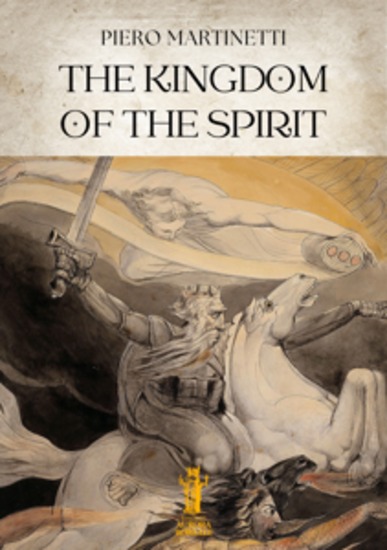
The Kingdom of the Spirit - cover

The Kingdom of the Spirit

Piero Martinetti

Publisher: Edizioni Aurora Boreale

  • 0
  • 0
  • 0

Summary

Piero Martinetti (1872-1943) was a historian of Philosophy and one of the greatest Italian philosophers of the 20th century. He was a unique figure of an independent intellectual, extraneous—by choice—to both the Catholic tradition and the heavy political conflicts that marred his time. A promoter of a "gnostic" vision of Christianity, free from confessional implications, while participating in the general European climate of idealistic revival, he did not share the polemic against positive science of the Neo-Hegelians (for him, philosophy and science were not distinguished by their object, but by their method) and moved increasingly toward a "critical" idealism akin to Neo-Kantianism, but with a clearer emphasis on the metaphysical motive of transcendence.As Cesare Goretti recalled, Piero Martinetti «He used to say of himself that he was a neo-Platonist who had migrated too soon into our century».The Kingdom of the Spirit, one of the most beautiful philosophical reflections of all time, considered by Boris Yousef to be worthy of a Plotinus or a Porphyry, included in the 1926 collection Piero Martinetti. Saggi e discorsi (Piero Martinetti. Essays and Speeches), constitutes the text of the inaugural speech for the 1908-09 academic year read by the Piedmontese philosopher in the Great Hall of the Scientific-Literary Academy on November 9, 1908.«The origin of every living being is due to the triumph of a form, of a unifying principle that forces a group of inferior energies to cooperate towards a goal of a higher order: and in this form, ancient wisdom already recognized something analogous to the spirit».
Available since: 08/23/2025.

Other books that might interest you

  • Maroons The: The History and Legacy of African Descendants Who Formed Free Settlements across the Americas - cover

    Maroons The: The History and...

    Editors Charles River

    • 0
    • 0
    • 0
    The Underground Railroad is one of the most taught topics to young schoolchildren, and every American is familiar with the idea of fugitive slaves escaping to Canada and the North with the help of determined abolitionists and even former escaped slaves like Harriet Tubman. The secrecy involved in the Underground Railroad made it one of the most mysterious aspects of the mid-19th century in America, to the extent that claims spread that 100,000 slaves had escaped via the Underground Railroad. Of course, from a practical standpoint, the Underground Railroad had to remain covert not only for the sake of thousands of slaves, but for a small army of men and women of every race, religion and economic class who put themselves in peril on an ongoing basis throughout the first half of the 19th century, and in the years leading up to the war.  
    Of course, a fairly common form of resistance was running away and seeking hiding places in environments where slave catchers experienced difficulty. Slaves who ran and hid out, or who made their own settlements, were called maroons, from the Spanish word cimarron, which means “wild” or “untamed.” The term that historians commonly use to describe this is marronage, adapted from the French word maron, meaning the same as maroon. Marronage took two forms, grand and petty. Grand marronage was permanent, with escapees joining together to establish lasting settlements in inaccessible areas in mountains and swamps, sometimes preferring death rather than being caught and enslaved again.
    Show book
  • Cult A Love Story - Ten Years Inside a Canadian Cult and the Subsequent Long Road of Recovery - cover

    Cult A Love Story - Ten Years...

    Alexandra Amor

    • 0
    • 0
    • 0
    For fans of Educated, Captive, and Leah Remini's Troublemaker comes the gripping true-life story of one young woman's accidental journey into a cult. And her escape a decade later. 
    It's rarely obvious when a group is a cult. Most cults don't advertise themselves as such: they are groups of people who look and act just like you and me. Not dangerous. Not deranged. At least, not at first. 
    The slide toward complete control of your personality, your thoughts, and your life is slow and virtually unnoticeable. Until it's too late. 
    In this award-winning memoir, Alexandra Amor shines a light on cults so that others might learn from her heartbreaking experience. Amor gracefully and sensitively explains how ordinary and intelligent people get seduced into joining cults, why they stay despite the emotional and psychological abuse, and what the long process of recovery looks like once someone leaves a cult. 
    Amor's transparency about her decade-long involvement with a Vancouver, Canada cult makes this powerful and gripping book an excellent resource for those wanting to know more about how the mind control of a high demand spiritual or religious group works. 
    "This excellent memoir reveals how a charismatic, manipulative spirit medium can use love for God and neighbor as a hook to drag a small group of devotees into her cynical web of impossible goals for self-perfection. After a heroic struggle for insight, Alexandra Amor was one of the cult members who broke the abusive spell." Joesph Szimhart, Cult Information Specialist
    Show book
  • When I Passed the Statue of Liberty I Became Black - cover

    When I Passed the Statue of...

    Harry Edward

    • 0
    • 0
    • 0
    The lost memoir of Britain's first Black Olympic medal winner—and the America he discovered 


    After winning Olympic medals for Britain in 1920, Harry Edward (1898–1973) decided to try his luck in America. The country he found was full of thrilling opportunity and pervasive racism. 


    Immensely capable and energetic, Harry rubbed shoulders with kings and presidents, was influential in the revival of Black theatre during the Harlem Renaissance, and became a passionate humanitarian and advocate for child welfare. He was present at some of the twentieth century's most significant moments, worked alongside W. E. B. Du Bois and Orson Welles, and witnessed two world wars and the civil rights movement. Yet he was frustrated at almost every turn. 


    Toward the end of his life he set down his story, crafting this memoir of athletics and activism, race and racism on both sides of the Atlantic. His manuscript went unpublished until now. This is the deeply engaging tale of Edward's life—and a moving testament to his drive to form a better world.
    Show book
  • How to Flourish - An Ancient Guide to Living Well - cover

    How to Flourish - An Ancient...

    Aristotle, Susan Sauvé Meyer

    • 0
    • 0
    • 0
    Aristotle's Nicomachean Ethics is one of the greatest guides to human flourishing ever written, but its length and style have left many readers languishing. How to Flourish is a colloquial new translation by Susan Sauvé Meyer that makes Aristotle's timeless insights about how to lead a good life more engaging and accessible than ever before. 


    For Aristotle, flourishing involves becoming a good person through practice, and having a life of the mind. To that end, he draws vivid portraits of virtuous and vicious characters and offers sound practical advice about everything from eating and drinking to managing money, controlling anger, getting along with others, and telling jokes. He also distinguishes different kinds of wisdom that are essential to flourishing and offers an unusual perspective on how to appreciate our place in the universe and our relation to the divine. 


    Omitting Aristotle's digressions and repetitions and overly technical passages, How to Flourish provides connecting commentary that allows listeners to follow the continuous line of his thought. The result is an inviting and lively version of an essential work about how to flourish and lead a good life.
    Show book
  • Hidden History of Texas 1836 – 1850 - A Failing Republic Becomes a State - cover

    Hidden History of Texas 1836 –...

    Hank Wilson

    • 0
    • 0
    • 0
    The Texans have defeated Santa Anna at San Jacinto and now start the process of establishing an identify for themselves. First as a Republic and then as a new state and part of the United States. 
     
    This was a chaotic time in Texas history. There was infighting among the leaders, violent and bloody clashes with the native peoples, distrust of the Mexican population, and a lust for power among the new Anglo immigrants. This book covers the policies of one of the great Texas political leaders Sam Houston and one of the most power-hungry leaders in Texas history Mirabeau B. Lamar. 
     
    Topics include a look at the Comanche, Apache, Kiowa, and Cherokee peoples, how they lived and how they were affected by this new country. I also take a preliminary look at a group who is, depending on your point of view, either famous heroes or infamous villains, Los Diablos Tejanos, AKA, the Texas Rangers. I talk about how Texas was formed into an actual independent nation, and I look at exactly how Texas finally ended up being annexed by the United States not as a territory but rather as a state. 
     
     
    Track List 
    Introduction 1:48 
    Chapter 1 – Independence 7:37 
    Chapter 2 – Sam Houston and the New Republic 12:11 
    Chapter 3 – The Republic and Relations with the Tribes 8:33 
    Chapter 4 – The Comanches - Finest Horsemen on the Plains 10:24 
    Chapter 5 -  The Apaches - Fierce Warriors of the Southwest 15:56 
    Chapter 6 – The Kiowa - Nomadic Warriors of the Plains 11:52 
    Chapter 7 – The Cherokee – The Principal People Part 1 10:28 
    Chapter 8 – The Cherokee – The Principal People Part 2 6:31 
    Chapter 9 – Los Diablos Tejanos – 6:54 
    Chapter 10 – Texas Finally Becomes a Nation 12:34 
    Chapter 11 – Texas Becomes a State 11:03 
    Conclusion 00:54
    Show book
  • Samurai and Ninja The: The History of Japan’s Legendary Warriors - cover

    Samurai and Ninja The: The...

    Editors Charles River

    • 0
    • 0
    • 0
    To most people in the West, particularly the youth, the mere mention of Japan immediately evokes various images. A delectable rainbow of sushi, hand-rolled temaki, and platters of crispy, golden-brown tempura. An idyllic, crystal-clear lake flanked by trees covered with delicate, cotton-candy-pink sakura blossoms. A montage of unique, hand-drawn cartoons that are a masterful mix of delightfully exaggerated proportions, features, and colors, and elements of arresting realism, collectively known as “anime.”  
    Ninjas are, without a doubt, one of the most timeless and far-reaching cultural staples ever to emerge from Japan. They have become a global phenomenon, and there are countless depictions of ninjas in comic books, films, TV shows, video games, toys, and other forms of popular culture around the world, not to mention their continued relevance as a “conventional” go-to Halloween costume. Kids across the world are intimately familiar with Teenage Mutant Ninja Turtles, Snake Eyes from the G.I. Joe franchise, Scorpion from Mortal Kombat, and Black Noir from The Boys. Ninjas have also been featured in a slew of other international movies and TV shows, among them the 1986 Filipino film The Legend of Ninja-Kol, the 2010 Norwegian film Norwegian Ninja, the 1982 Turkish film Holy Sword, and the 2002 New Zealand film Tongan Ninja. 
    Similarly, the samurai are among the most iconic warriors in history. The fighting elite of feudal Japan, they have played a dominant role in the country's life for over a thousand years. Even today, a century and a half after the rule of the samurai has formally ended, they remain a powerful symbol of martial might, and the embodiment of the stoic warrior.
    Show book