Join us on a literary world trip!
Add this book to bookshelf
Grey
Write a new comment Default profile 50px
Grey
Subscribe to read the full book or read the first pages for free!
All characters reduced
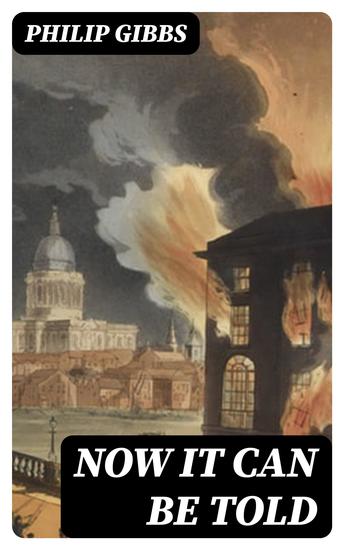
Now It Can Be Told - cover

Now It Can Be Told

Philip Gibbs

Publisher: DigiCat

  • 0
  • 0
  • 0

Summary

In "Now It Can Be Told," Philip Gibbs presents a compelling narrative that melds personal memoir with a vivid historical account of World War I. The book is characterized by its evocative prose and meticulous attention to detail, drawing readers into the trenches and fog of battle with an immediacy that renders the horrors of war both palpable and intimate. Gibbs utilizes a reflective literary style, merging the personal with the political, offering a unique first-hand perspective that critiques the ramifications of warfare on humanity and society at large, framed by the experiences of soldiers and civilians alike. Philip Gibbs, a British war correspondent and novelist, crafted this work while grappling with his own experiences during the conflict. His extensive background in journalism allowed him to bring authenticity and immediacy to the text, enriched by his empathetic understanding of the human condition. Gibbs's literary career was marked by a deep commitment to capturing the zeitgeist of his time, and this book reflects his desire to shed light on the complexities of wartime narratives and their lasting impacts. "Now It Can Be Told" is highly recommended for readers interested in historical narratives that go beyond mere accounts of events. Gibbs's exploration of the emotional and psychological landscapes of war offers a poignant reminder of the human cost of conflict. This book is essential for anyone seeking to understand the enduring legacy of World War I on modern consciousness.
Available since: 09/04/2022.
Print length: 456 pages.

Other books that might interest you

  • The Ripple Effect - China's Complex Presence in Southeast Asia - cover

    The Ripple Effect - China's...

    Enze Han

    • 0
    • 0
    • 0
    Many studies of China's relations with and influence on Southeast Asia tend to focus on how Beijing has used its power asymmetry to achieve regional influence. Yet, scholars and pundits often fail to appreciate the complexity of the contemporary Chinese state and society, and just how fragmented, decentralized, and internationalized China is today. 


    In The Ripple Effect, Enze Han argues that a focus on the Chinese state alone is not sufficient for a comprehensive understanding of China's influence in Southeast Asia. Instead, we must look beyond the Chinese state, to non-state actors from China, such as private businesses and Chinese migrants. These actors affect people's perception of China in a variety of ways, and they often have wide-ranging as well as long-lasting effects on bilateral relations. Looking beyond the Chinese state's intentional influence reveals many situations that result in unanticipated changes in Southeast Asia. Han proposes that to understand this increasingly globalized China, we need more conceptual flexibility regarding which Chinese actors are important to China's relations, and how they wield this influence, whether intentional or not.
    Show book
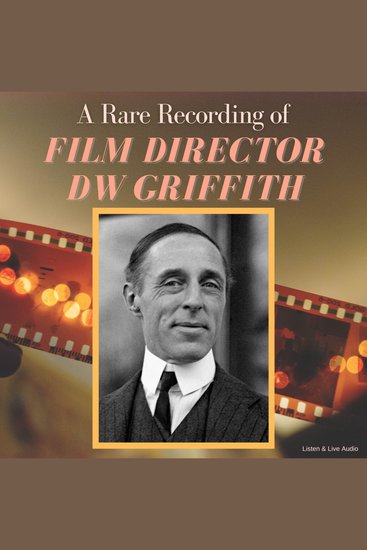
  • A Rare Recording of Film Director DW Griffith - cover

    A Rare Recording of Film...

    DW Griffith

    • 0
    • 0
    • 0
    David Wark Griffith (January 22, 1875 - July 23, 1948), best known for directing the 1915 film "The Birth of a Nation," is considered one of the most influential figures in the history of the motion picture, pioneering many aspects of film editing and expanding the art of the narrative film. In 1919, together with Charlie Chaplin, Mary Pickford, and Douglas Fairbanks, Griffith founded the movie studio United Artists, with the goal of enabling actors and directors to make films on their own terms as opposed to the terms of commercial studios. In this 1930 recording, actor Walter Huston and director DW Griffith discuss Griffith's film "The Birth of a Nation." 
    Show book
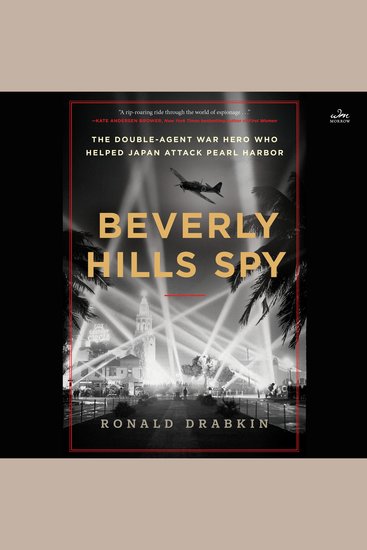
  • Beverly Hills Spy - The Double-Agent War Hero Who Helped Japan Attack Pearl Harbor - cover

    Beverly Hills Spy - The...

    Ronald Drabkin

    • 0
    • 0
    • 0
    In the spirit of Ben Macintyre’s greatest spy nonfiction, the truly unbelievable and untold story of Frederick Rutland—a debonair British WWI hero, flying ace, fixture of Los Angeles society, and friend of Golden Age Hollywood stars—who flipped to become a spy for Japan in the lead-up to the attack on Pearl Harbor. 
    Frederick Rutland was an accomplished aviator, British WWI war hero, and real-life James Bond. He was the first pilot to take off and land a plane on a ship, a decorated warrior for his feats of bravery and rescue, was trusted by the admirals of the Royal Navy, had a succession of aeronautical inventions, and designed the first modern aircraft carrier. He was perhaps the most famous early twentieth-century naval aviator. 
    Despite all of this, and due mostly to class politics, Rutland was not promoted in the new Royal Air Force in the wake of WWI. This ignominy led the disgruntled Rutland to become a spy for the Japanese navy. Plied with riches and given a salary ten times the highest-paid admiral, shuttled between Los Angeles and Tokyo where he lived in large mansions in both Beverly Hills and Yokohama, and insinuating himself into both LA high society and Japan’s high command, Rutland would go on to contribute to the Japanese navy with both strategic and technical intelligence. This included scouting trips to Pearl Harbor, investigations of military preparedness, and aircraft technology. All this while living a double life, frequenting private California clubs and hosting lavish affairs for Hollywood stars and military dignitaries in his mansion on the Los Angeles Bird Streets. 
    Supported by recently declassified FBI files and by incorporating unique and rare research through MI5 and Japanese Naval archives that few English speakers have access to, author Ronald Drabkin pieces together to completion, for the first time, this stranger-than-fiction story of one of the most fascinating and enigmatic characters of espionage history. 
    Supplemental enhancement PDF accompanies the audiobook.
    Show book
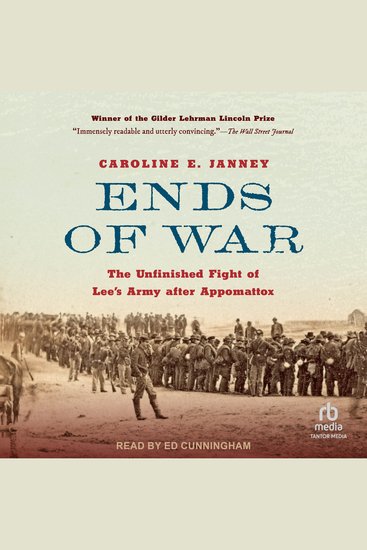
  • Ends of War - The Unfinished Fight of Lee's Army after Appomattox - cover

    Ends of War - The Unfinished...

    Caroline E. Janney

    • 0
    • 0
    • 0
    The Army of Northern Virginia's chaotic dispersal began even before Lee and Grant met at Appomattox Court House. As the Confederates had pushed west at a relentless pace for nearly a week, thousands of wounded and exhausted men fell out of the ranks. When word spread that Lee planned to surrender, most remaining troops stacked their arms and accepted paroles allowing them to return home, even as they lamented the loss of their country and cause. But others broke south and west, hoping to continue the fight. Fearing a guerrilla war, Grant extended the generous Appomattox terms to every rebel who would surrender himself. Provost marshals fanned out across Virginia and beyond, seeking nearly 18,000 of Lee's men who had yet to surrender. But the shock of Lincoln's assassination led Northern authorities to see threats of new rebellion in every rail depot and harbor where Confederates gathered for transport, even among those already paroled. While Federal troops struggled to keep order and sustain a fragile peace, their newly surrendered adversaries seethed with anger and confusion at the sight of Union troops occupying their towns and former slaves celebrating freedom. Caroline E. Janney reveals that Lee's surrender was less an ending than the start of an interregnum marked by military and political uncertainty, legal and logistical confusion, and continued outbursts of violence.
    Show book
  • Up From Slavery - cover

    Up From Slavery

    Booker T. Washington

    • 0
    • 0
    • 0
    "Up from Slavery is the 1901 autobiography of Booker T. WashingtonBorn into slavery, Booker Washington suddenly gained his freedom, after the American Civil War. This is a first hand account from a slave around the events of the emancipation proclamation.The book covers the inspiring story of a young man as he works to rise up from being enslaved as a child, overcoming massive obstacles to obtain an education, to eventually become an advisor to the president.A truly inspiring and informative story."
    Show book
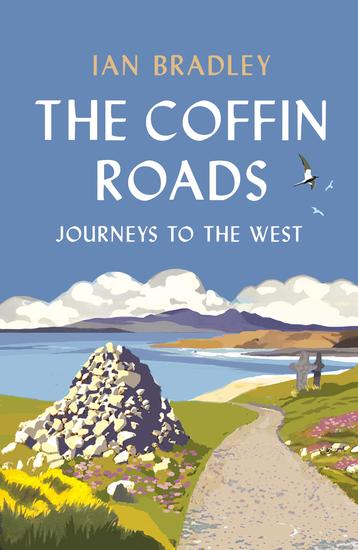
  • The Coffin Roads - Journeys to the West - cover

    The Coffin Roads - Journeys to...

    Ian Bradley

    • 0
    • 0
    • 0
    'Coffin roads' along which bodies were carried for burial are a marked feature of the landscape of the Scottish Highlands and islands – many are now popular walking and cycling routes. This book journeys along eight coffin roads to discover and explore the distinctive traditions, beliefs and practices around dying, death and mourning in the communities which created and used them.
    The result is a fascinating snapshot into place and culture. After more than a century when death was very much a taboo subject, this book argues that aspects of the distinctive West Highland and Hebridean way of death and approach to dying and mourning may have something helpful and important to offer to us today.
    
    
    Routes covered in this book are:
    The Kilmartin Valley – the archetypal coffin road in this ritual landscape of the dead.
    The Street of the Dead on Iona – perhaps the best known coffin road in Scotland.
    Kilearnadil Graveyard, Jura – a perfect example of a Hebridean graveyard.
    The coffin road through Morvern to Keil Church, Lochaline - among the best defined and most evocative coffin roads today.
    The Green Isle, Loch Shiel, Ardnamurchan - the oldest continuously used burial place anywhere in Europe.
    The coffin road on Eigg – with its distinctive 'piper's cairn' where the coffin of Donald MacQuarrie, the 'Great Piper of Eigg', was rested.
    The coffin road from Traigh Losgaintir to Loch Stocinis on Harris - popular with walkers and taken as the title for a best-selling thriller by Peter May.
    The coffin road on Barra – A detailed study of burial practices on Barra in the early 1950s provides a fascinating record of Hebridean attitudes to dying, death and mourning.
    Show book