Join us on a literary world trip!
Add this book to bookshelf
Grey
Write a new comment Default profile 50px
Grey
Subscribe to read the full book or read the first pages for free!
All characters reduced
New Geometric Systems - Jekabs Zvilna and Integrative Form-Languages - cover

New Geometric Systems - Jekabs Zvilna and Integrative Form-Languages

Philip Beesley, Bianca Weeko Martin

Publisher: Riverside Architectural Press

  • 0
  • 0
  • 0

Summary

New Geometric Systems: Jekabs Zvilna and Integrative Form-Languages surveys the graphic and three-dimensional work of Waterloo Architecture professor and mid-twentieth-century designer Jekabs Zvilna. Photography of original foam and wood models by Zvilna and new essays by Val Rynnimeri and Muhammad Tahir Pervaiz are followed by studies by undergraduate students working under the supervision of Philip Beesley at the University of Waterloo School of Architecture in 2019.
 
Jekabs Zvilna (1913-1997) was a designer, researcher, artist, and professor of architecture at the University of Waterloo. Zvilna studied architecture in Latvia at the University of Riga and immigrated to Canada in the mid-1950s.
 
Contributors: Muhammad Tahir Pervaiz, Val Rynnimeri, Saadman Ahmed, Yun Ru Amy Bao, Ien Boodan, Kelley Gu, Roni Haravon, Alice Jie Jie Huang, Winona Li, Bianca Weeko Martin, Vincent Min, Hagop Terzian, Winston Yew
Available since: 02/16/2022.
Print length: 160 pages.
Other books that might interest you

  • The Tang Dynasty - Cultural Flourishing and Expansion - cover

    The Tang Dynasty - Cultural...

    Jun Liu

    • 0
    • 0
    • 0
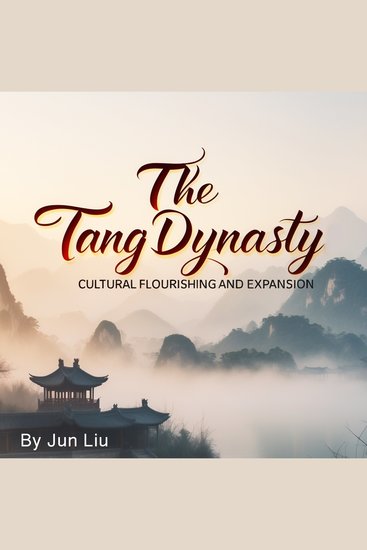
    The Tang Dynasty (618–907 CE) emerged after the collapse of the short-lived Sui Dynasty, which had failed due to internal strife, heavy taxation, and forced labor projects that drained the empire’s resources. The fall of the Sui created a power vacuum, allowing various factions to vie for control. Amid this turmoil, Li Yuan, a former Sui general, led a successful rebellion and established the Tang Dynasty in 618 CE, taking the throne as Emperor Gaozu. His leadership set the foundation for one of China’s most influential and prosperous dynasties. 
    Emperor Gaozu focused on stabilizing the empire by reforming the government, lowering excessive taxes, and restoring order to a nation weakened by years of misrule. However, his reign was relatively short-lived as his son, Li Shimin, proved to be a more capable leader. In 626 CE, Li Shimin forced his father to abdicate and took the throne as Emperor Taizong. His ascension marked the true consolidation of Tang power and the beginning of an era of expansion, reform, and cultural advancement. 
    Under Emperor Taizong’s rule, the Tang Dynasty established a strong centralized government based on Confucian principles. He refined the imperial examination system, ensuring that officials were chosen based on merit rather than birthright. This system allowed for the creation of a competent and efficient bureaucracy, which would become a hallmark of Tang governance. Additionally, Taizong worked to solidify China’s borders by engaging in strategic military campaigns. His army pushed westward into Central Asia, securing control over key trade routes and strengthening the empire’s influence along the Silk Road. These military victories, combined with diplomatic relations with neighboring states, positioned the Tang Dynasty as a dominant force in East Asia.
    Show book
  • A Prophet in the Darkness - Exploring Theology in the Art of Georges Rouault - cover

    A Prophet in the Darkness -...

    Wesley Vander Lugt

    • 0
    • 0
    • 0
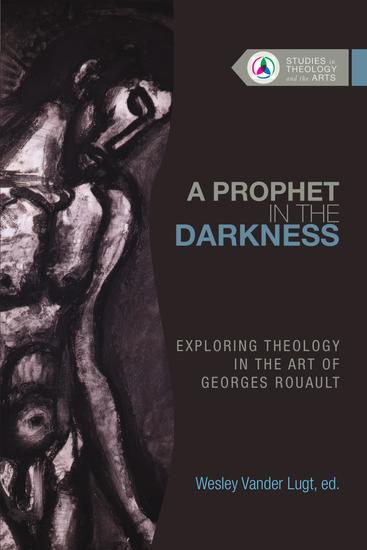
    Many consider Georges Rouault (1871–1958) to be one of the most important religious painters of the last few centuries. Yet both the secular art world and the church have struggled to engage with his work, which is profoundly shaped by his Christian faith and also starkly explores the pain and darkness of human experience.
    In this volume, a group of theologians, artists, and historians seek to bring Rouault out of the shadows. They offer a deeper understanding of the theological impulse of modern art and of Rouault's distinct contributions. Chapters explore how Rouault's unique work was influenced by his historical context, by personal suffering, and by biblical themes, especially the Passion of Christ. Essays are interspersed with original artistic responses to Rouault in the form of images and poetry, with contributions from Sandra Bowden, William A. Dyrness, Thomas Hibbs, Soo Kang, and others.
    Rouault displays our need for mercy within a world of anguish. This book explores how his prophetic creativity continues to inspire artists and thinkers seeking to understand the powerful intersection of lament and hope.
    The Studies in Theology and the Arts  series encourages Christians to thoughtfully engage with the relationship between their faith and artistic expression, with contributions from both theologians and artists on a range of artistic media including visual art, music, poetry, literature, film, and more.
    Show book
  • Asuka Period - Buddhism Reform and the Birth of Japanese Civilization - cover

    Asuka Period - Buddhism Reform...

    Rolf Hedger

    • 0
    • 0
    • 0
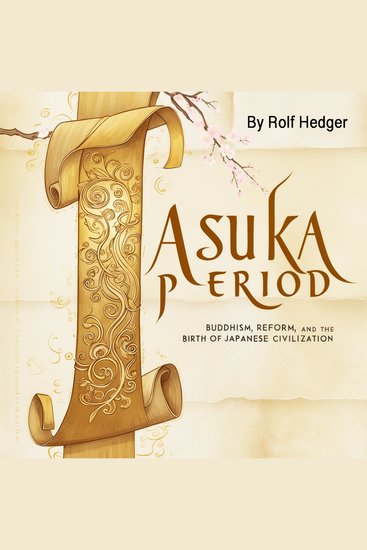
    The Asuka Period (538–710) marks a pivotal era in Japan’s history, serving as the transitional phase between the ancient Kofun Period and the Nara Period. This era is often considered the birthplace of Japanese civilization, a time when the political, religious, and cultural foundations of the nation began to take shape. It was during this period that Japan first came into direct contact with continental Asia, particularly through the introduction of Buddhism, the establishment of a centralized government, and the adoption of Chinese-style political and legal systems. 
    The early years of the Asuka Period were dominated by the Soga clan, who played a crucial role in the political and religious developments of the time. Their influence can be seen in their advocacy for the adoption of Buddhism, which arrived in Japan from Korea around the mid-sixth century. Buddhism’s introduction, however, was met with resistance from the powerful native Shinto religious leaders and aristocracy, creating a conflict that would shape the religious landscape of Japan for centuries to come. 
    Despite early opposition, Buddhism gradually took hold in Japan. The Soga clan, with the support of the royal family, used Buddhism as a tool to consolidate power and gain legitimacy. By the late 6th century, the religion had become deeply integrated into the fabric of Japanese society, influencing not only spiritual practices but also politics, art, and culture.
    Show book
  • 5 Steps to Winning Your Auditions! - cover

    5 Steps to Winning Your Auditions!

    Anthony Stream

    • 0
    • 0
    • 0
    In the highly competitive world of acting, auditions are the gateway to a successful career. The ability to make a lasting impression in those fleeting, yet critical moments can mean the difference between landing the role of a lifetime or being left in the waiting room, hoping for the phone to ring.? Mastering the art of auditioning, be they in-person, via self-tapes, or live on Zoom is a vital skill every acto?r must acquire. This guide is designed to help with practical advice, insightful s?trategies, and actionable steps to empower actors to turn each audition into a stepping stone towards success.?
    Show book
  • Design Mixology - The Interiors of Tineke Triggs - cover

    Design Mixology - The Interiors...

    Chase Reynolds Ewald, Heather...

    • 0
    • 0
    • 0
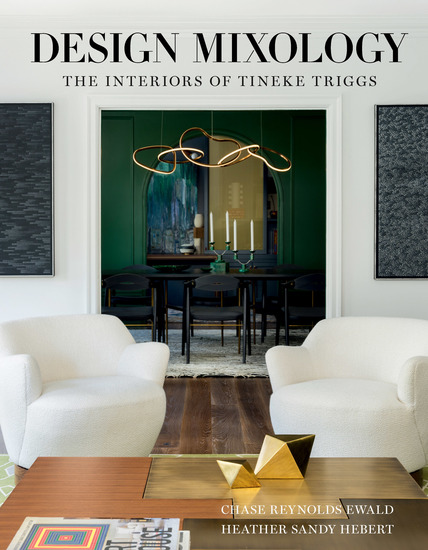
    Inspired by designers who break away from the pack, Tineke Triggs is known for creating soulful, artistic and imaginative interiors. By mastering both the art and science of design, her work gives rise to a distinct form of design mixology—each home as individual as each of her clients. This book includes an eclectic mix of projects from ski houses in Lake Tahoe and beachfront getaways in Northern and Central California, to reimagined period Victorians to modern homes in Marin County and Silicon Valley.
    Show book
  • How to Keep from Losing Your Mind - cover

    How to Keep from Losing Your Mind

    Deal W. Hudson

    • 0
    • 0
    • 0
    Liberal education is nothing other then the aquistion of a free mind. 
    Unfortunately, too many of us have a mind shackled by ideologies and moved by outside forces. We’re pulled and pushed by trends and the prevailing culture. Higher education has become ridiculously expensive and is producing graduates whose minds are anything but free, filled as they are with the prejudices of their teachers. 
    Only when we break these shackles and habitually exercise a free mind can we call ourselves liberally educated. 
    In How to Keep from Losing Your Mind, Deal Hudson will show you how to avoid the false open-mindedness and groupthink of the modern “-isms” promoted by the PC arbiters of our cultural milieu. Instead you’ll learn to: Form the habit of reconsideration, the key to a truly open mindEntertain doubts about your own immediate opinionsArgue coherently from first principles, instead of repeating ideological talking pointsRecognize prejudice and propagandaAvoid sloganeering and engage in real thought 
    This book will enable every person to rise above the shouting, the name-calling, and the brutal incivility of public discourse and rediscover the pleasure and benefit of contemplating the meaning and noble aims of human life.
    Show book