Join us on a literary world trip!
Add this book to bookshelf
Grey
Write a new comment Default profile 50px
Grey
Subscribe to read the full book or read the first pages for free!
All characters reduced
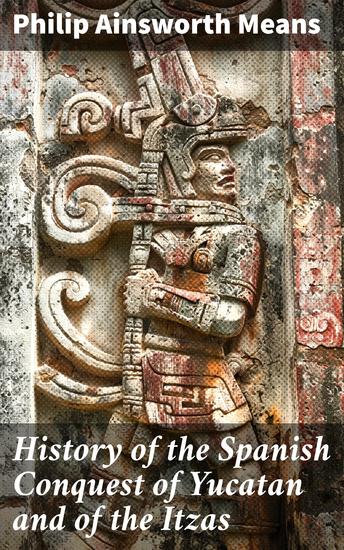
History of the Spanish Conquest of Yucatan and of the Itzas - Enriched edition Unveiling the Spanish Conquest of Yucatan and the Itzas: A Detailed Expedition into Mesoamerican History - cover

History of the Spanish Conquest of Yucatan and of the Itzas - Enriched edition Unveiling the Spanish Conquest of Yucatan and the Itzas: A Detailed Expedition into Mesoamerican History

Philip Ainsworth Means

Publisher: Good Press

  • 0
  • 0
  • 0

Summary

In "History of the Spanish Conquest of Yucatan and of the Itzas," Philip Ainsworth Means meticulously chronicles the complex interactions between Spanish conquistadors and the Indigenous civilizations of Yucatan, particularly the Itzas, during the 16th century. This scholarly work showcases Means's adeptness in blending narrative history with critical analysis, emphasizing the socio-political dynamics and the cultural ramifications of the conquest. Utilizing a range of historical sources, Means portrays the clash of civilizations, offering insights into indigenous resistance and adaptation, all while situating the events within a broader context of European colonial ambitions. Philip Ainsworth Means, an eminent historian and archaeologist, dedicated much of his career to Central American studies, inspired by a lifelong commitment to uncovering the narratives of marginalized communities. His extensive fieldwork in Yucatan and engagement with local histories contribute to a nuanced understanding of both the colonizers and the colonized. Means's scholarly rigor and cultural sensitivity elevate this work beyond mere historical recounting to a profound commentary on the legacy of conquest. This book is a must-read for historians, anthropologists, and anyone interested in the intricate tapestry of colonial history. Means's work not only illuminates the past but also compels readers to grapple with the enduring implications of that history in contemporary discussions on identity, power, and cultural resilience.

In this enriched edition, we have carefully created added value for your reading experience:
- Hand‐picked Memorable Quotes shine a spotlight on moments of literary brilliance.
- Interactive footnotes clarify unusual references, historical allusions, and archaic phrases for an effortless, more informed read.
Available since: 10/04/2023.
Print length: 211 pages.


Other books that might interest you

  • Cultural Studies for Troubling Times - A Multimodal Introduction to British and American Cultures - cover

    Cultural Studies for Troubling...

    Huck Christian

    • 0
    • 0
    • 0
    Haben Sie sich schon einmal gefragt, warum es so viele irische Männer nach Barbados verschlagen hat? Oder wie das Schwarze Detroit zu Kraftwerk tanzte? Warum es auf dem Trafalgar Square keine Frauenstatuen gibt? Und was all das mit den wirtschaftlichen und politischen Aspekten von Kultur zu tun hat? Das multimodale E-Book führt alle, die sich für Fragen kultureller Identität, medialer Materialität, der Repräsentation, Popkultur und des kulturellen Gedächtnisses interessieren, in Grundbegriffe und zentrale theoretische Ansätze der Kulturwissenschaften ein.
    Show book
  • The Story of Australia - From Convict Settlement to Modern Nation - cover

    The Story of Australia - From...

    Lillian Brooks

    • 0
    • 0
    • 0
    For an estimated 60,000 years, Indigenous Australians inhabited the vast and diverse landscapes of the continent, developing rich cultures, complex social structures, and deep spiritual connections to the land. Long before European arrival, hundreds of distinct Aboriginal and Torres Strait Islander nations thrived across Australia, each with unique languages, traditions, and ways of life. Their existence was deeply rooted in an intimate understanding of the environment, shaping a sustainable way of living that allowed them to flourish in regions ranging from arid deserts to lush coastal plains. 
    Central to Indigenous Australian culture was the Dreamtime, a spiritual belief system that explained the creation of the land, its people, and its natural features. These stories, passed down through generations, connected individuals to their ancestors and dictated social laws, customs, and responsibilities. The land was not seen as something to be owned but rather as a living entity to be respected and cared for. This relationship fostered sophisticated land management practices, such as controlled burns to regenerate vegetation, ensuring the survival of both the people and the ecosystem. 
    Trade networks existed long before European contact, linking different Indigenous groups across the continent. These exchanges included tools, ochre, food, and ceremonial items, highlighting the complexity of Aboriginal societies. The northern coastal communities also engaged in trade with seafarers from Southeast Asia, particularly the Makassan fishermen from present-day Indonesia, who arrived seasonally to harvest sea cucumbers. This interaction, occurring centuries before European exploration, demonstrates the long-standing external connections Indigenous Australians maintained.
    Show book
  • The Good Eater - A Vegan’s Search for the Future of Food - cover

    The Good Eater - A Vegan’s...

    Nina Guilbeault

    • 0
    • 0
    • 0
    For years, there has been no doubt that widespread consumption of meat is both environmentally destructive and morally dubious. A growing chorus of scientists, health experts, and activists champion the benefits of a plant-based diet. Nevertheless, change has been slow to arrive, and the chasm between our appetites and our collective well-being seems impossibly vast. We know we must transition to a more plant-based world. But what would such a world look like, and how do we realistically get there? 


    One group of people has been grappling with this question for decades: vegans. Once mocked for its hempy puritanism, the vegan movement has grown into a veritable cultural juggernaut. Yet visions of what our food system should look like continue to conflict. Is the healthful vegan lifestyle appealing—or alienating? Are high-tech meat alternatives merely a repeat performance of harmful fast-food values? Is modern veganism itself misguided—a wrong answer to the right questions? 


    In The Good Eater, Harvard-trained sociologist (and vegan) Nina Guilbeault, PhD, vividly explores the movement's history and its present-day tensions by grappling with the most fundamental question of all: Is there a truly ethical way to eat? What emerges is a fascinating portrait of how social change happens, with profound implications for our plates-and our planet.
    Show book
  • Rare Recording of Yuri Bezmenov A - Volume 2 - A Rare Recording of - cover

    Rare Recording of Yuri Bezmenov...

    Yuri Bezmenov

    • 0
    • 0
    • 0
    Yuri Bezmenov (1939 - January 5, 1993), was a Soviet journalist for RIA Novosti and a former KGB informant who defected to Canada. After being assigned to a station in India, Bezmenov eventually grew to love the people and the culture of India. At the same time, he began to resent the KGB-sanctioned repression of intellectuals who dissented from Moscow's policies and he decided to defect to the West. Bezmenov is best remembered for his anti-communist lectures and books published in the 1980s under the alias of Tomas David Schuman.
    Show book
  • Private Censorship - cover

    Private Censorship

    J.P. Messina

    • 0
    • 0
    • 0
    Concerns about censorship have once again reached a fever pitch across the liberal West. With a few notable exceptions, complaints about censorship in the twenty-first century West are complaints about the behavior of private parties: employers, media conglomerates, social media platforms, and search engines. 


    To better understand the concerns surrounding nonstate interference with speech, Private Censorship offers an account of censorship, as well as an assessment of the ethical and political issues it raises across contexts. J. P. Messina asks and variously answers questions like: what should we think when employees get fired for things they say and how might patterns of such firings create a climate of fear inimical to free inquiry? When is it appropriate for social media firms to deplatform users, and what does it mean for our democracy that those in charge of such decisions are often wealthy Silicon Valley executives? Do search engines act as massive gatekeepers to information in troubling ways, and how might they be constrained, if they do? Along the way, Messina casts a critical eye on many popular proposals for responding to these complaints. Unlike these popular approaches, Private Censorship foregrounds the importance of rights to property, association, and free expression for thinking well about twenty-first century censorship concerns.
    Show book
  • The Psychosis Workbook - Understand What You're Going Through Take an Active Role in Your Recovery and Prevent Relapse - cover

    The Psychosis Workbook -...

    PsyD Laura Dewhirst, PhD Jessica...

    • 0
    • 0
    • 0
    Your recovery from psychosis is a unique experience that encompasses many different emotions. Everyone experiences psychosis differently, and that's why The Psychosis Workbook offers customizable treatment strategies you can use to overcome the challenges associated with psychosis and move forward on your recovery journey. 


    Combining proven-effective skills from cognitive behavioral therapy for psychosis (CBTp), acceptance and commitment therapy (ACT), cognitive remediation therapy (CRT) and dialectical behavior therapy (DBT), this workbook provides a comprehensive set of tools to help you manage your symptoms, sustain your recovery, and achieve a better quality of life. With this accessible, step-by-step guide, you'll learn: 


    ● Why you experience certain symptoms 


    ● What's happening in your brain when symptoms occur 


    ● How to cope with voices, paranoia, cognitive difficulties, and depression 


    ● How to overcome a lack of motivation and stigma 


    This validating workbook will help you treat yourself with compassion and respect, while empowering you with new knowledge and ready-to-use strategies to realize your potential and find meaning in your experiences.
    Show book