Join us on a literary world trip!
Add this book to bookshelf
Grey
Write a new comment Default profile 50px
Grey
Subscribe to read the full book or read the first pages for free!
All characters reduced
Perspective Shift - Changing the Narrative Point of View to Offer New Insights or Context - cover

Perspective Shift - Changing the Narrative Point of View to Offer New Insights or Context

Peter Thompson

Publisher: Heritage Books

  • 0
  • 0
  • 0

Summary

The way a story is told can be just as powerful as the story itself. Perspective Shift explores how changing the narrative point of view can deepen character development, create tension, and reveal hidden layers of meaning.


Whether shifting between first and third person, alternating viewpoints, or exploring an unreliable narrator, this guide teaches how to use perspective shifts to reshape a reader’s understanding of events. Learn how subtle changes in viewpoint can add complexity, surprise, and emotional depth to your storytelling.


Perfect for novelists, screenwriters, and storytellers, this book will help you master the art of perspective, giving you the tools to craft dynamic narratives that keep readers engaged and thinking long after they turn the last page.
Available since: 02/02/2025.
Print length: 72 pages.

Other books that might interest you

  • Brazil's Economic Evolution - Past Present and Future - cover

    Brazil's Economic Evolution -...

    Anya Solace

    • 0
    • 0
    • 0
    Brazil's economic history is a dynamic and complex tale shaped by diverse influences, from colonial exploitation to modern-day challenges and opportunities. As the largest country in South America, Brazil’s economic evolution has mirrored its political, social, and cultural transformations. This journey began with its colonial era under Portuguese rule, which laid the foundation for Brazil’s agricultural-based economy. Over the centuries, Brazil shifted from a colony dependent on sugar and gold to a rapidly industrializing nation, emerging as an economic powerhouse in Latin America. 
    The early economic landscape of Brazil was heavily reliant on natural resources, particularly agriculture. The Portuguese established vast sugar plantations along Brazil’s northeastern coast, utilizing enslaved labor from Africa. This system of exploitation became the backbone of the Brazilian economy for centuries. Later, the discovery of gold in the 18th century led to a gold rush that contributed significantly to Brazil's wealth, though it also exacerbated regional disparities and social inequalities. 
    As the 19th century unfolded, Brazil transitioned into an empire, and its economic structure shifted once again. Coffee became the dominant export, driving the expansion of the country’s agricultural economy. The development of railways and the establishment of coffee plantations in the southeastern regions played a critical role in consolidating Brazil’s position as a major global supplier. However, this period of growth was also marked by profound social and economic inequalities, particularly in the form of slavery, which continued until its abolition in 1888.
    Show book
  • Tao Te Ching - A New English Version - cover

    Tao Te Ching - A New English...

    Anonymous

    • 0
    • 0
    • 0
    In 81 brief chapters, Lao-Tzu's Tao Te Ching, or Book of the Way, provides advice that imparts balance and perspective, a serene and generous spirit, and teaches us how to work for the good with the effortless skill that comes from being in accord with the Tao—the basic principle of the universe.  
    Stephen Mitchell's bestselling version has been widely acclaimed as a gift to contemporary culture.
    Show book
  • The Secret Ingredients in Your Foods - What Big Food Companies Don't Want You to Know - cover

    The Secret Ingredients in Your...

    John Harpoon

    • 0
    • 0
    • 0
    The food we consume each day often seems simple — bread, cereal, snacks, and beverages that fill grocery store shelves. Yet behind these seemingly ordinary products lies a hidden world of chemicals, additives, and artificial ingredients that most consumers never notice. While food labels provide some insight, the reality is that many harmful substances are deliberately disguised with complex names or misleading descriptions. This secrecy has allowed big food companies to use potentially dangerous ingredients while marketing their products as safe, natural, or even healthy.  
      
    One major reason these additives are so widespread is their role in extending shelf life, enhancing flavor, and improving texture. Preservatives, for example, allow products to last for months or even years without spoiling. While this may seem convenient, some preservatives have been linked to serious health concerns such as hormonal disruption, digestive issues, and even increased cancer risks. Similarly, flavor enhancers like monosodium glutamate (MSG) are designed to trigger cravings and increase consumption, yet they may also contribute to headaches, fatigue, and neurological problems.  
      
    Artificial sweeteners, another common additive, are often marketed as healthier alternatives to sugar. However, studies suggest that these substances may interfere with metabolism, increase the risk of obesity, and disrupt gut bacteria. Even seemingly harmless color additives — used to make processed foods appear vibrant and appealing — have been linked to behavioral changes in children and allergic reactions in some adults. 
    Show book
  • Agreeing to Disagree - How the Establishment Clause Protects Religious Diversity and Freedom of Conscience - cover

    Agreeing to Disagree - How the...

    Nathan S. Chapman, Michael W....

    • 0
    • 0
    • 0
    The Establishment Clause of the First Amendment, "Congress shall make no law respecting an establishment of religion", may be the most contentious and misunderstood provision of the entire United States Constitution. What exactly is an "establishment of religion"? And what is a law "respecting" it? 


    Many commentators reduce the clause to "the separation of church and state." This implies that church and state are at odds, that the public sphere must be secular, and that the Establishment Clause is in tension with the Free Exercise of Religion Clause. All of these implications misconstrue the Establishment Clause's original purpose. The clause facilitates religious diversity and guarantees equality of religious freedom by prohibiting the government from coercing or inducing citizens to change their religious beliefs and practices. 


    In Agreeing to Disagree, Nathan S. Chapman and Michael W. McConnell detail the theological, political, and philosophical underpinnings of the Establishment Clause, state disestablishment, and the disestablishment norms applied to the states by the Fourteenth Amendment. In one of the most thorough accounts of the Establishment Clause, Chapman and McConnell argue that the clause is best understood as a constitutional commitment for Americans to agree to disagree about matters of faith.
    Show book
  • Philosophy of Language - Words Meaning and Reality - cover

    Philosophy of Language - Words...

    Hector Davidson

    • 0
    • 0
    • 0
    Language plays a fundamental role in human life, functioning not only as a means of communication but as a structure that shapes the way we think, perceive, and understand the world. The philosophy of language seeks to unravel the complex relationships between words, meanings, and reality, exploring how language functions, how it conveys meaning, and how it relates to the world and our experiences. This chapter serves as an introduction to these foundational issues and provides an overview of the central questions and debates within the philosophy of language. 
    At its core, language is a system of symbols—words, phrases, and sentences—that represent concepts, objects, and actions. Understanding language, however, requires more than just examining its structure. It involves questioning how words acquire meaning, how those meanings change in different contexts, and how language can both represent and distort reality. This inquiry into meaning is not limited to how words correspond to things in the world, but also explores how they function in communication, how they shape thought, and how they reflect the underlying structures of human experience. 
    The structure of language itself is another crucial aspect. Language is governed by rules—such as syntax, grammar, and semantics—that allow words to be combined in meaningful ways. Syntax provides the framework for sentence structure, while grammar dictates how words should be used within that structure. Semantics, on the other hand, deals with the meaning of words and how they combine to form meaning within a sentence. Each of these aspects must be understood in relation to each other to grasp how language functions at a deeper level.
    Show book
  • Chilling Secrets: The Manson Murders Unveiled - Unveil chilling truths! Dive into gripping audio lessons on the Manson Murders for ultimate suspense - cover

    Chilling Secrets: The Manson...

    Eamon Venton

    • 0
    • 0
    • 0
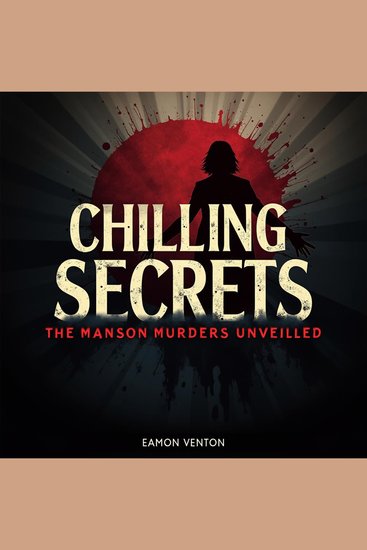
    Chilling Secrets: The Manson Murders Unveiled 
    ⭐⭐ Simplified Audio Guide with Explanations Included ⭐⭐ 
    Are you curious about the terrifying tales behind the infamous 1960s horror and want to dive deeper into the Manson Murders? 
    Looking for a detailed yet straightforward resource to uncover the chilling truths behind these historical crimes? 
    Your search ends here! 
    This audiobook serves as your definitive companion for deepening your understanding, applying your knowledge, and engaging with hands-on exercises. With this, you're geared for a thrilling exploration. 
    Updated for the latest revelations on the Manson Murders. 
    Key features of this enriched guide: 
    - Profound insights into the Manson Murders 
    - Detailed explanations uncovering the infamous events of the 1960s horror 
    - Effective strategies for understanding and tackling these chilling tales 
    Our guide distinguishes itself through comprehensive coverage, which is essential for a thorough understanding. Concepts aren't merely skimmed; they are delved into with precision. 
    Please note that this guide is purely an independent resource for your benefit. 
    Designed with a clear structure and easy-to-understand language, our audiobook ensures smooth transitions between topics. Say goodbye to dense jargon and welcome clear, precise, and technically accurate content. 
    So, why wait? Click the BUY NOW button, secure your guide, and begin your journey into the chilling secrets of the Manson Murders!
    Show book