Join us on a literary world trip!
Add this book to bookshelf
Grey
Write a new comment Default profile 50px
Grey
Subscribe to read the full book or read the first pages for free!
All characters reduced
How Therapists Coaches & Experts Use Tiktok to Grow Their Practice - cover

How Therapists Coaches & Experts Use Tiktok to Grow Their Practice

Peter Thompson

Publisher: Heritage Books

  • 0
  • 0
  • 0

Summary

How Therapists, Coaches & Experts Use TikTok to Grow Their Practice is a practical and inspiring guide for professionals who want to build real connections and expand their reach using one of today’s most powerful platforms.


Through real examples and clear strategies, this book shows how therapists, life coaches, and other experts are using short-form video to educate, engage, and attract clients—without feeling fake or salesy.


Whether you are just getting started on TikTok or looking to grow with more purpose, this book offers tips on creating content that feels authentic, builds trust, and helps your practice thrive in the digital age.
Available since: 07/10/2025.
Print length: 134 pages.

Other books that might interest you

  • Letters from a Father to His Daughter - cover

    Letters from a Father to His...

    jawaharlal Nehru

    • 0
    • 0
    • 0
    Letters from a Father to His Daughter is a collection of letters written by the former Prime Minister of Inidia, Jawaharlal Nehru, to his daughter, Indira Gandhi, during the period when he was imprisoned. Heartfelt and moving, Nehru imparts knowledge on various subjects to young Indira, who was around 10 years old at the time.
    The letters cover everything from history and science to philosophy and the natural world. Nehru introduces Indira to the great figures of history, including ancient civilizations and leaders from various cultures, and explains the concepts of freedom, justice, and democracy. He also shares his love for nature, describing the beauty of the world around him, and encourages Indira to think critically, ask questions, and embrace learning.
    Show book
  • Friedrich Schiller: A short biography - 5 Minutes: Short on time - long on info! - cover

    Friedrich Schiller: A short...

    5 Minutes, 5 Minute Biographies,...

    • 0
    • 0
    • 0
    Friedrich Schiller, Germany's great poet and dramatist: Life and work in a short biography! Everything you need to know, brief and concise. Infotainment, education and entertainment at its best!
    Show book
  • Agency and Cognitive Development - cover

    Agency and Cognitive Development

    Michael Tomasello

    • 0
    • 0
    • 0
    Children of different ages live in different worlds. This is partly due to learning: as children learn more and more about the world they experience it in different ways. But learning cannot be the whole story or else children could learn anything at any age—which they cannot. 


    Michael Tomasello argues that children of different ages live and learn in different worlds because their capacities to cognitively represent and operate on their experience change in significant ways over the first years of life. These capacities change because they are elements in a maturing cognitive architecture evolved for agentive decision making and action, including in shared agencies in which individuals must mentally coordinate with others. The developmental proposal is that from birth infants are goal-directed agents who cognitively represent and learn about actualities; at 9-12 months toddlers become intentional (and joint) agents who also imaginatively and perspectively represent and learn about possibilities; and at 3-4 years children become metacognitive (and collective) agents who also metacognitively represent and learn about objective/normative necessities. These developing agentive architectures—originally evolved in humans' evolutionary ancestors for particular types of decision making and action—help to explain why children learn what they do when they do.
    Show book
  • Holy Hurt - Understanding Spiritual Trauma and the Process of Healing - cover

    Holy Hurt - Understanding...

    PhD Hillary L. McBride

    • 0
    • 0
    • 0
    Too often the institutions and communities that are meant to be the most holy in our lives end up deeply hurting us. 


    In Holy Hurt, clinical psychologist Hillary L. McBride sends a sincere and profound message: spiritual trauma is real and impacts us all. She also reassures us that we can remake ourselves and heal in its aftermath. 


    McBride expertly and compassionately shows that acknowledging the impact of spiritual trauma in our lives allows us to begin to repair our wounds individually and collectively, experiencing reconnection with ourselves and others. She draws on clinical research, trauma literature, insightful interviews with experts, and poignant first-person stories of spiritual trauma, ending each chapter with a short practice to begin healing. 


    McBride empowers those who have lived through spiritual trauma or witnessed it, as well as those who want to develop healthier church environments and prevent abuse.
    Show book
  • Studies In Consciousness - and The Breath Of One - cover

    Studies In Consciousness - and...

    Sharon Ann Meyer

    • 0
    • 0
    • 0
    This is part of the “Lightworker's Log Book Series” that came into existence in 2008, via soul promptings and after a series of life circumstances designed to awaken the author to humanity's true state. Previous publications consisted of choosing titles, arranging content, and taking vast amounts of time to compile an entire book. These days, books are easily birthed by merely tapping into greater aspects of what may be referred to as the author’s ever-changing consciousness. Publications are now compiled in this way by many more authors than ever before. This book is just one example of material stemming from what may be referred to as a more evolved consciousness experiencing and expressing in a field of decreasing duality. 
    As segments of humanity become increasingly chaotic while others experience greater states of consciousness, there comes a time when one asks, “Are we there yet?” STUDIES IN CONSCIOUSNESS and The Breath Of One is designed to explain in, hopefully, easily understood terms the vast separation from Source that humanity chose to experience. It is not meant to create further separations of Consciousness by delving into and examining other planets, galaxies or universes, but to explain how humanity got to the point where it is in the later portion of the twenty-first century, and how it will rise above it. STUDIES IN CONSCIOUSNESS and The Breath Of One began to surface during weeks of daily, multiple deluges of water in September 2025. 
    “Water is the wilderness, the calling, the rally of the soul.” 
    This book contains what the author refers to as “heavy-duty information,” and as does water contains light codes, which necessitate short bursts of reading material to be assimilated chapter by chapter, allowing time between them for full incorporation. 
    The return to Source may not seem instantaneous, but it is already achieved, for separation is impossible in the grand scheme of Source. 
    Read this book to see that it rings true and speaks for itself.
    Show book
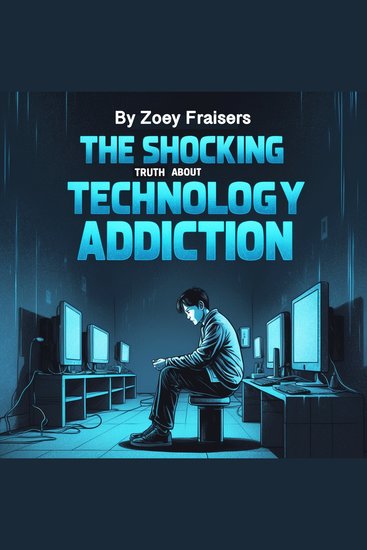
  • The Shocking Truth about Technology Addiction - cover

    The Shocking Truth about...

    Zoey Fraisers

    • 0
    • 0
    • 0
    Technology has transformed nearly every aspect of modern life. From the moment we wake up to the moment we fall asleep, screens surround us—our smartphones, computers, tablets, and televisions keep us connected, entertained, and informed. While technological advancements have undoubtedly improved communication, productivity, and convenience, they have also created a growing dependency that many people fail to recognize. The line between regular technology use and addiction has become increasingly blurred, making it crucial to examine the true impact of our digital habits.  
    The rise of digital dependency is not an accident. Social media platforms, video games, and even workplace tools are designed to keep users engaged for as long as possible. Algorithms tailor content to our interests, notifications demand our attention, and the allure of endless scrolling can make it difficult to put our devices down. The result is a society where people check their phones hundreds of times a day, struggle to focus without digital stimulation, and feel uneasy when disconnected. What once seemed like simple entertainment has evolved into something far more powerful—an addiction that can reshape our thoughts, behaviors, and even brain chemistry.  
    Scientific research has shown that excessive technology use can rewire the brain in ways similar to drug and gambling addictions. Dopamine, the neurotransmitter associated with pleasure and reward, plays a key role in keeping users hooked. Each "like" on social media, each message received, and each new piece of content triggers small dopamine releases, reinforcing the habit and making it difficult to stop. Over time, this can lead to compulsive behavior, decreased attention spans, and an inability to find pleasure in offline activities. 
    Show book