Join us on a literary world trip!
Add this book to bookshelf
Grey
Write a new comment Default profile 50px
Grey
Subscribe to read the full book or read the first pages for free!
All characters reduced
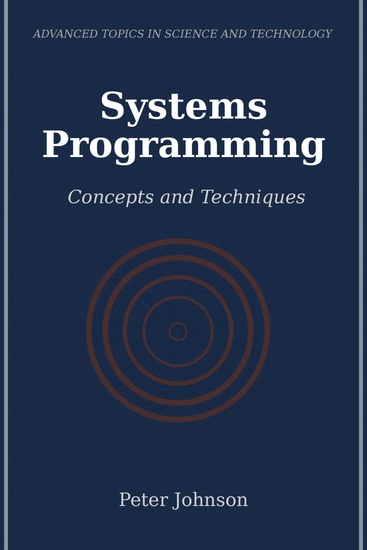
Systems Programming - Concepts and Techniques - cover

Systems Programming - Concepts and Techniques

Peter Johnson

Publisher: HiTeX Press

  • 0
  • 0
  • 0

Summary

"Systems Programming: Concepts and Techniques" offers a comprehensive exploration of the foundational elements that underpin the operation and control of modern computing systems. Designed for beginners and those seeking to solidify their understanding, this book delves deeply into the critical areas of systems programming, from the intricacies of operating systems and memory management to the complex dynamics of concurrency and synchronization. Each chapter is meticulously structured to build upon previous knowledge, guiding the reader through a logical progression of topics essential for mastering system-level programming.This book provides a detailed examination of essential concepts such as process and thread management, interprocess communication, networking, and file systems. Readers will gain valuable insights into optimizing system performance through chapters dedicated to debugging, profiling, and advanced programming techniques. Real-world examples and case studies further enrich the learning experience, ensuring that readers are well-equipped to develop efficient, robust, and scalable system software.With its elegant and matter-of-fact style, "Systems Programming: Concepts and Techniques" serves as both an educational resource and a practical reference, empowering readers to navigate the complexities of systems programming with confidence and competence. Whether developing software on personal computers or large-scale servers, this book lays the foundation for understanding the critical components that drive today's digital infrastructure.
Available since: 09/17/2024.
Print length: 293 pages.

Other books that might interest you

  • The New Girls - Drastic Choices Fighting Cancer BEFORE a diagnosis - cover

    The New Girls - Drastic Choices...

    Janice Anne Wheeler

    • 0
    • 0
    • 0
    You cannot undo this, one of the surgeons told me, you have to be sure. I was sure. My choices were frightening, grim and daunting. I possess the rare Breast Cancer genetic mutation BRCA2 and I saw it as a death sentence. My choices were drastic, my actions were immediate.   Complete Hysterectomy followed by Prophylactic Double Mastectomy with Reconstruction. I will never be the same. In so many ways. It was, and is, such a journey.  
    I clearly remember when Angelina Jolie first publicized her preventive mastectomy; it was a shock, almost unthinkable, to remove healthy organs from a healthy body. My perspective on that has certainly changed; I followed in her footsteps! She is brave, a pioneer, but did not tell of her experience.  
    The New Girls fills that gap, and describes with candor, humor and raw emotion, what it was like to undergo such extensive surgery. It was not easy. The rewards, however, are tremendous! I took my Breast Cancer risk from almost certain to nearly zero.  At first, I wanted my transformation to be a secret, so that people would not know what I have done. When I realized how little awareness there is, the desire to share my experience, to help people, simply grew and grew.  I started this book while in recovery; it’s entitled The New Girls because that is what I call my new breasts, and they are the protagonists;)! 
    I sincerely hope that my story lets people facing the same or similar decisions know they are not alone. I felt alone, uninformed, without clear information about what to expect, what it would feel like. Please listen to, share and embrace The New Girls.
    Show book
  • Modern Software Engineering for Beginners - Journey into the World of IT Solutions - cover

    Modern Software Engineering for...

    Daniel Greene

    • 0
    • 0
    • 0
    In the rapidly evolving landscape of technology, the demand for skilled software engineers has never been higher. "Modern Software Engineering for Beginners" offers a clear and concise introduction to the foundational concepts, methodologies, and tools that are essential for beginning a career in software engineering. This book is meticulously designed to equip you with the knowledge and skills needed to navigate the complexities of developing high-quality software in today’s digital world. 
    From understanding the basics of the Software Development Life Cycle (SDLC) to mastering Agile and Scrum methodologies, this guide covers the critical aspects of modern software engineering. You'll learn the importance of version control with Git, embrace best coding practices, and discover the significance of testing and quality assurance to ensure the delivery of robust software products. 
    "Modern Software Engineering for Beginners" doesn’t stop at theory. It dives deep into practical aspects, introducing you to the world of continuous integration and deployment (CI/CD), working with databases, and the essentials of cloud computing. With a dedicated chapter on building a simple application, you get to apply what you've learned in a hands-on project, reinforcing your understanding and preparing you for real-world challenges. 
    This book offers a step-by-step journey through the intricacies of software development. With practical examples, insights into the latest trends, and a focus on modern tools and practices, "Modern Software Engineering for Beginners" is your comprehensive guide to becoming a proficient software engineer in today’s digital age. Embrace the journey of learning and innovation, and start building software that makes a difference. 
     
    Show book
  • Forgotten Forests: Twelve Thousand Years of British and Irish Woodlands - cover

    Forgotten Forests: Twelve...

    Jonathan Mullard

    • 0
    • 0
    • 0
    Ancient trees, some over a thousand years old, are dotted around the British Isles, the last survivors of a lost world. Now, new scientific studies of these trees and of fossilised forests and of our oldest wooden artifacts can help us to understand the many woodlands that have disappeared from our landscapes. 
    Locked in ice for more than twenty thousand years, the lands that now make up Britain and Ireland were some of the last settled by humans. The earliest people, Mesolithic hunter-gatherers like Cheddar Man, arrived around eleven thousand years ago to find dense forests. While they lived lightly, they did introduce fire, which they used to create clearings, and this was the beginning of the reshaping of Britain’s forests. 
    When Neolithic farmers migrated to Britain from Europe some six thousand years ago, it meant a violent end to the hunter-gatherers’ way of life. It also indicated a dramatic change for the ecosystems. Forests were cleared for fields, trees and plants fed to livestock and predators hunted. A wild, forested world became one of agriculture and villages. 
    As humans learned to work bronze, then iron, they also used wood in myriad ways, building homes, then cathedrals, hand tools then furniture and early machines, boats and eventually immense ships. The forests of Britain and Ireland fuelled the burgeoning human civilisation, from the Romans, Anglo Saxons, Vikings and Normans, to the British, Scottish, Welsh and Irish peoples through to the present day. In that time our woodlands have changed beyond recognition, but clues to their story remain. Biologist and Britain’s first senior officer for Areas of Outstanding Natural Beauty Jonathan Mullard retraces the history of the forgotten forests of Britain and Ireland, piecing together historical records going as far back as the written word and archaeological evidence going back far further. The result is a wealth of arcane anecdotes and the latest scientific understanding of our natural history, as well as a fascinating journey through the forests, landscapes and human history of Britain. 
    In his latest non-fiction work, Forgotten Forests, Jonathan Mullard takes us on a journey through time, exploring the habitats that once covered Britain and Ireland. His deep understanding of ecology and passion for nature shine through in this compelling narrative of human impact and ecological transformation. 
    For fans of Robert Macfarlane (Is a River Alive?), Tristan Gooley (How To Read Water), Adam Weymouth (Kings of the Yukon), Jo Woolf (The Great Horizon), and Rough Guides (The Rough Guide to Morocco). 
    HarperCollins 2025
    Show book
  • Human Anatomy - cover

    Human Anatomy

    Introbooks Team

    • 0
    • 0
    • 0
    This is an introduction to the overall structure of the human body. It is meant to primarily provide a basic foundation for the advanced study in the fields related to fitness and overall health. In addition to this, the study of human anatomy can also offer a satiating sense of self-understanding. This chapter lays the foundation for the study of anatomy by considering some important aspects –what does this science encompass? What methods are used to study anatomy? How did our understanding of human anatomy develop? What aspects of human anatomy differentiate us from other animals and define us as humans? How did the human body come to be as it is? 
    Show book
  • NHA Phlebotomy Exam 2022-2023 - Study Guide with 400 Practice Questions and Answers for National Healthcareer Association Certified Phlebotomy Technician Examination - cover

    NHA Phlebotomy Exam 2022-2023 -...

    Mona Lindsey

    • 0
    • 0
    • 0
    Give yourself the best possible chance to succeed in one of the most important exams in your life. 
      
    You’re almost there! Just a few more steps to finally become a full-fledged practicing phlebotomist. 
      
    To get certified, you’ll have to pass the NHA Certified Phlebotomy Technician Exam first.  
      
    Without passing this test, you won’t be able to practice this profession. 
      
    Your career as a phlebotomist is dependent on passing this exam, so you need to take it seriously. 
      
    So how do you prepare for it? 
      
    It helps to know what to expect in the exam – what topics are covered, how many questions there are, and how long you have to finish it. 
       
    In NHA Phlebotomy Exam 2022-2023, you will discover: 
      
    ●     How to ease your exam nerves by thoroughly preparing for your Phlebotomy certification exam using this study guide 
    ●     An exhaustive list of possible questions to test your core knowledge about blood components, needlestick safety, vascular anatomy, and more 
    ●     A helpful way to assess your knowledge and preparedness – and track your progress as you get closer to exam time 
    ●     Comprehensive practice tests covering each of the main subjects in the exam – from Safety and Compliance to Processing 
      
    And much more. 
      
    Even if you think you’re already ready to take this exam, it doesn’t hurt to get additional preparation. 
    If you want to increase your chances of success in the NHA Phlebotomy exam and finally become a certified phlebotomy technician, then you need this audiobook today!
    Show book
  • Playing Possum - How Animals Understand Death - cover

    Playing Possum - How Animals...

    Susana Monsó, Mark Rowlands

    • 0
    • 0
    • 0
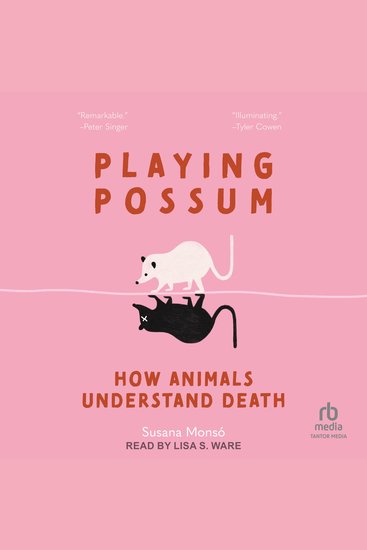
    When the opossum feels threatened, she becomes paralyzed. Her body temperature plummets, her breathing and heart rates drop to a minimum, and her glands simulate the smell of a putrefying corpse. Playing Possum explores what the opossum and other creatures can teach us about how we and other species understand mortality, and demonstrates that the concept of death, far from being a uniquely human attribute, is widespread in the animal kingdom. 


    With humor and empathy, Susana Monsó tells the stories of ants who attend their own funerals, chimpanzees who clean the teeth of their dead, dogs who snack on their caregivers, crows who avoid the places where they saw a carcass, elephants obsessed with collecting ivory, and whales who carry their dead for weeks. Monsó, one of today's leading experts on animal cognition and ethics, shows how there are more ways to conceive of mortality than the human way, and challenges the notion that the only emotional reactions to death worthy of our attention are ones that resemble our own. 


    Blending philosophical insight with new evidence from behavioral science and comparative psychology, Playing Possum dispels the anthropocentric biases that cloud our understanding of the natural world, and reveals that, when it comes to death and dying, we are just another animal.
    Show book