Join us on a literary world trip!
Add this book to bookshelf
Grey
Write a new comment Default profile 50px
Grey
Subscribe to read the full book or read the first pages for free!
All characters reduced
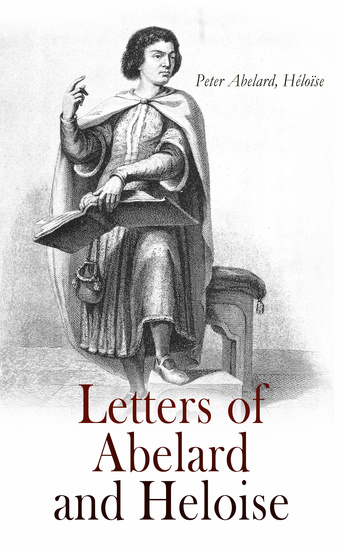
Letters of Abelard and Heloise - cover

Letters of Abelard and Heloise

Peter Abelard, Héloïse

Translator John Hughes

Publisher: e-artnow

  • 0
  • 0
  • 0

Summary

Letters of Abelard and Heloise is a collection of a surviving correspondence between Peter Abelard and Héloïsed'Argenteuil. These letters are considered a foundation of French and European literature and primary inspiration for the practice of courtly love.
Available since: 03/30/2023.
Print length: 120 pages.

Other books that might interest you

  • German Autumn - cover

    German Autumn

    Stig Dagerman

    • 0
    • 0
    • 0
    In the aftermath of World War II, Germany lay in ruins - its cities bombed, its people starving, its identity fractured. In German Autumn, Swedish journalist Stig Dagerman delivers a raw and unfiltered account of life in occupied Germany during the fall of 1946. 
    Through a series of deeply personal and vividly detailed reports, Dagerman goes beyond political narratives, capturing the human cost of war with compassion and insight. He walks through decimated cities, speaks with civilians, former soldiers, and refugees, and exposes the moral and physical struggles of a defeated nation. Neither excusing nor condemning, he presents an honest, haunting portrait of a society grappling with guilt, survival, and the slow process of rebuilding. 
    First published in 1947, German Autumn remains one of the most powerful works of war reportage - an urgent and poetic reflection on the consequences of destruction, the resilience of humanity, and the role of a writer in times of crisis. 
    A gripping and essential historical document—perfect for readers of war journalism, postwar history, and political literature.
    Show book

  • Plagues and Their Aftermath - How Societies Recover from Pandemics - cover

    Plagues and Their Aftermath -...

    Brian Michael Jenkins

    • 0
    • 0
    • 0
    From a plague in Athens during the Peloponnesian War in 430 BCE, to another in 540 that wiped out half the population of the Roman empire, down through the Black Death in the Middle Ages and on through the 1918 flu epidemic (which killed between 50 and 100 million people) and this century's deadly SARS outbreak, plagues have been a much more relentless fact of life than many realize. 


    The legacy of epidemics, Brian Michael Jenkins observes, is not only one of lives lost but of devastated economies and social disorder, all of which have severe political repercussions. 


    Thus, each chapter of Plagues and Their Aftermath draws on those historical precursors to focus on one particular aspect of their aftermath: What happens to political systems? What happens in the area of crime and terrorism? Do wars happen? What are the effects on cultures? What was the impact of widespread fear and public hysteria, of increased suspicion and scapegoating, of the spread of rumors and conspiracy theories? 


    Jenkins's sobering analysis is riveting and thought-provoking listening for general listeners and specialists alike, and throws welcome light into what many fear is a dark future.
    Show book
  • Veil of Silence - How the Irish State Covered Up an IRA Murder and Framed a Garda Whistleblower - cover

    Veil of Silence - How the Irish...

    J.P. O’Sullivan

    • 0
    • 0
    • 0
    In 1985 John Corcoran, a garda informer within the ranks of the Cork IRA, was abducted and brutally executed by the IRA. No one has ever been charged with his murder, but for decades, speculation was rife that gardaí of the highest rank allowed Corcoran – a father of eight – to be murdered to protect Sean O’Callaghan, the state’s most prized IRA informer during the Troubles. 
     
    Now, for the first time, J.P. O’Sullivan, Corcoran’s Special Branch handler, breaks his silence. He reveals the chain of events leading to the killing, including detailed reports he filed warning of potential threats to his informant’s life that were systematically ignored by garda intelligence. He recounts how he was inexplicably sidelined from the investigation into Corcoran’s murder and later framed and convicted for a crime he did not commit in order to silence him and bury the truth. 
     
    O’Sullivan’s account is a damning indictment of garda complicity in covering up an IRA murder. It exposes murky manoeuvres, a flawed investigation, and the devastating cost paid by a detective who refused to back down. This is a story of betrayal and justice denied in a state under siege, and one man’s quest for justice.
    Show book
  • Harvard Business Review Emotional Intelligence Collection - Happiness Resilience Empathy Mindfulness - cover

    Harvard Business Review...

    Harvard Business Review

    • 0
    • 0
    • 0
    How to be human at work. 


    Each book in the HBR's Emotional Intelligence series offers proven research showing how our emotions impact our work lives, practical advice for managing difficult people and situations, and inspiring essays on what it means to tend to our emotional well-being at work. Uplifting and practical, these books describe the social skills that are critical for ambitious professionals to master. 


    This four-volume set includes Happiness, Resilience, Mindfulness, and Empathy.
    Show book
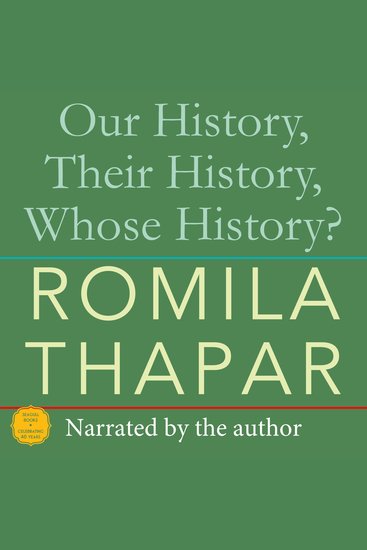
  • Our History Their History Whose History? (Unabridged) - cover

    Our History Their History Whose...

    Romila Thapar

    • 0
    • 0
    • 0
    An overview of nationalism and its impact on the study of history from one of India's most prominent historians.
    
    In this timely book, historian Romila Thapar delves into the complex world of nationalisms and its impact on the interpretations of the past and on the discipline of history itself. History, she expounds, is no mere collection of information and chronology and its purpose extends well beyond storytelling.
    
    Recognizing nationalism as a powerful force that gives rise to various narratives that provide ancestry to communities and shape the direction of societies, Thapar explores how, in India, two conflicting notions of nationalism have evolved and shaped the idea of the nation. Today, one such nationalistic theory claims the victimization of one religious community by another through centuries of 'misrule'. Such a claim willfully ignores ample evidence to the contrary to suit a particular political and ideological purpose. Thapar counters such attempts at misrepresentation by citing several historical instances of the nuanced interface and intermingling of cultures, as well as by showing how today's conflicts have their roots in the British colonial construction of India's history. She also addresses the recent controversy surrounding the deletions of sections of Indian history textbooks published by NCERT, the Indian educational council and suggests that the intention is more likely to be the promotion of a particular reading of history that conforms to the ideology of those in power.
    
    Engaging and thought-provoking, Our History, Their History, Whose History? invites readers to question the authenticity of historical narratives touted by one group of nationalists and it explores the clash between professional historians who study the past to understand our inherited present and fabricators who wield history for political gain.
    Show book
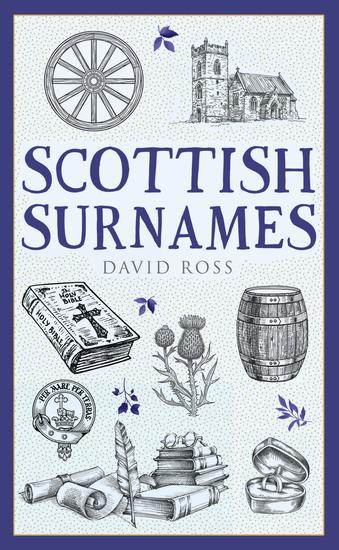
  • Scottish Surnames - cover

    Scottish Surnames

    David Ross

    • 0
    • 0
    • 0
    Surnames give us a sense of identity and belonging. Even in today's mobile society they can have strong links with particular areas. They are keys to our family history. And they always have an original meaning. This new collection of some 400 names, gathered from Shetland to Galloway, provides an informative and reliable  guide to Scottish surnames from Abercrombie and Abernethy to Younie and Yuill.
    In each case the original meaning is given, along with the original location and its first recorded appearance. Historical details of particular interest are also noted.
    Scottish Surnames informs, entertains and may even settle (or start) some arguments. It's an essential item for any Scottish-interest bookshelf.
    Show book