¡Acompáñanos a viajar por el mundo de los libros!
Añadir este libro a la estantería
Grey
Escribe un nuevo comentario Default profile 50px
Grey
Suscríbete para leer el libro completo o lee las primeras páginas gratis.
All characters reduced
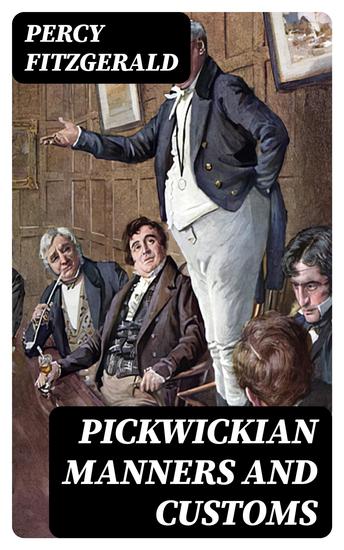
Pickwickian Manners and Customs - cover

Pickwickian Manners and Customs

Percy Fitzgerald

Editorial: DigiCat

  • 0
  • 0
  • 0

Sinopsis

In "Pickwickian Manners and Customs," Percy Fitzgerald explores the cultural nuances and societal norms of the early 19th century through a lens that echoes the satirical spirit of Charles Dickens' original "The Pickwick Papers." Fitzgerald's literary style is marked by rich, vivid descriptions and keen observations that evoke both humor and reflection. The book serves as a companion piece, delving into the peculiarities of the Pickwick Club and its members, while illuminating issues of class, etiquette, and the burgeoning Victorian social landscape amidst the backdrop of a rapidly changing England. Percy Fitzgerald, an esteemed Victorian writer, critic, and biographer, was well immersed in the literary world of his time. His close association with Dickens and his appreciation for the interplay of humor and social commentary significantly influenced his decision to write this book. Fitzgerald's own experiences as a traveler and observer enriched his narrative, providing an authentic perspective on the manners and customs that defined a complex era. "Pickwickian Manners and Customs" is a delightful read for scholars and enthusiasts of Victorian literature alike. Fitzgerald invites readers to engage with the past, drawing connections between historical customs and contemporary society. This work not only entertains but also enriches our understanding of cultural evolution, making it a must-read for those interested in the intersection of literature, history, and social critique.
Disponible desde: 16/09/2022.
Longitud de impresión: 196 páginas.


Otros libros que te pueden interesar

  • Mind and Intelligence - The Brain’s Strengths and Weaknesses (5 in 1) - cover

    Mind and Intelligence - The...

    John Harpoon

    • 0
    • 0
    • 0
    This illuminating audiobook explores the fascinating complexities of human cognition and behavior through five compelling sections: 
    12 Habits That Damage Your Brain 
     Discover the everyday behaviors and patterns that can impair cognitive function over time. 
    12 Habits That Make You More Attractive 
     Explore the science-backed behaviors that increase personal appeal beyond physical appearance. This part reveals how intellectual curiosity, emotional intelligence, conversational skills, and other cultivated habits can dramatically enhance how others perceive you, improving your relationships, opportunities, and social connections. 
    Why Intelligent People Do Stupid Things 
     Examine the counterintuitive relationship between high intelligence and poor decision-making. Understand how cognitive biases, emotional blind spots, and overconfidence can lead even the brightest minds astray, and discover strategies for balancing intellectual capacity with practical wisdom in everyday life. 
    Why Smart People Don't Have Many Friends 
     Investigate the social challenges that often accompany high intelligence. From differing interests and communication styles to the psychological need for deeper connections, this section explores why intellectually gifted individuals sometimes struggle with social relationships and offers insights for building meaningful connections. 
    How School Makes Kids Stupid 
     Challenge conventional educational paradigms by examining how traditional schooling can sometimes inhibit genuine intellectual development. This section analyzes how standardized testing, rigid curricula, and outdated teaching methods may suppress creativity, critical thinking, and natural curiosity.
    Ver libro
  • German Tanks in the World Wars: The History of Germany’s Most Famous Tanks during Both Conflicts - cover

    German Tanks in the World Wars:...

    Charles River Editors

    • 0
    • 0
    • 0
    One of the most important breakthroughs in military technology associated with World War I, and certainly the one that continues to capture the public imagination, was the introduction of a war machine that came to dominate the face of land battles throughout most of the 20th century: the tank. As a concept, it was not revolutionary; in fact, it harkened back to classical antiquity and to the Middle Ages, such as the covered battering rams and testudos which had made frequent appearances on ancient battlefields. In essence, it was designed to solve the age-old problem of protecting infantry from enemy projectiles while remaining mobile. 	Ironically, Germany, which would subsequently become famous for panzers and blitzkrieg warfare, was late in taking up the idea. During World War I, the Germans continued to rely on other techniques, and they produced less than two dozen models for battlefield use.  
    	The beginning of World War II found the major powers developing tanks to some extent, but lingering ideas from World War I affected the development of tanks during the Interwar period. As a result, aside from the blitzkrieg doctrine developed by the Nazis, tanks were still used in terms of infantry support, and there were few wars during this period to give strategists the chance to develop better uses for the new armored vehicles before World War II started. Commanders soon found that many of the tanks fielded in the campaigns of 1939-1941 lacked the necessary armor, guns, and designs. Inevitably, tactics evolved throughout the war. The Germans were early leaders in tank tactics, as their successes from Poland through the opening phases of Operation Barbarossa demonstrated. The main German tank tactic was the so-called Schwerpunkt (“center of gravity”), in which a concentration of tanks achieved a local superiority, broke through, and drove deep behind enemy lines.
    Ver libro
  • How to Be Funny: How You Can Make People Laugh Using Secret Humor Techniques Proven Jokes and Be Witty Even If You’re Not - cover

    How to Be Funny: How You Can...

    Andy Gardner

    • 0
    • 0
    • 0
    Learn the art of making people laugh with jokes, stories, and performance tips! 
    Are you looking for ways to become funnier?  
    Do you want to know how to make people laugh?  
    Do you want to be the life of the party, the center of attention at any gathering?  
    Have you been struggling to find humor in anything and everything? 
    Then this audiobook is for you! 
    In this audiobook, you will:Have access to step-by-step instructions on how to write and tell jokesLearn how to use stories as a humorous backdrop and insights on performing in front of an audienceFind tips on timing, delivery, facial expressions, and gesturesLearn ways to use humor to bolster morale in the workplace or add some sparkle to your relationships with family and friendsUnderstand the principles of comedy and how to use them in everyday lifeDiscover the power of wit and sarcasmLearn advanced joke-writing techniquesMaster the art of improvising to make people laugh with you in any situationDevelop your own unique style of humor that makes everyone chuckle 
    This comprehensive guide includes sections on stand-up comedy techniques, such as writing one-liners and developing a stage persona. It also provides a detailed overview of improvisational comedy techniques like using callbacks and creating characters for comedic effects. Plus, there are plenty of resources for finding inspiration from professional comedians online and offline.  
    Whether you’re looking for tips on how to make your friends laugh or trying to become a paid comedian, How To Be Funny has something for everyone. This book is packed with funny anecdotes and expert advice to help you take your sense of humor from okay to outstanding!  
    Click on the “add to cart” button now and start learning the art of making people laugh today!
    Ver libro
  • Magna Carta - Its Medieval Writings Rights and Background - cover

    Magna Carta - Its Medieval...

    Kelly Mass

    • 0
    • 0
    • 0
    The Magna Carta Libertatum, commonly known as the Magna Carta, is a royal charter of rights that was signed by King John of England on June 15, 1215, at Runnymede, near Windsor. This historic document was initially drafted by Archbishop of Canterbury Stephen Langton in response to escalating tensions between King John and a group of discontented barons. The Magna Carta sought to resolve these tensions by outlining a series of promises and protections, aimed at securing peace between the monarchy and the nobility. 
    At its core, the Magna Carta addressed several critical grievances, promising protection for the rights of the Church, safeguarding barons from illegal imprisonment, guaranteeing access to swift justice, and imposing limitations on feudal payments to the Crown. These promises were to be enforced through the creation of a council of 25 barons, which would oversee the king's adherence to the terms. However, the charter's effectiveness was short-lived. Within a few months, Pope Innocent III annulled the document, declaring it void, as neither King John nor the rebel barons honored their commitments. This revocation led directly to the First Barons' War, a conflict that further destabilized the kingdom.
    Ver libro
  • Glenesk - The History and Culture of a Scottish Glen - cover

    Glenesk - The History and...

    Margaret Fairweather Michie

    • 0
    • 0
    • 0
    Glenesk is one of the most beautiful of the Angus glens. Though surrounded by high peaks in its upper reaches and seemingly remote, it is no isolated backwater. A network of hill-paths through the Mounth links Glenesk to Deeside and neighouring Angus glens, while its lower end opens out to the low country of the east. This is one reason why the Glen is so rich in the relics of life and work of the people who have lived there and who have passed through it from early times onwards.
    This is the story of an upland, rural community, told from the perspectives of the people themselves and covers almost every aspect of glen life. From the distant past to modern day, the book looks at people's changing relationships with the landscape, the buildings they lived, worked and worshipped in and the tools they used.
    Official documents record the effects of the famine and wars of the 17th-century, and the deprivations suffered either at the hands of marauding Highland caterans or the renegade offspring of their landlords. The text is complemented by many origianl, period photographs which portray the everyday life of the Glen.
    Ver libro
  • Finding Francis - One Family's Journey from Slavery to Freedom - cover

    Finding Francis - One Family's...

    Elizabeth J. West

    • 0
    • 0
    • 0
    Finding Francis, finding family, freeing history 


    Francis is found. Beyond Francis, a family is found—in archival material that barely deigned to notice their existence. This is the story of Francis Sistrunk and her children, from enslavement into forced migration across South Carolina, Georgia, Alabama, and Mississippi. It spans decades before the Civil War and continues into post-emancipation America. A family story full of twists and turns, Finding Francis reclaims and honors those women who played an essential role in the historical survival and triumph of Black people during and after American slavery. 


    Elizabeth West has created a remarkable "biohistoriography" of everyday Black resistance, grounded in a determination to maintain enduring connections of family, kinship, and community despite the inhumanity and rapacity of slavery. There is inevitable heartbreak in these histories, but there is also an empowering strength and inspiration—the truth of these lives will indeed set us all free.
    Ver libro