Rejoignez-nous pour un voyage dans le monde des livres!
Ajouter ce livre à l'électronique
Grey
Ecrivez un nouveau commentaire Default profile 50px
Grey
Abonnez-vous pour lire le livre complet ou lisez les premières pages gratuitement!
All characters reduced
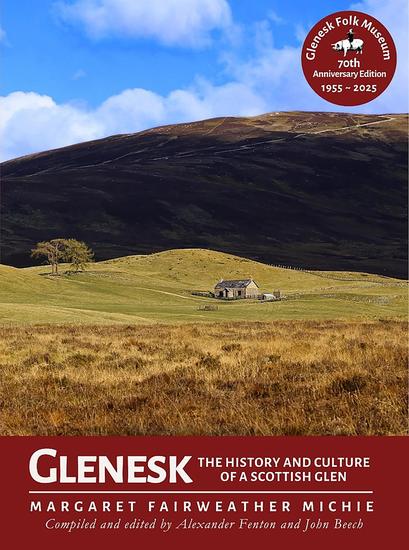
Glenesk - The History and Culture of a Scottish Glen - cover

Glenesk - The History and Culture of a Scottish Glen

Margaret Fairweather Michie

Maison d'édition: John Donald

  • 0
  • 0
  • 0

Synopsis

Glenesk is one of the most beautiful of the Angus glens. Though surrounded by high peaks in its upper reaches and seemingly remote, it is no isolated backwater. A network of hill-paths through the Mounth links Glenesk to Deeside and neighouring Angus glens, while its lower end opens out to the low country of the east. This is one reason why the Glen is so rich in the relics of life and work of the people who have lived there and who have passed through it from early times onwards.
This is the story of an upland, rural community, told from the perspectives of the people themselves and covers almost every aspect of glen life. From the distant past to modern day, the book looks at people's changing relationships with the landscape, the buildings they lived, worked and worshipped in and the tools they used.
Official documents record the effects of the famine and wars of the 17th-century, and the deprivations suffered either at the hands of marauding Highland caterans or the renegade offspring of their landlords. The text is complemented by many origianl, period photographs which portray the everyday life of the Glen.
Disponible depuis: 27/03/2025.
Longueur d'impression: 320 pages.

D'autres livres qui pourraient vous intéresser

  • Railroad Robber Barons The: The Lives of the Magnates Who Dominated America’s Rail Industry in the 19th Century - cover

    Railroad Robber Barons The: The...

    Editors Charles River

    • 0
    • 0
    • 0
    The Gilded Age and the dawn of the 20th century are often remembered as an era full of monopolies, trusts, and economic giants in heavy industries like oil and steel. Men like Andrew Carnegie built empires like Carnegie Steel, and financiers like J.P. Morgan merged and consolidated them. The era also made names like Astor, Cooke, and Vanderbilt instantly recognizable across the globe. Over time, the unfathomable wealth generated by the businesses made the individuals on top incredibly rich, and that in turn led to immense criticism and an infamous epithet used to rail against them: robber barons.  
    	Dozens of men were called “robber barons”, and the industrial might wielded by some of these men in the late 19th century directly led to a public backlash and made President Teddy Roosevelt the “trust buster”, and there has since been countless regulations to attempt to avoid the types of monopolies found over 100 years ago. However, many 20th century historians and writers pushed back against the allegations hurled at the “robber barons” and even took issue with the name. Libertarian writer John Stossel argued, “They weren't robbers, because they didn't steal from anyone, and they weren't barons - they were born poor...” Ironically, one of America’s most famous robber barons, Andrew Carnegie, epitomized the American Dream, migrating with his poor family to America in the mid-19th century and rising to the top of the business world in his adopted country. And like Carnegie, railroad tycoon Cornelius Vanderbilt set a precedent of sorts with his philanthropy, most notably his gift to Vanderbilt University, which bears his name. Similarly, the West Coast's most famous railroad mogul became Leland Stanford, who also bequeathed a prestigious university after making it to the top of the industry.
    Voir livre
  • Raising Positive Little People - Being an Awesome Parent Using Love Not Discipline by Creating Boundaries and Listening to Your Child - cover

    Raising Positive Little People -...

    Holly Henderson

    • 0
    • 0
    • 0
    Discover the secrets to effective discipline without punishment, even if your child misbehaves 
    Are you tired of tantrums? 
    Do you feel guilty when you punish your child but don't know any other option? Does it seem like nothing works? Are you constantly saying no to your children? 
    You're not alone. 
    Parenting isn't easy – as your child gets older and more independent, you get to see them reach a lot of milestones. 
    Discipline is one of the most difficult experiences reported by parents, and it makes sense why. You're having to impose rules and limitations on children who don't understand many of these choices are made with their best interests in mind. 
    Instead of gratitude, you get attitude. 
    Whether you're going through the terrible twos and threes or navigating life with a surly teenager, within these pages you'll find strategies and tactics to help you with the most frustrating situations. 
    Research has made it clear there are certain methods and techniques that are better for your child and better for you. 
    In Raising Positive Little People, you will discover:Practical exercises and steps to help apply your newfound knowledge todayThe important difference between punishment and discipline and why you need to understand the differenceAppropriate developmental expectations for each age group and how to tailor your communication style to any child's needsHow validation plays a critical role in developing your child's emotional self-regulation skillsCommon misconceptions about effective disciplineHow to establish and create healthy boundaries that encourage your child to develop self-controlRelatable, real-world anecdotes that perfectly illustrate life as a parentWhy you shouldn't fear the dreaded tantrum – and best practices for handling them when they happen and solutions for reactive parenting
    Voir livre
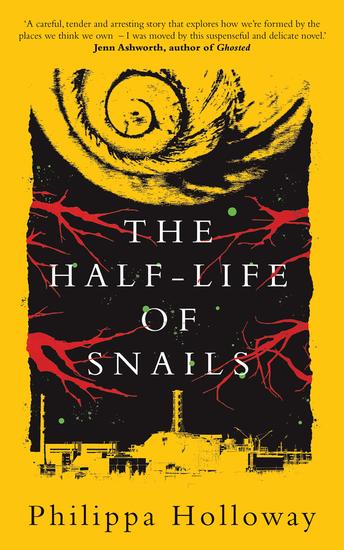
  • The Half-life of Snails - cover

    The Half-life of Snails

    Philippa Holloway

    • 0
    • 0
    • 0
    'a novel that shimmers with compassion... the author has crafted a tale that will linger longer than the half-life of many other books you will read this year.' – Alex Lockwood, author of The Chernobyl Privileges
    'A careful, tender and arresting story that explores how we're formed by the places we think we own – I was moved by this suspenseful and delicate novel.' – Jenn Ashworth, author of Ghosted
    Two sisters, two nuclear power stations, one child caught in the middle...
    When Helen, a self-taught prepper and single mother, leaves her young son Jack with her sister for a few days so she can visit Chernobyl's Exclusion Zone, they both know the situation will be tense. Helen opposes plans for a new power station on the coast of Anglesey that will take over the family's farmland, and Jennifer works for the nuclear industry and welcomes the plans for the good of the economy.
    But blood is thicker than heavy water, and both want to reconnect somehow, with Jack perhaps the key to a new understanding of one another.
    Yet while Helen is forced to face up to childhood traumas, and her worst fears regarding nuclear disaster, during a trip that sees her caught up in political violence and trapped in Chernobyl's Exclusion Zone during the 2014 Euromaidan revolution, Jennifer too must discover that even the smallest decision can have catastrophic and long-lasting effects, both within the nuclear industry, and within the home.
    And Jack isn't like other five-year olds... as they will both discover with devastating consequences.
    Voir livre
  • Fur Trade in North America The: The History and Legacy of the Competition and Conflicts over Furs - cover

    Fur Trade in North America The:...

    Editors Charles River

    • 0
    • 0
    • 0
    Though the importance of hats is easy to overlook, it was deadly serious in more ways than one, impacting the beavers and birds used to make fashionable hats, the environment of the region, and the people fighting over the resources. Beaver hats put the Dutch, British, and French in conflict, and later the Americans and Canadians. Plumed women’s hats were considerably less important historically, but they had a huge ecological impact. The beaver is a crucial species that once had an immense impact on the environment around it, while the short era concerning the plume trade for women’s hats drove a number of bird species to near-extinction. Indeed, several species have never recovered their numbers. The end product was fashionable men’s and women’s hats, sold primarily in Europe and the United States, but from raw materials to finished products, these hats linked tribal peoples, traders, hunters, trappers, merchants, and soldiers. Whether it crossed their minds or not, countless men and women in London and Paris were linked to the North American wilderness and all the violence it entailed. 
    The fur trade had its tensions, but for many years, traders and natives worked out their own systems, times, and traditions, allowing many different groups to interact and even compete without issues that led to war. Though native groups sometimes found themselves in conflicts based on long-standing rivalries or relations with the Europeans, most of the fur traders, the trappers, the Indians, and Hudson’s Bay Company officials lived peaceably. The great amount of distance from one another in this land of millions of miles likely helped to alleviate tensions. When a new vision for the Hudson’s Bay Company came about, one where settlers, not itinerants, would be responsible for the colony, the rules changed.
    Voir livre
  • Being Black in America's Schools - A Student-Educator-Reformer's Call for Change - cover

    Being Black in America's Schools...

    Brian Rashad Fuller

    • 0
    • 0
    • 0
    In a polarizing and racially divided America, what do children of color learn about themselves before they even go to school? How do they see themselves and is that image only exacerbated by spending twelve years in a public education system that perpetuates negative stereotypes? Brian Rashad Fuller personally knows that the impact of low expectations can be devastating. He aims to make a difference in this humanizing and very personal portrayal of what it means to be Black in America's schools. 


    As a Black man who has spent his life as a student and an educator, Brian shares his own story of navigating the world, overcoming his family struggles, and eventually entering an educational system that he believes is inherently racist, damaging, and disserving. He exposes the challenges Black students face and offers a firsthand account of the emotional and psychological impact made by teachers, administrators, policies, practices, lessons, and student interactions. Most Americans are looking for answers on how to improve our education system—as illustrated by the critical race theory debate—but have not fully understood the lived Black experience, until now. With powerful insight into a thoroughly American institution, Brian offers present-day solutions, and liberating hope, for a centuries-long issue, as well as a galvanizing and radical step forward.
    Voir livre
  • How to Be Authentic - Simone de Beauvoir and the Quest for Fulfillment - cover

    How to Be Authentic - Simone de...

    Skye C. Cleary

    • 0
    • 0
    • 0
    An illuminating introduction to the philosophy of Simone de Beauvoir and its relevance to modern lifeIn an age of self-exposure, what does it mean to be authentic?“Authenticity” has become attenuated to the point of meaninglessness; everyone says to be yourself, but what that means is anyone’s guess. For existential philosopher Simone de Beauvoir, authenticity is not the revelation of a true self, but an exhilarating quest towards fulfillment. Her view, central to existentialism, is that we exist first and then spend the rest of our lives creating—not discovering—who we are. To be authentic is to live in pursuit of self-creation and self-renewal, with many different paths towards diverse goals.How to Be Authentic is a lively introduction to Simone de Beauvoir's philosophy of existentialism, as well as an exploration of the successes and failures that Beauvoir and other women have experienced in striving towards authenticity. Skye C. Cleary takes us through some of life’s major relationships and milestones: friendship; romantic love; marriage; children; and death, and examines how each offers an opportunity for us to stretch toward authenticity. While many people don’t get to choose their path in life—whether because of systemic oppression or the actions of other individuals—Cleary makes a compelling case that Beauvoir’s ideas can help us become more conscious of living purposefully, thoughtfully, and with vitality, and she shows us how to do so in responsible ways that invigorate every person’s right to become poets of their own lives.A Macmillan Audio production from St. Martin's Essentials.
    Voir livre