Join us on a literary world trip!
Add this book to bookshelf
Grey
Write a new comment Default profile 50px
Grey
Subscribe to read the full book or read the first pages for free!
All characters reduced
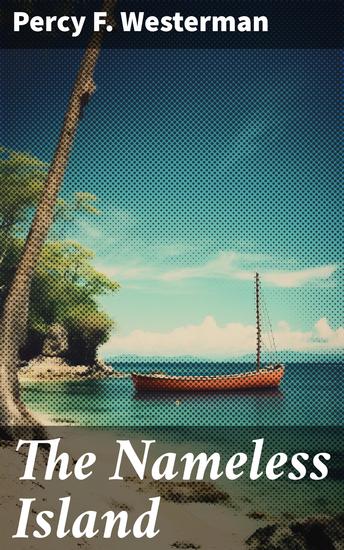
The Nameless Island - A Story of Some Modern Robinson Crusoes - cover

The Nameless Island - A Story of Some Modern Robinson Crusoes

Percy F. Westerman

Publisher: Good Press

  • 0
  • 0
  • 0

Summary

In "The Nameless Island," Percy F. Westerman crafts an engaging narrative that blends adventure and mystery against an exotic backdrop. Set on an enigmatic isle unexplored by conventional maps, the story unfolds through the lens of young adventurers who face both natural and supernatural challenges. Westerman's literary style is characterized by vibrant descriptions and an action-driven plot, reflective of early 20th-century adventure novels, where the quest for discovery resonates with themes of resilience and camaraderie. The richly detailed setting not only evokes the thrills of exploration but also invites readers to ponder the allure of the unknown and the nature of human courage. Percy F. Westerman was a prolific author and a passionate navigator in the realms of juvenile literature. His experiences as a naval officer during World War I and his profound appreciation for the sea and exploration significantly influenced his writing. "The Nameless Island" stands out in his oeuvre as it encapsulates his desire to inspire youthful readers to embrace adventure, instilling in them a sense of wonder and discovery that transcends the confines of their everyday lives. For those who relish tales of adventure infused with elements of suspense and intrigue, "The Nameless Island" is an essential read. Westerman's ability to evoke a sense of place and his skill in character development ensure that readers will be captivated from the first page to the last, making it a timeless addition to any adventure enthusiast's library.
Available since: 09/17/2023.
Print length: 165 pages.
Other books that might interest you

  • Grownup Matters - cover

    Grownup Matters

    Vsevolod Garshin

    • 0
    • 0
    • 0
    Much like his stories for children, Vsevolod Garshin's grownup prose may not always be easy to read due to difficult subject matter he tends to pick for his narratives. It is, however, always beautifully written and fascinating.
    Show book
  • Revolting Tales - cover

    Revolting Tales

    Todd A Curry

    • 0
    • 0
    • 0
    These are a few of the author's favorite chapters from the five star rated dark humor thriller by Todd Curry and Christopher Abbott. The voice over characters in this audio version were actually performed by the authors themselve. During a recent PODCAST in Miami, Author Todd Curry was asked to give an analogy of there recent work." I can compare these stories to... Well, picture the little skeleton guy from the TV series "Tales from the Crypt" and he meets Rod Serling from "The twilight Zone" and they eat Stephen KingAuthor Todd Curry
    Show book
  • Portraits of a Mother - A Novella and Stories - cover

    Portraits of a Mother - A...

    Shusaku Endo, Carly Phillips

    • 0
    • 0
    • 0
    Shusaku Endo (1923-1996), widely considered one of the greatest writers of the twentieth century, is known for his historical novels, which masterfully probe the encounters between the cultures and religions of East and West from a Japanese Catholic perspective. A salient and curious theme in his work is the unique image of a maternal God, and a concomitant sense of loss and longing for maternal love. 


    Confronting the Shadows, the semiautobiographical novella discovered at the Endo Museum in Nagasaki in 2020, is the author's most personal work and constitutes the interpretive key to his entire oeuvre. Translated into English here for the first time, it tells the story of Suguro, an aspiring novelist who was separated from his mother after his parents' divorce. Desperate to understand the woman his mother was, he sets out to retrace her footsteps, only to find himself face to face with his own demons. Accompanying the novella are five stories; exploring complex truths in uncomplicated prose, each tale discloses the intricacies of the sacred feminine and the apprehensions and joys of familial love. Endo once again beams bright light on the hidden corners of the human heart in this intimate and remarkable new collection.
    Show book
  • Russian Short Story The - Volume 4 - Nikolai Lyeskov to Anton Chekhov - cover

    Russian Short Story The - Volume...

    Anton Chekhov, Helena Blavatsky,...

    • 0
    • 0
    • 0
    The Russian novel has a reputation that is immense, both in narrative and in length.  Unquestionably though the ideas, themes and characters make many novels rightly revered as world class, as icons of literature. 
     
    Perhaps an easier way to enjoy a wider selection of the Russian heritage, with its varied and glorious literary talents, is with the short story.  These gems sparkle and beguile the mind with their characters and narrative, exploring facets of society and the human condition that more Western authors somehow find more difficult to navigate, or to explore, explain and relate to.   
     
    The Russian short story is, in many respects, in a genre of its own.  It is at its captivating best whether it’s an exploration of real-life experiences, through fantasy and fables and on to total absurdity. 
     
    In a land so vast it is unsurprising that it is a world almost unto itself. Cultures and landscapes of differing hues are packed together bound only by the wilful bonds and force of Empire. 
     
    The stories in this collection traverse the decades where one might be a serf under an absolute monarch, and the reality of that was pretty near to slavery, into an emancipation of sorts in the fields, or towns under the despotic will of landowners and the rich into the upheavals of Empire and then the overthrow of the ruling class and its replacement by the communists, who promised equality for all and delivered a society where the down-trodden remained the lowest yet vital cog of the state machine and its will.  
     
    Whilst Tolstoy, Gogol, Dostoevsky, Pushkin and Chekhov are a given in any Russian collection we also explore and include Andreyev, Korolenko, Turgenev, Blavatsky and many others to create a world rich and dense across a sprawling landscape of diverse people, riddled with the class and unfairness in perhaps some of the most turbulent times that Russia has ever experienced. 
     
    01 - The Russian Short Story - Volume 4 - An Introduction 
    02 - The Sentry by Nikolai Lyeskov 
    03 - A Witch's Den by Helena Blavatsky 
    04 - The General's Will by Vera Jelihovsky 
    05 - The Old Bell Ringer by Vladimir Korolenko 
    06 - The Shades, A Phantasy by Vladimir Korolenko 
    07 - The Signal by Vsevolod Garshin 
    08 - Dethroned by I N Potapenko 
    09 - The Kiss by Anton Chekhov 
    10 - The Lady with the Dog by Anton Chekhov 
    11 - The Bet by Anton Chekhov 
    12 - Gooseberries by Anton Chekhov
    Show book
  • About Love - From their pens to your ears genius in every story - cover

    About Love - From their pens to...

    Anton Chekhov

    • 0
    • 0
    • 0
    Anton Pavlovich Chekhov was born on 29th January 1860 in Taganrog, on the south coast of Russia.  
    His family life was difficult; his father was strict and over-bearing but his mother was a passionate story-teller, a subject Chekhov warmed to. As he later said; ‘our talents we got from our father, but our soul from our mother’.  
    At school Chekhov was distinctly average. At 16 his father mis-managed his finances and was declared bankrupt. His family fled to Moscow. Chekhov remained and eked out a living by various means, including writing and selling short sketches to newspapers, to finish his schooling. That completed and with a scholarship to Moscow University obtained he rejoined his family. 
    He was able to help support them by selling satirical sketches and vignettes of Russian lifestyles and gradually obtained further commissions. In 1884, he qualified as a physician and, although it earned him little, he often treated the poor for free, he was fond of saying ‘Medicine is my lawful wife, and literature is my mistress.’ 
    His own health was now an issue as he began to cough up blood, a symptom of tuberculosis.  Despite this his writing success enabled him to move the family into more comfortable accommodation.  
    Chekhov wrote over 500 short stories which included many, many classics including ‘The Kiss’ and ‘The Lady with a Dog’.  His collection ‘At Dusk’ won him the coveted Pushkin Prize when was only 26.  
    He was also a major playwright beginning with the huge success of ‘Ivanov’ in 1887.   
    In 1892 Chekhov bought a country estate north of Moscow. Here his medical skills and money helped the peasants tackle outbreaks of cholera and bouts of famine. He also built three schools, a fire station and a clinic.  It left him with less time for writing but the interactions with real people gained him detailed knowledge about the peasantry and their living conditions for his stories.  
    His most famous work, ‘The Seagull’ was received disastrously at its premiere in St Petersburg. It was later restaged in Moscow to highlight its psychological aspects and was a huge success. It led to ‘Uncle Vanya’, ‘The Three Sisters’ and ‘The Cherry Orchard’.  
    Chekhov suffered a major lung hemorrhage in 1897 while visiting Moscow. A formal diagnosis confirmed tuberculosis and the doctors ordered changes to his lifestyle.  
    Despite a dread of weddings the elusive literary bachelor quietly married the actress Olga Knipper, whom he had met at rehearsals for ‘The Seagull’, on 25th May 1901. 
    By May 1904 with his tuberculosis worsening and death imminent he set off for the German town of Badenweiler writing cheerful, witty letters to his family and assuring them his health was improving.  
    On 15th July 1904 Anton Chekhov died at Badenweiler.  He was 44.
    Show book
  • After the Funeral - From their pens to your ears genius in every story - cover

    After the Funeral - From their...

    Mary Butts

    • 0
    • 0
    • 0
    Mary Frances Butts was born on 13th December 1890 in Poole, Dorset. 
    Her early years were spent at Salterns, an 18th-century house overlooking Poole Harbour.  Sadly in 1905 her father died, and she was sent for boarding at St Leonard's school for girls in St Andrews. 
    Her mother remarried and, from 1909, Mary studied at Westfield College in London, and here, first became aware of her bisexual feelings.  She was sent down for organising a trip to Epsom races and only completed her degree in 1914 when she graduated from the London School of Economics.  By then Mary had become an admirer of the occultist Aleister Crowley and she was given a co-authorship credit on his ‘Magick (Book 4)’. 
    In 1916, she began the diary which would now detail her future life and be a constant reference point for her observations and her absorbing experiences. 
    During World War I, she was doing social work for the London County Council in Hackney Wick, and involved in a lesbian relationship.  Life changed after meeting the modernist poet, John Rodker and they married in 1918. 
    In 1921 she spent 3 months at Aleister Crowley's Abbey of Thelema in Sicily; she found the practices dreadful and also acquired a drug habit.  Mary now spent time writing in Dorset, including her celebrated book of short stories ‘Speed the Plough’ which saw fully develop her unique Modernist prose style. 
    Europe now beckoned and several years were spent in Paris befriending many artists and writing further extraordinary stories.   
    She was continually sought after by literary magazines and also published several short story collections as books. Although a Modernist writer she worked in other genres but is essentially only known for her short stories.  Mary was deeply committed to nature conservation and wrote several pamphlets attacking the growing pollution of the countryside. 
    In 1927, she divorced and the following year her novel ‘Armed with Madness’ was published.  A further marriage followed in 1930 and time was spent attempting to settle in London and Newcastle before setting up home on the western tip of Cornwall.  By 1934 the marriage had failed. 
    Mary Butts died on 5th March 1937, at the West Cornwall Hospital, Penzance, after an operation for a perforated gastric ulcer. She was 46.
    Show book