Join us on a literary world trip!
Add this book to bookshelf
Grey
Write a new comment Default profile 50px
Grey
Subscribe to read the full book or read the first pages for free!
All characters reduced
Man On Dog Sex 16-Pack - cover

Man On Dog Sex 16-Pack

Penelope Liksit

Publisher: Bmonly

  • 0
  • 20
  • 0

Summary

16 naughty tales featuring men and dogs! You won't be able to put this volume down, it contains just the kind of hot, nasty action that you're looking for! 
Available since: 06/07/2021.
Print length: 85 pages.

Other books that might interest you

  • Hell inc - cover

    Hell inc

    Dick Wybrow

    • 0
    • 0
    • 0
    Raz Frewer just made a bet with the Devil. 
    He needs a cure to save his dying wife, and Lucifer has it-- a mystical lamp, but its pieces were scattered around the globe centuries earlier. 
    If he can find them, he'll get his cure; if he can't, the Devil gets his soul. 
    Now, with the help of three willing strangers (well, two of them are willing), he's got just four days to search the planet for the pieces. 
    The powers of the ancient lamp can change the world. In the right hands, it can cure the sick. Turn dark to light and bad to good. 
    In the wrong hands, it can transform decent to decadent. Innocence to evil. Pink Floyd to Coldplay. 
    And the Lord of the Underworld has plans for it. 
    ★★★★★ "You will love this. Five stars... if I could give it more stars I would." 
    ★★★★★ "Reminds me of the great writing in Hitchhikers Guide to the Galaxy." 
    ★★★★★ "Best book I've read in a long time." 
    ★★★★★ "One of the best comedic adventure stories I've ever read!"
    Show book
  • Captain of the Guard - cover

    Captain of the Guard

    Ron C. Nieto

    • 0
    • 0
    • 0
    To protect the kingdom, he must prove his worth . . .  


    Oren Trevaine has never shaken the feeling that he's not good enough, but he's determined to avoid the same fate for his men. Oren's first task as Captain of the Guard is to transform his unruly, undisciplined soldiers into a formidable army—if only they would cooperate. 


    But Oren will need to act fast because the snow is melting with the budding of spring. Soon, the enemy will be able to traverse the main pass through the imposing Sansford Range and his men must be ready to patrol the mountain. 


    When Oren rescues Lady Joan and her traveling party from a band of Mirdoni raiders, his worst fears are realized. The enemy has utilized less accessible routes to infiltrate their territory, and an attack is imminent. 


    Now Oren must not only think like the enemy, but he will need to be one step ahead. With the kingdom relying on him and Lady Joan promising her favor if he returns alive, Oren will need to prove to her and his men that he truly is good enough. Or at the very least, die trying . . .
    Show book
  • Anthology of Classic Short Stories Vol 2 (Animals) - Kashtanka by Anton Chekhov Sredni Vashtar by Saki Kholstomer The Story of a Horse by Leo Tolstoy Jackals and Arabs by Franz Kafka A Dark-Brown Dog by Stephen Crane and others - cover

    Anthology of Classic Short...

    Saki Saki, Leo Tolstoy, Stephen...

    • 0
    • 0
    • 0
    In these selections, an animal plays an important role in the action or plot of the story. The animals in these stories are real or are stand-ins for humans:
    Sredni Vashtar by Saki (H. H. Munro)
    Kholstomer, The Story of a Horse by Leo Tolstoy
    A Dark-Brown Dog by Stephen Crane
    Kashtanka by Anton Chekhov
    The Cat That Walked By Himself by Rudyard Kipling
    The Black Cat by Edgar Allan Poe
    The Fly  by Katherine Mansfield
    The Boar-Pig by Saki (H. H. Munro)
    The Tiger Guest by Pu Songlbying
    Jackals and Arabs by Franz Kafka
    Show book
  • Mists over the Channel Islands - A Novel of World War II - cover

    Mists over the Channel Islands -...

    Sarah Sundin

    • 0
    • 0
    • 0
    Behind enemy lines, adversary and ally become impossible to distinguish.  
     
    The German invasion of the British Channel Islands shatters Dr. Ivy Picot's peaceful world, forcing her to shoulder the weight of her father's medical practice and hold together a family unraveling under the strain of war. As conditions worsen in Jersey with the arrival of thousands of forced laborers, Ivy's quiet allegiance to the Allies compels her to risk everything by providing medical aid to escaped workers--even as danger closes in. 
     
    Dutch engineer and resistance member Gerrit van der Zee volunteers to build fortifications for the Germans so he can secretly send maps and diagrams to the Allies. On his arrival in the Channel Islands, he crosses paths with Ivy, who shows him contempt for the uniform he wears. As tensions mount and their missions grow increasingly dangerous, Ivy and Gerrit must confront the cost of courage, the meaning of sacrifice, and whether love can survive in the shadow of war. Will their covert efforts turn the tide--or will they pay the ultimate price for defiance? 
     
    Renowned WWII fiction author Sarah Sundin crafts a compelling historical romance featuring enemies-to-lovers, wartime resistance, and medical intrigue--a tale of loyalty, resilience, and courage when love and duty collide.
    Show book
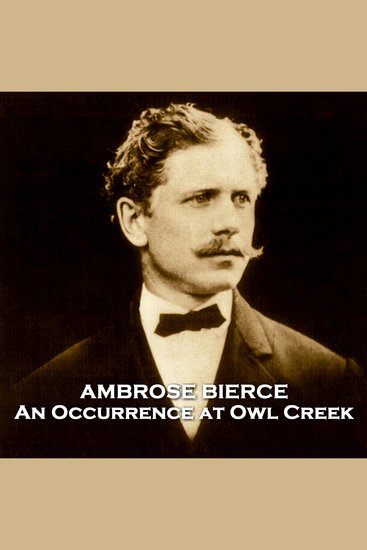
  • Occurrence at Owl Creek An - One of the most iconic stories in American literature - cover

    Occurrence at Owl Creek An - One...

    Ambrose Bierce

    • 0
    • 0
    • 0
    Ambrose Gwinnett Bierce was born on 24th June 1842 at Horse Cave Creek in Meigs County, Ohio. His parents were poor but they introduced him to literature at an early age, instilling in him a deep appreciation of books, the written word and the elegance of language.  
     
    Growing up in Koscuisko County, Indiana poverty and religion were defining features of his childhood, and he would later describe his parents as “unwashed savages” and fanatically religious, showing him little affection but always quick to punish. He came to resent religion, and his introduction to literature appears to be their only positive effect. 
     
    At age 15 Bierce left home to become a printer’s devil, mixing ink and fetching type at The Northern Indian, a small Ohio paper. Falsely accused of theft he returned to his farm and spent time sending out work in the hopes of being published. 
     
    His Uncle Lucius advised he be sent to the Kentucky Military Institute. A year later he was commissioned as an Officer.  As the Civil War started Bierce enlisted in the 9th Indiana Infantry Regiment.  
     
    In April 1862 Bierce fought at the Battle of Shiloh, an experience which, though terrifying, became the source of several short stories. Two years later he sustained a serious head wound and was off duty for several months. He was discharged in early 1865.  
     
    A later expedition to inspect military outposts across the Great Plains took him all the way to San Francisco. He remained there to become involved with publishing and editing and to marry, Mary Ellen on Christmas Day 1871.  They had a child, Day, the following year.  
     
    In 1872 the family moved to England for 3 years where he wrote for Fun magazine. His son, Leigh, was born, and first book, ‘The Fiend’s Delight’, was published. 
    They returned to San Francisco and to work for a number of papers where he gained admiration for his crime reporting. In 1887 he began a column at the William Randolph Hearst’s San Francisco Examiner.  
     
    Bierce’s marriage fell apart when he discovered compromising letters to his wife from a secret admirer. The following year, 1889 his son Day committed suicide, depressed by romantic rejection. 
     
    In 1891 Bierce wrote and published the collection of 26 short stories which included ‘An Occurrence at Owl Creek Bridge’.  Success and further works including poetry followed.  
     
    Bierce with Hearst’s resources helped uncover a financial plot by a railroad to turn 130 million dollars of loans into a handout. Confronted by the railroad and asked to name his price Bierce answered “my price is $130 million dollars. If, when you are ready to pay, I happen to be out of town, you may hand it over to my friend, the Treasurer of the United States”.  
     
    He now began his first foray as a fabulist, publishing ‘Fantastic Fables’ in 1899.  But tragedy again struck two years later when his second son Leigh died of pneumonia relating to his alcoholism. 
     
    He continued to write short stories and poetry and also published ‘The Devil’s Dictionary’.  
     
    At the age of 71, in 1913 Bierce departed from Washington, D.C., for a tour of the battlefields where he had fought during the civil war. At the city of Chihuahua he wrote his last known communication, a letter to a friend. It’s closing words were “as to me, I leave here tomorrow for an unknown destination,” Ambrose Bierce then vanished without trace.
    Show book

  • Forgotten Authors The - Women - Volume 1 - Alice Askew to Ethel Dell - cover

    Forgotten Authors The - Women -...

    Louisa Baldwin, Aphra Behn,...

    • 0
    • 0
    • 0
    Throughout the long centuries of human history is the want, and the need, to share information, to exchange ideas and for that knowledge and experience, for curiosity and learning, to be the basis of a civil society. 
    In literature the ambition is much narrower.  In order to be known, to be popular, you had to be published.  And for that people had to know you existed and your ideas worth reading.  Obviously for most of humanity’s time people couldn’t read and texts couldn’t be published in any great number. 
    In the 15th Century Gutenberg’s printing press began the revolution to address the second and by the 19th century had gathered pace with startling speed and mass distribution.  Education for the many was brought in to help people understand more of their world and, with new skills, how to have a better place within it.  Now, if the powers that owned the presses and means of distribution agreed an audience would now be able to avail themselves of your ideas, your printed words.  
    All too often the talents of women have been scorned, mocked and laughed at.  In reality that was more usually by those who’s own talents were hardly fit to even grace their shadows.   
    But society in general still connived and set women to one side in almost everything that men considered their rightful territory.  And literature was one such territory.  Remarkably resilient as well as talented these women strove to be published, to show themselves as equals.  The results more often than not proved that they were.   
    Sadly, in the thirst for the new, the recent and the past fell from sight, relegated to dark corners and dusty shelves.    
    But the printed word is rarely without someone, somewhere busying themselves through piles of papers and books rediscovering what a good story is, whatever its age. 
    In this volume we offer up a small selection of talents whose time has now come again.
    Show book