Join us on a literary world trip!
Add this book to bookshelf
Grey
Write a new comment Default profile 50px
Grey
Subscribe to read the full book or read the first pages for free!
All characters reduced
The War of Chupas - cover

The War of Chupas

Pedro de Cieza de León

Translator Clements R. Markham

Publisher: DigiCat

  • 0
  • 0
  • 0

Summary

In "The War of Chupas," Pedro de Cieza de León presents a gripping historical narrative that blends firsthand observation with detailed ethnographic insight, chronicling the fierce conflict between Spanish conquistadors and the indigenous communities of Peru. Written in the mid-16th century, the text reflects the tumultuous era of European expansion and indigenous resistance. Cieza de León's literary style features vivid descriptions and a meticulous approach to historical detail, effectively capturing the complex dynamics of power, culture, and survival in the Andean region. His work serves not only as a chronicle of warfare but as a testament to the cultural richness and resilience of the indigenous peoples during a time of radical upheaval. Cieza de León, a Spanish explorer and historian, spent years documenting the landscapes and societies of South America, influenced by his personal experiences and interactions with the indigenous populace. His connections with local communities, as well as his scholarly pursuits, informed his perspectives on conquest and colonization—factors that are distinctly evident in "The War of Chupas." Drawing from his experiences, Cieza de León effectively highlights the human impact of conflict, making his accounts both compelling and insightful. Readers seeking an in-depth understanding of early colonial history and its implications for indigenous cultures will find "The War of Chupas" to be a crucial addition to their literary exploration. This work not only serves as a historical document but also challenges readers to engage critically with themes of power, identity, and resistance, making it a relevant and thought-provoking read for both history enthusiasts and scholars alike.
Available since: 09/16/2022.
Print length: 397 pages.

Other books that might interest you

  • The Compendium of Erotica - Dictionary of Erotic Literature Dictionary of Aphrodisiacs and Love Potions Through the Ages - cover

    The Compendium of Erotica -...

    Harry E. Wedeck

    • 0
    • 1
    • 0
    Explore what sent hearts a flutter through the centuries in this compilation of erotic cultural and literary history.Dictionary of Erotic LiteratureRepresenting cultures around the world and spanning from ancient times to the twentieth century, this A-to-Z guide explores one of the most universal and enduring themes in literature. Entries range from Ovid’s Ars amatoria, second-century Gnosticism, and ninth-century Arabian poets, all the way up to the explicit novels published in Paris in the 1960s.As author Harry E. Wedeck explains in his introduction, a culture’s artistic and literary depictions of eroticism reveal a great deal about their way of life. In Dictionary of Erotic Literature, Wedeck draws on this endlessly vast topic to present an illustrative sampling of authors, written works, and terminology that will be of value to any student of literature or cultural history.Dictionary of AphrodisiacsFrom absinthe, almond soup, and Albertus Magnus to yarrow, yohimbine, and Émile Zola,this authoritative reference volume covers knowledge of aphrodisiacs spanning centuries and drawn from literature, spirituality, and ancient science. Entries include edible substances believed to enhance sexual performance, gemstones thought to possess amorous charms, gods and goddesses of love from various myths, and historic figures who contributed to studies and thought on aphrodisiacs.This dictionary reveals many intriguing ways for partners to enrich their relationships, including recipes to stimulate the gourmet lover using the many ingredients described in the book.Love Potions Through the AgesThis survey explores the evolution of love potion practices in societies over the centuries and across the world. Separate chapters focus on ancient Greece, Rome, India, and the Orient, as well as the Middle Ages and modern times. Wedeck relays the spiritual aspects of these concoctions as well as historical anecdotes about them. Recipes are also included, though Wedeck cautions that they are exclusively for academic purposes and not intended for personal use.
    Show book
  • Working with the Developmental Trauma of Childhood Neglect - Using Psychotherapy and Attachment Theory Techniques in Clinical Practice - cover

    Working with the Developmental...

    Ruth Cohn

    • 0
    • 0
    • 0
    This book provides psychotherapists with a multidimensional view of childhood neglect and a practical roadmap for facilitating survivors' healing. 


    Working from a strong base in attachment theory, esteemed clinician Ruth Cohn explores ways therapists can recognize the signs of childhood neglect, provides recommendations for understanding lasting effects that can persist into adulthood, and lays out strategies for helping clients maximize therapeutic outcomes. Along with extensive clinical material, chapters introduce skills that therapists can develop and hone, such as the ability to recognize and discern nonverbal attempts at communication. They also provide an array of resources and evidence-based treatment modalities that therapists can use in session. 


    Working with the Developmental Trauma of Childhood Neglect is an essential book for any mental health professional working with survivors of childhood trauma.
    Show book
  • Italian History - An Overview of Cities Venetians and Historic Sites - cover

    Italian History - An Overview of...

    Kelly Mass

    • 0
    • 0
    • 0
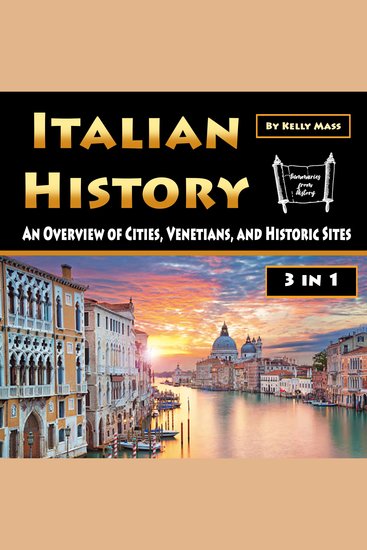
    This is a 2-book combo, which contains these books: 
    1: Naples (or, in Italian, Napoli) is the local capital of Campania and Italy's third-largest city, after Rome and Milan, with a population of 967,069 people living within the city's administrative limits since 2017. With a population of 3,115,320 people, its province-level town is Italy's third-most inhabited urbane city, and its city periods for around twenty miles outside the city walls. 
    Naples, established by Greeks in the first millennium BC, is just one of the world's oldest constantly occupied cities. 
    On the isle of Megaride, a district, referred to as Parthenope, was established in the ninth century BC. It was re-founded as Neápolis in the sixth century BC. 
    Naples has a long history, all the way dating back to Roman times, the outbreak of the Vesuvius, and much more. Let’s learn more about this fascinating city’s history. 
    2: When we think of Venice, we think of masks, canals, murals and frescoes, and little “gondoliers” with picturesque boats. Venice, indeed, has an impressive artistic history. But did you know that Venice was also, for a while, a considerably-sized empire? 
      
    Although no enduring historic records associate with the creation of Venice, the Republic of Venice's history is typically said to start at 12 a.m. on Friday, March 25th, AD 421, when authorities from Padua established the city to develop a trading center in that area of northern Italy. 
    The creation of the Venetian republic is said to have accompanied the starting of the church of St. James at the exact same time. Still, the church (which is believed to be that of Saint Giacomo di Rialto) dates no earlier than the l lth century, and no after the mid-twelfth century.
    Show book
  • I Think Therefore I Orgasm - Philosophy of Sex - cover

    I Think Therefore I Orgasm -...

    Sylvain Bosselet

    • 0
    • 0
    • 0
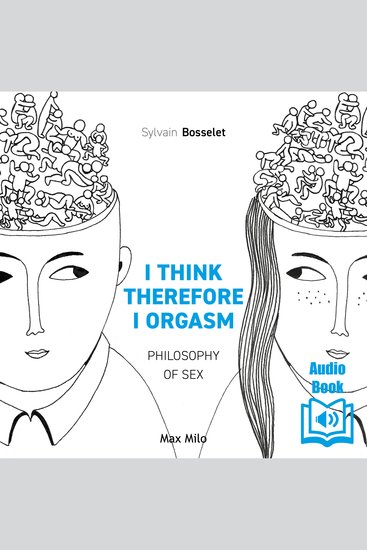
    In their search for truth and happiness, the classical philosophers overlooked one of the most important facets of our lives—sexuality. The author rectifies this error by questioning this field of knowledge and practice: What is "good" coitus? What is a "nice" ass? What is a "legal" sexual act? What is universally "true" in sexuality? Who is "perverse?" Does sex represent a momentary pleasure, or could it embody a foundation for happiness? Using concrete examples, Sylvain Bosselet deconstructs the preconceptions that hinder our freedom and hinder sexual happiness. He seeks to lay the foundations for a philosophy of sex.
    Show book
  • Echolocation - cover

    Echolocation

    Sally Bliumis-Dunn

    • 0
    • 0
    • 0
    As a series, the poems in Echolocation swing back and forth from the natural world keenly observed--rain, birds, sunflowers, even a clam-- to the contortions of the human heart, mostly caused by hurt and loss. And isn't that where the best poetry resides, between the thing and the emotion, the swan and the grief? 
    --BILLY COLLINS 
    Echolocation is a collection driven by image and figurative language-- often the simile--and Bliumis-Dunn has both power of observation and imagination which she uses to great, lovely, terrifying and always compelling effect in these vivid, near- and far-looking poems. 
    --MARTHA RHODES 
    Sally Bluimis-Dunn's spare and stunning lyrics of grief and loss restore us to the clarity, and the clear finality, of our deepest emotions. They are grave and formal while being at the same time almost unbearably human and intimate. 
    --VIJAY SESHADRI 
    Sally Bliumis-Dunn leaves the reader of Echolocation in deceptively complex verbal landscapes in which both literal and figurative language play off each other with spare yet lapidary results in poems that focus on such everyday subjects as family, animals, loss, the seasons, menopause, and disaster with a compassionate, distilling eye. The voice that emanates from these poems is quiet but deeply resonant with generous stirrings beneath. She writes with what John Keats has called "disinterestedness"--a clear-headed objectivity that combines lucid narrative with lyrical charge. 
    --CHARD DENIORD 
    *Cover design by Wendy Letven
    Show book
  • From Shattered to Restored - Recovering Hope Discovering Purpose - cover

    From Shattered to Restored -...

    Nanette V Larson

    • 0
    • 0
    • 0
    In this stunningly transparent memoir, Nanette Larson shares her journey from a life of constant hopelessness and despair, deep depression, crippling anxiety, and suicidality to one full of victorious hope and purpose. Realizing that she had allowed the labels that had been pasted upon her by medical professionals and society alike to define who she was, Nanette changed her perspective by seeing herself through the eyes of her Maker. Taking control of her thoughts was only the first step of a winding road to wellness, however. As a mental health professional herself, Nanette now shares with her readers the techniques that helped her address every part of her being - spirit, soul, and body. From distressed patient to nationally recognized deputy director and ambassador of Wellness and Recovery Services for the Illinois Division of Mental Health, Nanette is living proof that full recovery from mental health issues is, indeed, possible, and a successful, happy, healthy life can be found on the other side of the struggle.
    Show book