Join us on a literary world trip!
Add this book to bookshelf
Grey
Write a new comment Default profile 50px
Grey
Subscribe to read the full book or read the first pages for free!
All characters reduced
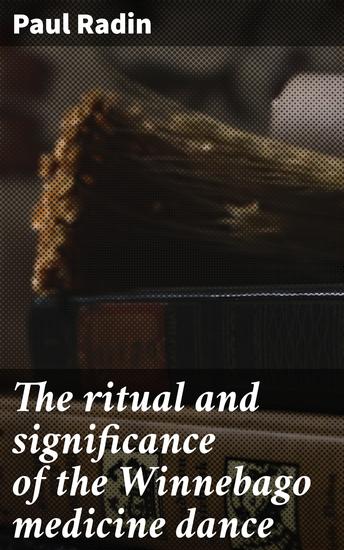
The ritual and significance of the Winnebago medicine dance - Unveiling the Sacred Rituals: Cultural Insights into Winnebago Medicine Dance - cover

The ritual and significance of the Winnebago medicine dance - Unveiling the Sacred Rituals: Cultural Insights into Winnebago Medicine Dance

Paul Radin

Publisher: Good Press

  • 0
  • 0
  • 0

Summary

In "The Ritual and Significance of the Winnebago Medicine Dance," Paul Radin meticulously examines the intricate cultural practices of the Winnebago tribes, focusing particularly on their profound medicine dance rituals. Combining ethnographic detail with a comparative lens, Radin elucidates the complex symbolism and spiritual beliefs that underpin the dance, revealing its function as both a healing practice and a community unifier. His scientific yet accessible literary style allows readers to engage with the nuanced interplay between ritual and social life within the Winnebago community, situated within the broader context of Native American spiritual practices and traditions. Paul Radin was a pioneering anthropologist deeply influenced by his commitment to indigenous cultures and their narratives. His extensive fieldwork, particularly among the Winnebago people, allowed him to gain unique insights into their customs and belief systems. Radin'Äôs anthropological background, combined with a profound respect for the cultural practices he studied, catalyzed his desire to document and share the intricacies of Native American rituals, challenging prevailing Eurocentric perspectives in academia. This book is a compelling read for scholars of anthropology, cultural studies, and indigenous studies, as well as for anyone interested in gaining a deeper understanding of Native American spirituality. Radin'Äôs insightful analysis not only preserves the richness of Winnebago traditions but also invites readers to reflect on the broader implications of cultural rituals in human society.
Available since: 07/10/2023.
Print length: 78 pages.
Other books that might interest you

  • What WE Lost - Inside the Attack on Canada’s Largest Children’s Charity - cover

    What WE Lost - Inside the Attack...

    Tawfiq S. Rangwala

    • 0
    • 0
    • 0
    TORONTO STAR #1 BESTSELLER 
    GLOBE AND MAIL AND AMAZON BESTSELLER
    		 
    WE Charity had changed the game. In its 25 years, the international development charity and youth empowerment movement impacted lives the world over. Innovation was at its core: while most charities focus on making the world a better place for our children, WE Charity focused on making better children for our world. Founded by the ubiquitous Kielburger brothers, WE Charity operated more like a Silicon Valley start-up than a traditional NGO. From creating stadium-filling events with A-list celebrity ambassadors to building schools, infrastructure, a hospital and even a university at lightning speed, the organization was always full-throttle.
    		 
    Its for-profit partner, ME to WE, filled shelves with socially-conscious products that allowed consumers to track the impact of their spending, invited young people and families to visit and work in communities WE Charity supported, and channelled proceeds back into the charity to make it self-sustaining.
    		 
    Unique and disruptive, WE generated energy, engagement, and accolades. But it also bred misunderstanding and, in some quarters, resentment. With a long history of propelling youth to act in support of myriad causes—making ”doing good doable,” the slogan went—WE Charity was the ideal candidate to administer the Canada Student Services Grant (CSSG) program. The program, if it had happened, involved matching students within non-profits in a summer in which Covid had stolen most job opportunities. And then, WE Charity in Canada was gone. It didn’t crumble. It crashed. Unwittingly caught in the crosshairs of a partisan fight that reflects the increasing ”Americanization” of Canadian politics, WE Charity was forced to shutter its doors in Canada.
    		 
    Once a media darling with politicians of all stripes clamouring to appear at its events, the charity was suddenly a pariah accused (falsely) of a litany of wrongdoings: political cronyism; governance failures; heavy-handed decision-making by executives; lining the pockets of the founders; manipulating children; mistreating donors; racism and international corruption. Many were shocked. Detractors were delighted. Led by fringe commentators, the media quickly piled on. Allies who spoke out were castigated and forced to take cover. But while most Canadians have heard of the so-called ”WE Charity Scandal”—at times forming strong views—few are able to recount the true facts.
    		 
    Misperceptions and confusion have ruled the day. And many of the most important voices—including those of educators and young people—have gone unreported and unheard. In this book, former WE board member and lawyer Tawfiq Rangwala unpacks the evidence and provides the critical context around the headline-grabbing controversies that have shaped the narrative. Drawing on the factual record, his personal experiences inside the organization, and extensive interviews with supporters and critics, Rangwala cuts through the fog and explains what really happened, why it happened, and who should be held to account. The author goes even deeper with insightful, compassionate and heartbreaking interviews with WE supporters, benefactors and the politicians that used the awarding of the contract during the global pandemic crisis to paint a picture of conflicts of interest and special favours by the Prime Minister. Along the way, we learn what has been lost and the personal cost to Canadians and people around the world.
    		 
    More than just a story of the rise and fall of an iconic global charity, this is a cautionary tale of the collateral damage that can be levelled by unchecked partisan politics, social media pundits, and sensationalist headlines. In the end, Canadians are left to ponder whether the real ”scandal” is the demise of WE Charity and the values of fair play and due process that most of us hold dear.
    Show book
  • Sign-Language and Mythology as Primitive Modes of Representation - Ancient Egypt the Light of the World Book 1 - cover

    Sign-Language and Mythology as...

    Gerald Massey

    • 0
    • 0
    • 0
    “Myth-making Man” did not create the Gods in his own image. The primary divinities of Egypt, such as Sut, Sebek, and Shu, three of the earliest, were represented in the likeness of the Hippopotamus, the Crocodile, and the Lion; whilst Hapi was imaged as an Ape, Anup as a Jackal, Ptah as a Beetle, Taht as an Ibis, Seb as a Goose. So it was the Goddesses. They are the likenesses of powers that were super-human, not human…. A huge mistake has hitherto been made in assuming that the Myth-Makers began by fashioning the Nature-Powers in their own human likeness. –from “Sign Language and Mythology as Primitive Modes of Representation” It goes unappreciated by modern Egyptologists, but it is embraced by those who savor the concept of a “hidden history” of humanity, and those who approach all human knowledge from the perspective of the esoteric. Gerard Massey’s massive Ancient Egypt: The Light of the World–first published in 1907 and the crowning achievement of the self-taught scholar–redefines the roots of Christianity via Egypt, proposing that Egyptian mythology was the basis for Jewish and Christian beliefs. Here, Cosimo proudly presents Book 1 of Ancient Egypt, in which Massey argues that “primitive man” found no human agency in the phenomena of the natural world, which led to a woeful misinterpretation of Egyptian hieroglyphics by the Greeks and Romans as well as a misunderstanding of the essence of Egyptian mythology. As a consequence, Massey contends, a deep fount of wisdom of the ancients has been lost, and he goes on to reveal how it can be rediscovered. Peculiar and profound, this work will intrigue and delight readers of history, religion, and mythology. British author GERALD MASSEY (1828-1907) published works of poetry, spiritualism, Shakespearean criticism, and theology, but his best-known works are in the realm of Egyptology, including A Book of the Beginnings and The Natural Genesis.
    Show book
  • America’s First Korean War: The History and Legacy of the United States Expedition to Korea in 1871 - cover

    America’s First Korean War: The...

    Editors Charles River

    • 0
    • 0
    • 0
    hips engaged in trade in Asia were at risk from pirates, and shipwrecked sailors were at the mercy of locals. Additionally, American whaling ships came to dominate the whaling trade in the Pacific and were also vulnerable to piracy and to incidents when they docked at Pacific ports to refresh supplies. American warships investigated incidents of piracy, including occasional punitive expeditions to punish pirates or their maltreatment of shipwrecked sailors. 
    Given the distances involved, the captains of warships had a great deal of discretion to commit their ships to action as they saw fit. Before they left port, they were usually given deliberately broad instructions by the Secretary of the Navy or by the President. U.S. ships got to Asia by way of Cape Horn at the tip of South America, or by the Cape of Good Hope around southern Africa, as there was no Suez Canal to shorten the very long voyage until 1869, and there was no easy communication between Washington and California until the transcontinental telegraph in 1861. California became a state in 1850, and the Navy was quick to establish a naval base there, setting up the Mare Island Navy Yard base near San Francisco in 1854. The first warship constructed there was in 1859. 
    An American warship was involved in a punitive expedition in the Pacific as early as 1813-14 at Nuku Hiva in the Marquesas. American naval landing forces fought battles at Quallah Batoo in 1831 and at Muckee in 1839, both in Sumatra. The Navy was involved in a battle in the Gilbert Islands in 1841. The Navy sometimes cooperated with the Royal Navy in actions against pirates off the Chinese coast and was involved in fighting in China in the 1850s and 1860s. There were incidents when American warships were involved not only in China, but also Vietnam and Japan. Americans participated in the violence in Japan as the Shogunate fell and the Meiji restoration began.
    Show book
  • William Wallace - The History Facts and Fight for Freedom of a Scottish Hero - cover

    William Wallace - The History...

    Kelly Mass

    • 0
    • 0
    • 0
    The Film "Braveheart" has it right on some points but does a bad job with historic precision with others, most likely because they're just attempting to dramatize a Hollywood film, not promoting dull precision. 
    Let's see what info we can learn from history about the real William Wallace. William Wallace was a Scottish knight. In order to comprehend the impact of that time's knight civilization and roles, we will discuss the idea itself. We will also discuss the brutal reign of Edward I of England, the sadistic murder of William Wallace (worse than you might think), and several other factors contributing to his capture, his resistance, and his following.
    Show book
  • Mounted by the Alien Demon - A Gay Science Fiction Tale - cover

    Mounted by the Alien Demon - A...

    Jane Fox

    • 0
    • 0
    • 0
    It has been three weeks since space pilot Dustin has gotten any action, so he's happy to finally get his ship into port. But his plans for some recovery debauchery get derailed when he is commanded to transport aliens in the shape of tall, ripped demons to a diplomatic summit. These demons are so hot he can almost taste it...but then he finds out they have taken a vow of chastity for their mission, and they expect him to as well. 
    Then, it turns out one of the demons can't keep a vow any better than Dustin can, and soon Dustin is learning what it means to be mastered by a huge, hot devil.
    Show book
  • Healing Minds - A Practical Guide to Understanding and Supporting Someone with PTSD - cover

    Healing Minds - A Practical...

    Bob Babson

    • 0
    • 0
    • 0
    This audiobook is narrated by an AI Voice.   
    Healing Minds: A Practical Guide to Understanding and Supporting Someone with PTSD 
    by Bob Babson 
    Living with post-traumatic stress disorder (PTSD) can feel overwhelming—not only for those experiencing it but also for the family members, friends, and caregivers who want to help. Healing Minds is a compassionate, easy-to-follow guide that sheds light on the challenges of PTSD while offering practical steps to provide meaningful support. 
    Bob Babson presents clear explanations of what PTSD is, how it affects the mind and body, and why recovery takes patience and care. With real-world strategies, this book empowers readers to create a supportive environment and become a steady source of encouragement. 
    Inside this guide, you’ll discover: 
    A simple breakdown of PTSD symptoms and triggers 
    Effective communication strategies to avoid conflict and build trust 
    Coping techniques that bring comfort during stressful moments 
    Practical self-care advice for both supporters and survivors 
    Hopeful pathways toward healing and resilience 
    Whether you’re a spouse, parent, friend, or professional, this book will help you better understand PTSD and provide the tools to walk alongside someone you care about on their journey toward recovery. 
    Healing Minds is more than a guide—it’s a lifeline of empathy, knowledge, and encouragement for anyone touched by trauma.
    Show book