Join us on a literary world trip!
Add this book to bookshelf
Grey
Write a new comment Default profile 50px
Grey
Subscribe to read the full book or read the first pages for free!
All characters reduced
The Lion of Poland - The Story of Paderewski - cover

The Lion of Poland - The Story of Paderewski

Paul Hume, Ruth Fox Hume

Publisher: Good Press

  • 0
  • 0
  • 0

Summary

The Lion of Poland presents an exploration of the indomitable spirit and historical complexity of Poland through a captivating array of literary works. Spanning narrative prose and poignant poetry, the collection captures the resilience and cultural heritage of a nation defined by its tumultuous past and enduring hopes. Readers are taken on a journey through time, discovering the nuanced beauty and stoic fortitude that characterize Polish identity. This anthology not only showcases the country's legendary struggles and triumphs but also invites introspection on universal themes of freedom, identity, and the human condition, with standout pieces illuminating deep emotional and historical truths. Contributed by the notable editors Paul Hume and Ruth Fox Hume, the anthology brings together voices that reflect Poland'Äôs diverse literary canon. These authors, from varied backgrounds, offer insights grounded in both personal and communal experiences shaped by broader historical and cultural movements, such as Romanticism and post-war literary renaissance. Together, they weave a rich tapestry of narratives that fundamentally connect with the reader, illustrating how Poland's story is one of collective memory as well as individual expression. The Lion of Poland serves as an essential gateway to understanding the country'Äôs multifaceted culture by providing a platform for a multiplicity of voices and styles. It offers readers an unparalleled opportunity to engage with a variety of perspectives and literary forms while encouraging dialogue around themes of perseverance and cultural identity. This anthology is ideal for anyone seeking to deepen their knowledge of Polish literature and history, highlighting the power of collective literary dialogue to foster empathy and insight.
Available since: 11/15/2023.
Print length: 89 pages.
Other books that might interest you

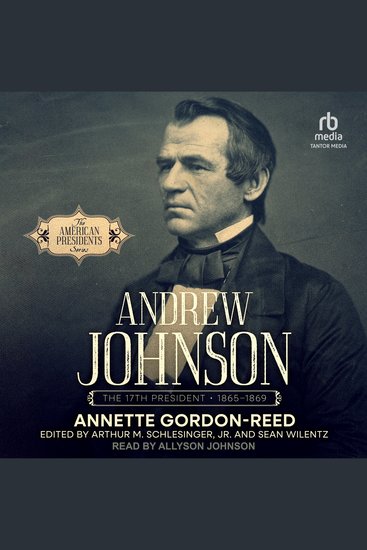
  • Andrew Johnson - The American Presidents Series: The 17th President 1865-1869 - cover

    Andrew Johnson - The American...

    Annette Gordon-Reed

    • 0
    • 0
    • 0
    A Pulitzer Prize-winning historian recounts the tale of the unwanted president who ran afoul of Congress over Reconstruction and was nearly removed from office 


    Andrew Johnson never expected to be president. But just six weeks after becoming Abraham Lincoln's vice president, the events at Ford's Theatre thrust him into the nation's highest office. Johnson faced a nearly impossible task—to succeed America's greatest chief executive, to bind the nation's wounds after the Civil War, and to work with a Congress controlled by the so-called Radical Republicans. Annette Gordon-Reed, one of America's leading historians of slavery, shows how ill-suited Johnson was for this daunting task. His vision of reconciliation abandoned the millions of former slaves (for whom he felt undisguised contempt) and antagonized congressional leaders, who tried to limit his powers and eventually impeached him. 


    The climax of Johnson's presidency was his trial in the Senate and his acquittal by a single vote, which Gordon-Reed recounts with drama and palpable tension. Despite his victory, Johnson's term in office was a crucial missed opportunity; he failed the country at a pivotal moment, leaving America with problems that we are still trying to solve.
    Show book
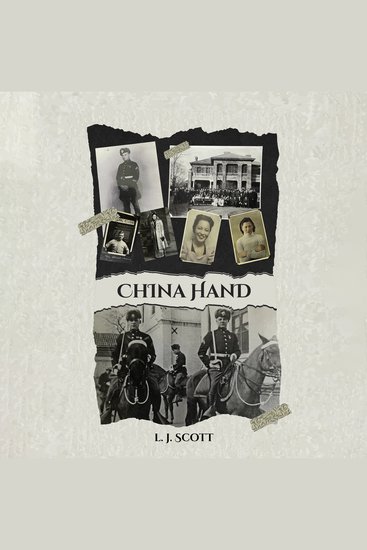
  • China Hand - cover

    China Hand

    L.J. Scott

    • 0
    • 0
    • 0
    This audiobook is narrated by an AI Voice.   
    Lawrence Joseph Scott was born in 1910 in Saskatchewan, Canada. His family made their way south and ended up in Alabama. In 1924, having finished 8th grade at the age of 14, L.J. lied about his age and enlisted in the United States Marine Corps. 
    Sometime in the 1930s, L.J. was stationed in Peking, China. As a member of the famous China Marines, he performed his duties on horseback. For a period of time, his commanding officer was Captain Lewis Burwell "Chesty" Puller, one of the most famous and decorated U.S. Marines. Years later, L.J. was transferred to Pearl Harbor, along with his wife, Cliz. They were there on December 7th, 1941. 
    After WWII ended, he retired to El Cajon, California. Later in life, L.J. took advantage of the G.I. Bill and attended Grossmont College, where he graduated Valedictorian with a G.P.A. of 4.0. He died in 1985 and was buried at Fort Rosecrans National Cemetery in San Diego. He is survived by his son Robert, and his daughters Bonnie and Sandra
    Show book
  • Reverence - A priest's life of holiness and humanity - cover

    Reverence - A priest's life of...

    Magdalen Smith

    • 0
    • 0
    • 0
    Part memoir, part reflection on vocation, Reverence charts the past and present life of an Anglican and female priest, one of the first women to be ordained in the Church of England in the 1990s. Magdalen Smith grew up in a clergy family, married a cleric, then became one herself. Working in many different contexts, cathedral, outer estate, city and countryside, she draws from a depth of experience in ministry and spirituality and reflects on how the church has changed over the years. Describing the often quirky and profound experiences of human life where all is infused with the holy, the book communicates a deep love of enabling others to discover a sense of the divine for themselves.
    
     
    Reverence is a journey through one woman’s life, beginning in the 23-roomed vicarage where she grew up and ending in a place where her priestly calling is still believed to be relevant in a rapidly changing world. It takes familiar concepts of spirituality and through personal stories, reflections on art, culture and place, seeks to connect with the sense of vocation and an intuitive sense of the numinous that many people feel whether they describe themselves as religious or not.
    Show book
  • A Garland of Earth - From their pens to your ears genius in every story - cover

    A Garland of Earth - From their...

    Dorothy Edwards

    • 0
    • 0
    • 0
    Amelia Ann Blanford Edwards was born on 7th June 1831 in Islington, London.  She was educated at home by her mother and showed early promise as a writer, publishing her first poem at the age of 7 and her first story at 12.  Thereafter several popular periodicals published her poetry, stories and articles. 
    In addition she also illustrated some of her own writings and painted scenes from books she had read.  This talent was not supported by her parents, who saw an artist’s life as scandalous.  Undeterred Amelia took up composing and performing music until a bout of typhus caused throat damage.  Other interests soon followed until, early in the 1850s, Amelia focused exclusively on writing.  Her early novels were well received, and with ‘Barbara's History’ in 1864, a work revolving around bigamy, her reputation was established.  
    Amelia’s pen was also the purveyor of ghost stories for magazines and are still anthologized as classic tales to this day. 
    In January 1851, Amelia became engaged, apparently to please her parents, but she quickly broke it off.  In reality her emotional attachments were almost exclusively with women.  From the early 1860s she lived with Ellen Drew Braysher, a widow 27 years her senior, until both women died in early 1892.  During this relationship other women also entered and left her life.  Her frequent travelling companion, Lucy Renshaw, accompanied her to Egypt in the winter of 1873 and there she found a life-changing interest in Egyptology.  Aware of increasing threats from tourism and modern development she became an advocate for their research and preservation.  
    To advance the work Amelia largely abandoned much of her writing in favour of Egyptology and even took on strenuous lecture tours to raise funds. 
    After catching influenza, Amelia Edwards, ‘the Godmother of Egyptology’ died on 15th April 1892 at Weston-super-Mare.  She was 60.
    Show book
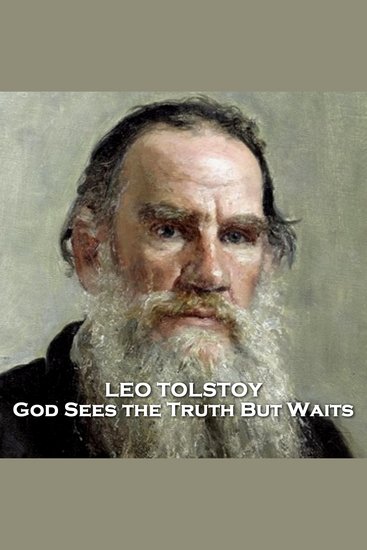
  • God Sees the Truth But Waits - From their pens to your ears genius in every story - cover

    God Sees the Truth But Waits -...

    Leo Tolstoy

    • 0
    • 0
    • 0
    Leo Tolstoy was born in 1828 in the Russian province of Tula to a wealthy noble family. As a child, he had private tutors but he showed little interest in any formal education. When he went to the University of Kazan in 1843 to study oriental languages and law, he left without completing his courses.  Life now was relaxed and idle but with some writing also taking place.  Gambling debts forced an abrupt change of path and he joined the army to fight in the Crimean War.  He was commended for his bravery and promoted but was appalled at the brutality and loss of life.  He recorded these and other earlier experiences in his diaries which formed the basis of several of his works. 
    In 1852 ‘Childhood’ was published to immediate success and was followed by ‘Boyhood’ and ‘Youth’. 
    His experience in the army and the horrors he witnessed resulted in ‘The Cossacks’ in 1862 and the trilogy ‘Sevastopol Tales’. After the war he travelled around Europe, visiting London and Paris and meeting such luminaries as Victor Hugo and Charles Darwin.  
    It was now that Tolstoy began his masterpiece, ‘War and Peace’. Published in 1869 it was an epic work that changed literature. He quickly followed this with ‘Anna Karenina’.  
    These successes made Tolstoy rich and helped him accomplish many of his dreams but also brought problems as he grappled with his faith and the lot of the oppressed poor. These revolutionary views became so popular that the authorities now kept him under surveillance.  
    He led a life of asceticism and vegetarianism and put his socialist ideals into practice by establishing numerous schools for the poor and food programmes. He also believed in giving away his wealth, which caused much discord with his wife.  
    His writing continued to bring forth classics such as ‘The Death of Ivan Ilyich’ and many brilliant and incisive short stories such as ‘How Much Land Does A Man Need’.  
    In 1901 Tolstoy was excommunicated from the Church and controversially deselected for the Nobel Prize for Literature. 
    Whilst undertaking a pilgrimage by train in October 1910 with his daughter Aleksandra he caught pneumonia in the nearby town of Astapovo.  Leo Tolstoy died on November 9th, 1910, he was 82.
    Show book
  • A Bar in Toledo - The Untold Story of a Mafia Frontman and a Grammy-winning Song - cover

    A Bar in Toledo - The Untold...

    Stephanie Abbajay, Dominic Vaiana

    • 0
    • 0
    • 0
    When Duane Abbajay took over his brother’s bankrupt nightclub in Toledo, Ohio in 1962, he promised his wife it would be a quick turnaround to bail his brother out and clear the family name. Instead, he became the face of a bar that transformed the city’s entertainment scene and inspired a Grammy-winning country song—all under the thumb of a trigger-happy mafia boss. 
    Informed by interviews with crime historians, employees, and patrons and corroborated by FBI and police reports, Dominic Vaiana and Stephanie Abbajay have crafted a Rust Belt psychodrama that offers a unique perspective into the worlds of organized crime and the music business, which were closely entwined. 
    Duane Abbajay, the 10th child of Syrian immigrants, went from having a Norman Rockwell-like all-American family life to owning and operating the most successful nightclub outside of Detroit and Chicago, all with the help of the mob, a secret he kept from his family. 
    A Bar in Toledo is a story of rock and roll, the Rust Belt, and redemption. It’s a story of the American Dream and the cost of success. Of a man who wanted it all, got it all, and the high price he paid to keep it. 
    Emotional, theatrical, and dripping with nostalgia, A Bar in Toledo is a love letter to the golden age of American music—and the dark underworld that helped make it all possible.
    Show book