Join us on a literary world trip!
Add this book to bookshelf
Grey
Write a new comment Default profile 50px
Grey
Subscribe to read the full book or read the first pages for free!
All characters reduced
Monsieur Cherami - cover

Monsieur Cherami

Paul de Kock

Translator George Burnham Ives

Publisher: DigiCat

  • 0
  • 0
  • 0

Summary

In "Monsieur Cherami," Paul de Kock masterfully weaves a narrative infused with humor and social commentary, offering readers a glimpse into the complexities of early 19th-century French society. The novel utilizes a light, conversational prose style that often dips into satire, allowing de Kock to explore themes of love, class disparity, and the nuances of Parisian life. Set against the backdrop of the developing bourgeois class, the book's characters reflect the evolving social dynamics of the era, artfully engaging readers with both their charm and folly. Paul de Kock was a prolific French novelist whose keen observations of society spring from his own life experiences. Born into modest means, he adeptly portrayed the struggles and aspirations of common people, deftly contrasting their lives with the aspirations of the upper classes. His firsthand exposure to the vibrancy of Parisian culture and his understanding of its class divisions imbues "Monsieur Cherami" with authenticity and depth, influencing de Kock's unique approach to storytelling. Readers are encouraged to delve into "Monsieur Cherami" for a rich exploration of human relationships and societal norms. De Kock's lively characters and witty narrative will captivate anyone interested in the intricacies of love and society during an era ripe for change.
Available since: 08/01/2022.
Print length: 301 pages.

Other books that might interest you

  • Dogman - cover

    Dogman

    Rohan Everingham

    • 0
    • 0
    • 0
    Well known current affairs investigator David Chase nick-named 'the axe' from popular segment  
    'Cut to the Chase' has been on the tail of a murderer who was released from jail after killing a  
    man but who claims he was a wolf man at the time. A good old fashioned right-wing 'moral  
    outrage sensationalist' field-operative, Chase doesn't like what he sees happening to the news  
    world around him - especially at his long-standing conservative TV Network, CNT (we missed 'u') , which, under the spinning eye of Veronica Fox, is reverting to myth making, 'false facts' and disinformation.  
    Chase feels his expiration date is closing in as he tries to keep traditional gutsy tabloid antics  
    front and center. He gets his chance to bribe Ted Victor the self-alleged 'wolf man of Wirrawee'  
    in for a live interview... and to show real guts - on the crest of a full moon. Veronica Fox can't  
    help but get her magic wand spinning and tries molding it all for the alt-right, while Chase  
    desperately clings onto his authority as a 'common sense' conservative reporter. The world  
    comes to a standstill as Ted and Chase go face-to-face in an event billed as the next tabloid  
    'Frost versus Nixon' - left activists surround the building and the recipe is set for an outlandish  
    denouement...
    Show book
  • Eliza - cover

    Eliza

    Barry Pain

    • 0
    • 0
    • 0
    A gentle, yet deliciously humourous series of anecdotes following the life of the main character and his wife, Eliza. Full summary to follow. (Summary by Nigel Boydell)
    Show book
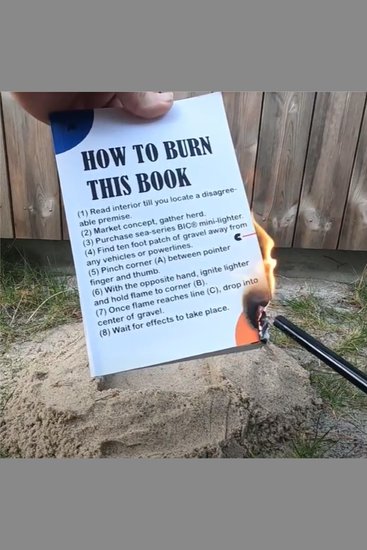
  • How To Burn This Book - cover

    How To Burn This Book

    Evan Witmer

    • 0
    • 0
    • 0
    Step one of burning a book is finding a disagreeable premise within. To simplify this process, each story is followed by a reason it should be immolated, opined by the author’s critics. 
    "Lucky Girl Noir" is about a cop solving the murder of a ‘Lucky Girl,’ a woman born with probability consistently in her favor. Burning this story would be a win against plagiarism. 
    "Three Days West" is an acid-Western about cowboys exploiting their otherworldly connection in frontier Colorado. This story deserves burning for ruining pulp heroes. 
    "Zantar" is Tarzan with aliens and raccoons. Burning seems appropriate, as it continues the author’s insatiable bloodlust. 
    "Sea Creatures" is a sapphic love story between a siren and a mermaid. The story deserves burning for suggesting bras are an art form. 
    "Lizard People Take Orlando" tells the story of Zaffre Davis, a student running for mayor while keeping his life as a scalie secret. Burning should be considered due to its depictions of furries as Democrats. 
    "The Spirit Realm" is about the survivor of a mass poisoning who wakes up to find he can talk to alcohol. No character represents absinthe, a crime best punished by burning. 
    "The Pimp That Slapped the Ripper" is about the fall of Jack the Ripper at the hands of a procurer who will protect her property at any cost. The author’s softness has robbed the story of graphic detail; their omission begets burning. 
    "Washed" is the story of a man who loses his memory when he showers. Burn this one to eliminate the author’s ugly past. 
    "An American Weekend" is about a boy visited by the human embodiments of Friday, Saturday, and Sunday, who guide him out of his funk. Turn it to ashes; this interpretation of the weekend reeks of privilege. 
    "Roadwork" is about a lemurtologist, an exorcist for the DMV who removes ghosts from road accidents. Tossing this story in the fire could wound a hateful author, smudging the name of the DMV.
    Show book
  • Mental News - cover

    Mental News

    BARAKATH

    • 0
    • 0
    • 0
    Funny and fictional news that are all very funny.
    Show book
  • Why Do We Say That? 101 Idioms Phrases Sayings & Facts! A Brief History On Where They Come From! - cover

    Why Do We Say That? 101 Idioms...

    Scott Matthews

    • 0
    • 0
    • 0
    Why do we say "no dice" when refusing someone's request? What do clouds and their ‟silver linings" have to do with our hopes and troubles? Why are some people born with a “silver spoon” in their mouth? What does it truly mean to be a “jack of all trades?” 
    Like many people, you’ve probably used idioms or phrases like these without giving them a second thought. But if you were to take a moment to step back and learn about them, you’ll be pleasantly surprised to discover the mesmerizing and sometimes outright bizarre origins to these fun sayings! 
    In Why Do We Say That, we have curated 101 regularly used idioms, proverbs, turns of phrases, and colloquial terms that have the most fascinating backstories. For each phrase, we have explained how it was coined, how its use evolved through the ages, and how it gained its contemporary use. 
    Inside you will discover: 
    - Why people go “green with envy” instead of a different color 
    - How “knocking on wood” gives you good luck 
    - Why some people talk a lot of “mumbo jumbo” 
    - How “Bob” can be everyone’s uncle 
    - Why someone would want to be a “devil’s advocate” 
    - And much, much more! 
    Click the BUY NOW button at the top of the page to unravel the mysteries behind popular English
    Show book
  • Sunshine Sketches of a Little Town - Including a Biography of Stephen Leacock by Peter Gilchrist McArthur - cover

    Sunshine Sketches of a Little...

    Stephen Butler Leacock, Peter...

    • 0
    • 0
    • 0
    This annotated edition of "Sunshine Sketches of a Little Town" includes: 
    A biography of Stephen Leacock By Peter Gilchrist McArthur (1923). 
    "Sunshine Sketches of a Little Town" is considered to be the masterpiece of Stephen Leacock. Originally published in 1912, it is a set of tales occurring in the fictional hamlet of Mariposa, on the shores of Lake Wissanotti. Many of the characters in the stories are patterned on locals of Orillia, Ontario. The stories are  gems of Canadian small town folklore. Leacock brings the quirks, eccentricities and flaws of these everyday people to life in the most humorous way. Every corner of Mariposa has a story to tell! 
    Quoting Leacock: "Mariposa is not a real town. On the contrary, it is about seventy or eighty of them. You may find them all the way from Lake Superior to the sea, with the same square streets and the same maple trees and the same churches and hotels."
    Show book