Join us on a literary world trip!
Add this book to bookshelf
Grey
Write a new comment Default profile 50px
Grey
Subscribe to read the full book or read the first pages for free!
All characters reduced
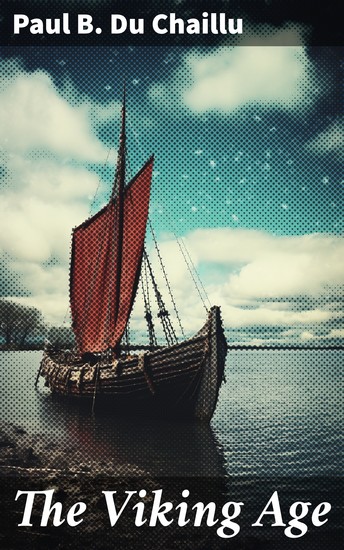
The Viking Age - The Early History and Customs of the Ancestors of the English-Speaking Nations - cover

The Viking Age - The Early History and Customs of the Ancestors of the English-Speaking Nations

Paul B. Du Chaillu

Publisher: Good Press

  • 0
  • 0
  • 0

Summary

In "The Viking Age," Paul B. Du Chaillu masterfully unveils the rich tapestry of Viking history, culture, and exploration in a narrative that balances rigorous scholarship with a captivating literary style. Du Chaillu delves into the Norse sagas, archaeological findings, and historical records, rendering a vivid account of the Viking spirit'Äîmarked by adventure, commerce, and conquest'Äîduring the late eighth to early eleventh centuries. His eloquent prose invites readers to witness the complex societal structures and the often misconceived brutality of the Viking Age, all while situating these narratives within a broader context of European history. Paul B. Du Chaillu, a pioneering anthropologist and explorer, found his passion for Viking lore during his travels in Scandinavia. His own experiences shaped his understanding of cultural intersections and human resilience. Du Chaillu'Äôs unique upbringing, marked by a mix of African and European heritage, further informs his empathetic approach to history, allowing him to deeply appreciate the cultural legacies of diverse civilizations. For those intrigued by the enigmatic allure of the Vikings, "The Viking Age" is an essential read. Du Chaillu'Äôs comprehensive insights and engaging storytelling make this work an indispensable resource for historians, enthusiasts, and casual readers alike, illuminating a pivotal era that continues to fascinate.
Available since: 12/28/2023.
Print length: 924 pages.
Other books that might interest you

  • Peacemaker - U Thant and the Forgotten Quest for a Just World - cover

    Peacemaker - U Thant and the...

    Thant Myint-U

    • 0
    • 0
    • 0
    In the early 1960s, a peaceful world was an imaginable goal. The United Nations was widely respected and regarded as humankind's best hope for resolving global conflicts. African and Asian nations, having recently won their freedom from colonial domination, sought dignity and influence on the world stage. At the helm of their efforts was U Thant, a practicing Buddhist from a remote town in Burma who, as the UN's first non-Western secretary-general, became the Cold War era's preeminent ambassador of peace. From the moment of his predecessor's death in 1961, Thant faced a deluge of violent conflicts. Crucially, during the Cuban Missile Crisis, he played an indispensable role in defusing tensions and helping both superpowers find a way back from nuclear confrontation. For years Thant also challenged Washington over its war in Vietnam, identifying paths to peace that could have saved the lives of millions. 
      
    Drawing on newly declassified documents, Thant's grandson, historian Thant Myint-U, gives a riveting account of how his grandfather's gentle yet willful disposition shaped his determination to avoid a third world war, give voice to the newly decolonized world, create a fairer international economy, and safeguard the environment. Rather than a vestige of an idealistic past, U Thant's fight for peace is central to a fresh understanding of our world today.
    Show book
  • Chinese Biographies - A Biography of Mao Zedong and of Confucius - cover

    Chinese Biographies - A...

    Kelly Mass

    • 0
    • 0
    • 0
    This is a book combo with the following subjects: 
    Mao Zedong has had a tremendous impact on the Chinese nation. During his Great Leap Forward, he was responsible for more deaths than both Hitler and Stalin, making him the biggest mass murderer in history. Mao Zedong, typically called Chairman Mao, was a Chinese communist revolutionary who functioned as the starting dad of peoples's Republic of China (PRC), judgment as the chairman of the Chinese Communist Party from 1949 till his death in 1976. Maoism is a Marxist-- Leninist dogma that includes his theories, army operations, and political programs. What happened during the Great Leap Forward? Why did so many farmers starve to death? And what else did Mao Zedong do during his reign? You will find out more about those and other questions in this book. 
    Confucius was a Chinese thinker and political leader who was considered as the apotheosis of Chinese sages. Confucius' theories and philosophy, commonly seen as one of the most essential and prominent individuals in human history, created the structure of East Asian civilization and civilization, and stay appropriate across China and East Asia today.  
    Confucianism, his philosophical theories, highlighted personal and governmental morality, social connection precision, justice, generosity, and genuineness. Confucianism was instilled in Chinese civilization and way of living; for Confucians, daily life was a spiritual arena. Throughout the Hundred Schools of Thought age, his disciples contended efficiently with lots of other schools, only to be repressed in favor of the Legalists throughout the Qin dynasty. Confucius' ideas were formally approved in the new administration following Han's success over Chu after Qin's collapse. Confucianism developed into a system known in the West as Neo-Confucianism, and later as New Confucianism, at the time of the Tang and Tune dynasties.
    Show book
  • The Vanishing Church - How the Hollowing Out of Moderate Congregations Is Hurting Democracy Faith and Us - cover

    The Vanishing Church - How the...

    Ryan P. Burge

    • 0
    • 0
    • 0
    Many people take it for granted: Evangelicals are Republican, Democrats aren't religious, and moderate Christians may as well not exist. But it wasn't always this way. Those who grew up evangelical in the 1980s were just as likely to sit next to a Democrat as a Republican at church. What happened in the decades that followed?Data scientist Ryan Burge demystifies the recent polarization of American pews, helping listeners understand why the religious landscape has changed so much in the last fifty years and how this divide impacts every aspect of society. Burge argues that Americans prioritized their political parties over their denominations amid the culture wars. As many churches embraced conservative politics, moderate and liberal Christians left the church in droves.Yet Burge shows us that returning to church may be just what America needs. Many Americans want to be people of faith and believe deeply in the principles of religion. Churches provide support systems for needy families. And statistically, churchgoers tend to be more tolerant and have better mental health than Americans who don't attend church. Blending personal narrative and carefully presented data, Burge urges listeners to rebuild faith communities that can reach across the aisle.
    Show book
  • Why You Should Go to Dubrovnik - cover

    Why You Should Go to Dubrovnik

    Mark Ferdinand

    • 0
    • 0
    • 0
    Dubrovnik is a city where time seems to stand still—yet its beauty and history evolve with every step you take. Known as the "Pearl of the Adriatic," Dubrovnik’s ancient stone walls, baroque churches, and terracotta rooftops create a landscape that’s as captivating as it is historic. Whether you're strolling along the iconic Stradun, relaxing by the crystal-clear waters, or wandering through the UNESCO World Heritage Old Town, the city feels like a living museum. 
    Mark Ferdinand guides you through the enchanting streets and scenic vistas of this Croatian gem. From the lush island of Lokrum to the grand medieval city walls, Dubrovnik is a place where the past and present coexist beautifully. With its rich culture, stunning views, and warm Mediterranean climate, you'll quickly understand why Dubrovnik is one of the most sought-after destinations in Europe.
    Show book
  • CONTROL - How To Gain And keep Power In Your Relationship - cover

    CONTROL - How To Gain And keep...

    Warren MCFADDEN

    • 0
    • 0
    • 0
    Chapter 1 
     Desire  
    The root of all suffering is attachment and desire 
    Buddha 
    Buddha said that “the root of suffering is attachment and desire.” But what does attachment and desire exactly mean? It's basically what we do when we hold on to things in an effort to find happiness and comfort. We don't just cling to things that give us joy, but we also cling to something because we're afraid to let go of them as well. 
      Signs that your  spouse is moving on and  happy in the rebound relationship with the painkiller.They see you as just another person and you're not that special.They ask you to return their things or they return the things that you bought themThey don't care if you're dating someone newThey appear to be happy with their new life outside of youThey don't care or try to convince you they're  happyThey unfriended you and unfollow you on social mediaThey stop contacting you for whatever reasonThey told you to your face that their feelings are goneThey move far away from youThey date someone totally opposite from you that have no similarities to youWhen you contact them they do not rush to respond back to you or they respond not at allThey tell you to your face you should move on 
    Signs your  spouse is suffering without youMultiple dating apps: the reason why they do this is because they have a fear of being aloneChanging lovers: the number one killer of relationship is complacency and boredom your ex or spouse will get bored very quickly in the new relationship
    Show book
  • Learn Urdu With Music - cover

    Learn Urdu With Music

    Innovative Language Learning, ...

    • 0
    • 0
    • 0
    Can learning Urdu be as simple as listening to music? 


    And as easy as remembering song lyrics?


    Just think. You remember song lyrics because lyrics are catchy, repeated throughout the song, and go with the music, right? Now, if you stuck in Urdu, you’d easily learn Urdu words and phrases the same way! 


    So, yes, learning Urdu is as easy as listening to music… with the Learn Urdu With Music Audiobook.


    Just press play, and you’ll hear Urdu words and phrases repeated to the beat of upbeat and cheerful music. And… follow along!


    You’ll learn 180+ most common Urdu words and phrases… while relaxing at home, or while driving to work.


    Learn Urdu With Music is the easiest way to start learning Urdu.. without getting overwhelmed by complicated explanations. Perfect for new learners with little to no language learning experience.


    What will you learn?
     
    180+ Words & Phrases Including...
     
    • Basic Greetings
     
    • Numbers
     
    • Common Questions and Answers
     
    • Parts of the Body & Talking About Your Wellbeing
     
    • Common Hobbies
     
    • And much more


    Learn Urdu With Music includes...
     
    • 15 Songs/Lessons Inside (Each is about 7 minutes long)
     
    • Fast-Paced Review Section at the End of Each Lesson
     
    • 1 Hour 50 Minutes in Total
     
    • Accompanying PDF eBook with the Words, Phrases and Translations


    Download the PDF and read along
    Show book