Join us on a literary world trip!
Add this book to bookshelf
Grey
Write a new comment Default profile 50px
Grey
Subscribe to read the full book or read the first pages for free!
All characters reduced
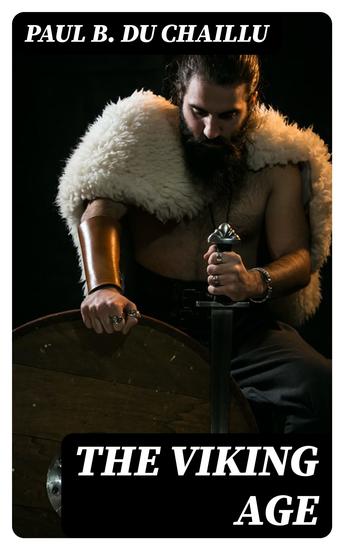
The Viking Age - The Early History and Customs of the Ancestors of the English-Speaking Nations - cover

The Viking Age - The Early History and Customs of the Ancestors of the English-Speaking Nations

Paul B. Du Chaillu

Publisher: DigiCat

  • 0
  • 0
  • 0

Summary

In "The Viking Age," Paul B. Du Chaillu delves into the complex tapestry of Norse exploration, culture, and mythology from the late 8th to the early 11th century. His work is characterized by a vivid, narrative-driven style that combines rigorous historical research with an engaging prose, making it accessible yet enlightening. Du Chaillu's use of primary sources, including sagas and archaeological findings, offers readers a profound understanding of the Vikings' impact on European history and their role as formidable explorers and traders. The blend of mythological references and factual narrative places the text within the wider context of 19th-century historical revivalism, as the author seeks to illuminate the often-misunderstood Viking legacy through a lens of respect and fascination. Born to a family of French descent and raised in an environment steeped in both American and European cultures, Du Chaillu's insatiable curiosity led him to embark on extensive travels, including expeditions to Africa and Scandinavia. His unique perspective as an outsider looking in enabled him to challenge prevailing stereotypes of the Vikings, emphasizing their sophistication and complexity. This background, marked by both adventure and rigorous study, profoundly influenced his approach to historical writing. This book is highly recommended for readers interested in medieval history, Viking culture, and the intersection of myth and reality. Du Chaillu's vivid portrayal invites scholars and casual readers alike to explore a thriving, adventurous society that contributed significantly to shaping modern Europe. "The Viking Age" not only educates but also inspires a deeper appreciation for the multifaceted heritage of the Norse.
Available since: 05/17/2022.
Print length: 924 pages.


Other books that might interest you

  • Scottish History - Forces Facts and Highlanders of the North - cover

    Scottish History - Forces Facts...

    Kelly Mass

    • 0
    • 0
    • 0
    Scotland is an old country with an ancient history. There is no doubt about that. Many traditions, words, symbols, and other cultural aspects we see as normal today, originate from Scotland. 
    Scotland's documented history started with the Roman Empire's entryway in the first century, when the province of Britannia broadened as far north as the Antonine Wall. Caledonia, to the north, was home to the Picti, whose uprisings drove Rome's armies back to Hadrian's Wall. As Rome withdrew from Britain, the Scoti, a group of Gaelic pirates, started colonizing Western Scotland and Wales. Ancient Scotland saw the Neolithic Age around 4000 BC, the Bronze Age around 2000 BC, and the Iron Age around 700 BC before the arrival of the Romans. 
    With all of this history and more in the past few centuries, when things got really interesting, let’s take a look at some of the best-known, most important factors of Scotland’s history, and what we can learn from them.
    Show book
  • How to Overcome Procrastination - Overcoming Perfectionism and Anxiety to Break the Deadline Dilemma - cover

    How to Overcome Procrastination...

    Aria Ponder

    • 0
    • 0
    • 0
    Unlock the secrets to a more productive, fulfilling life with “How to Overcome Procrastination”!  
    If you’re tired of watching important tasks pile up while procrastination overwhelms you, then get ready to:  
    1.     Dive into the psychology of chronic procrastination, unraveling motives, and mastering strategies for lasting change.  
    2.     Conquer perfectionism, reshape your mindset, and adopt effective motivational techniques.  
    This transformative guide offers: 
    ●      Science-Backed Insights: Delve into the procrastinator’s brain, recognizing behaviors, and breaking the procrastination cycle. 
    ●      Proven Strategies: Acquire time management techniques, cognitive restructuring, and habit-breaking tools for lasting change. 
    ●      Master Discipline: Develop resilience, set goals, and foster disciplined habits to overcome setbacks. 
    ●      Embrace Mindfulness: Embrace mindfulness for enhanced focus, decision-making, and stress management. 
    ●      BONUS Confidence Boost: Confront Imposter Syndrome with strategies for cultivating unshakable self-confidence. 
    And more! 
    If you’ve been dreaming of a life where tasks are tackled head-on, goals are achieved, and the weight of unfinished business is lifted, then get ready to break free from the procrastination cycle, and start living the proactive, fulfilling life you deserve with “How to Overcome Procrastination”! 
    Your transformative journey begins today!
    Show book
  • Mesoamerican Astronomy: The History of Celestial Observations Made by the Maya Aztec and Inca - cover

    Mesoamerican Astronomy: The...

    Editors Charles River

    • 0
    • 0
    • 0
    For the Maya, astronomy was not a purely scientific pursuit but intimately linked to religious, mythological, and ideological elements that were of the highest importance. The celestial realm held a sacred nature, as did the many gods and goddesses that dwelt there, so for all Mesoamerican cultures, astronomy was a fundamental part of their everyday lives. Thus, astronomy was present in their calendars, religion, and even agriculture, and in close relation to astronomy, the concept of time was also an essential part of their worldview.  
    The Aztec recorded many of the astronomical events they observed in codices and hieroglyphic inscriptions, but the main evidence of their deep astronomical knowledge comes from their calendar system. This information was then used to plan the orientation of buildings and ceremonial centers, which were aligned to sunrises or sunsets corresponding to special dates, such as solstices or equinoxes. Observational calendars were also used to schedule agricultural activities, as well as rituals, festivals, and celebrations. 
    Though the Spanish physically conquered them in quick fashion, the culture and legacy of the Inca Empire has continued to endure throughout the centuries in both Europe and South America, due in no small part to the fact they were one of the most advanced and sophisticated cultures on the continent. The sun was the main element present in the Inca worldview, so Inti, the sun god, was worshipped above all others and, even though the different parts of the empire were allowed to practice their individual beliefs, they were encouraged to venerate the sun. The connection with the sun even extended to their kings since they were considered to be the sons of the sun. Naturally, this meant astronomy was a key component of the Incas’ beliefs, and in addition to the sun, the Inca observed the moon, stars, constellations, and some planets, all of which became integral parts of their cosmology.
    Show book
  • A Journey North - Jefferson Madison and the Forging of a Friendship - cover

    A Journey North - Jefferson...

    Louis P. Masur

    • 0
    • 0
    • 0
    Between May 21 and June 16, 1791, Thomas Jefferson and James Madison went on a trip together through Upstate New York and parts of New England on horseback. Whether the country could overcome regional and political differences and remain unified, however, was still very much in question. Hence why some observers at the time wondered whether this excursion into Federalist New England by the two most prominent southern Democratic-Republicans, both future presidents, had an ulterior motive. 


    While in Vermont, they focused on the sugar maple tree, which many hoped might offer a domestic alternative to slave-grown sugar cane imports. An encounter with a free Black farmer at Fort George resulted in a journal entry that illuminates their attitudes toward slavery and race. A meeting with members of the Unkechaug tribe on Long Island led to a vocabulary project that preoccupied Jefferson for decades, and which remains relevant today. 


    Madison later recalled that the trip made Jefferson and him "immediate companions," solidifying a bond with almost no peer in the annals of American history, one that thrived for fifty years. Jefferson declared at the end of his life, that his friendship with Madison had been "a source of constant happiness" to him. This book reveals the moment when it took hold.
    Show book
  • Children of Mars - The Origins of Rome's Empire - cover

    Children of Mars - The Origins...

    Jeremy Armstrong

    • 0
    • 0
    • 0
    Before the Romans could become masters of the Mediterranean, they had to first conquer the people of their own peninsula. This book explores the origins of Roman imperialism and the creation of Rome's early Italian empire, bringing new light and interpretations to this important but problematic period in Roman history. It explains how and why the Romans were able to expand their influence within Italy, often through the use of armed conflict, laying the foundations for their great imperial project. 


    This book critically reexamines and reframes the traditional literary narrative within an archaeologically informed, archaic Italian context. Jeremy Armstrong presents a new interpretation of the early Roman army, highlighting the fluid and family-driven character which is increasingly visible in the evidence. Children of Mars argues that the emergence of Rome's empire in Italy should not be seen as the spread of a distinct "Roman" people across Italian land, but rather the expansion of a social, political, and military network amongst the Italian people. Armstrong suggests that Rome's early empire was a fundamentally human and relational one. While this reinterpretation of early Roman imperialism is no less violent than the traditional model, it alters its core dynamic and nature, and thus shifts the entire trajectory of Rome's Republican history.
    Show book
  • The Battle of Agincourt - England's Triumph in France - cover

    The Battle of Agincourt -...

    Nova Ashford

    • 0
    • 0
    • 0
    The Battle of Agincourt, fought on October 25, 1415, stands as one of the most celebrated military victories in English history. It was a defining moment in the Hundred Years’ War, a prolonged conflict between England and France that spanned over a century. Agincourt not only showcased the military brilliance of King Henry V but also demonstrated the effectiveness of the English longbow against heavily armored French knights. The battle’s significance goes beyond a single day of combat—it influenced the course of the war, shaped national identities, and left an enduring legacy in both military history and cultural memory. 
    To fully understand Agincourt, one must first examine the broader conflict in which it took place. The Hundred Years’ War (1337–1453) was a series of intermittent battles and political struggles between England and France, primarily over territorial claims and the right to rule France. The origins of the war can be traced back to the complex feudal relationships of medieval Europe. The English monarchy held vast territories in France, including Aquitaine, a rich and strategically important region. However, growing tensions between the English and French crowns, combined with disputes over succession, led to open warfare. 
    A key factor in the war was the question of who had the legitimate right to the French throne. In 1328, the death of Charles IV of France left the French crown without a direct male heir. Under French succession laws, Philip VI of the House of Valois was chosen as king. However, England’s King Edward III, who was the grandson of a previous French king through his mother, claimed the throne as well. His assertion of this right in 1337 marked the official beginning of the Hundred Years’ War.
    Show book