Join us on a literary world trip!
Add this book to bookshelf
Grey
Write a new comment Default profile 50px
Grey
Subscribe to read the full book or read the first pages for free!
All characters reduced
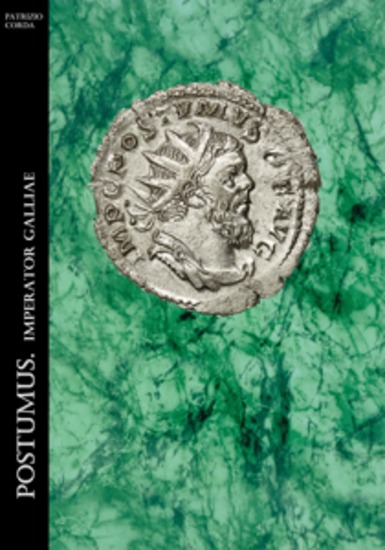
Postumus Imperator Galliae - cover

Postumus Imperator Galliae

Patrizio Corda

Publisher: Patrizio Corda

  • 0
  • 0
  • 0

Summary

260 AD. - After a long and luminous military career, which led him from a simple recruit to becoming governor of Germania Inferior, Marcus Cassianus Latinus Postumus finds himself at a crossroads. Fraternally bound to the legionnaires but bound to obey the orders of the august Gallienus and his despotic son Saloninus, he is forced to make a choice from which he has long fled: listen to his heart and dare
leveraging the support of the troops, or continue to live as a servant.
His decision will radically change the Roman empire of the third century. In an era marked by barbarian invasions, infighting, and especially secessionist uprisings, Postumus will emerge imposing himself as the best alternative to the legitimate emperor, giving rise to a kingdom that will hold Rome in check for years.
And which, like the latter, will experience harsh battles, betrayals, and fatal conspiracies.
Available since: 11/10/2024.

Other books that might interest you

  • The Art of Rome - Masterpieces of the Ancient Empire - cover

    The Art of Rome - Masterpieces...

    Rogan Fish

    • 0
    • 0
    • 0
    The art of ancient Rome was shaped by a blend of cultural influences, evolving through a combination of native traditions and foreign influences, most notably from the Etruscans and Greeks. Early Roman art was heavily influenced by the Etruscans, who occupied central Italy before the rise of Rome. Etruscan art was characterized by its religious themes, vibrant frescoes, and elaborate tomb paintings, which had a significant impact on the early Roman artistic style. These early Roman artists often adopted Etruscan methods but began incorporating their own innovations, creating a distinctive blend of the two cultures. 
    Greek art also played a crucial role in the development of Roman art. As Rome expanded and conquered Greece, it absorbed many aspects of Greek culture, including their artistic styles. Greek sculptural ideals of beauty, proportion, and harmony were emulated by Roman artists. However, while Greek art favored idealized forms and perfection, Roman art took a more realistic approach, focusing on depicting individuals as they truly appeared. Roman portraiture, for example, was known for its attention to detail, capturing the wrinkles, facial expressions, and other characteristics that defined a person’s likeness. This move toward realism was a major shift from the idealized forms of Greek art, and it became a hallmark of Roman artistry. 
    In the early stages of Roman art, the primary medium was sculpture, often used to commemorate important figures or events. The Romans developed a talent for creating lifelike statues and busts, which were displayed in homes and public spaces to honor ancestors and gods. These sculptures, often made from marble or bronze, served as a means of preserving the memory of individuals or celebrating military victories.
    Show book
  • Jumpstart Your Allyship - Five Easy Steps to Ally with BIPOCs - cover

    Jumpstart Your Allyship - Five...

    Xolani Kacela

    • 0
    • 0
    • 0
    Don’t Be a Silent Ally- Educate Yourself and Discover Ways to Ally Yourself With BIPOCs and Let Your Voices Be Heard - In Less Than 30 Minutes, Learn 5 Easy Steps to Ally With BIPOCs! 
    Do you want to educate yourself on race and politics? 
    Do you struggle handling conflict? 
    Would you like to learn how to control difficult conversations? 
    Well, your search is over. Find all the answers on how to control conflict, how to talk about politics and race, and ally yourself with BIPOC. 
    Talking about race and privilege is hard. 
    But, in our day and age, staying uneducated about social concepts is no longer acceptable. It is our duty to step out of our comfort zone and educate ourselves. Race and racial privilege are on everyone’s mind. 
    This book will teach you how to open up and speak about difficult topics. Get clear examples of how to deal with sensitive topics around your family, friends, and co-workers. 
    In this book, you’ll discover: 
    ●     Use your voice: Learn how to ally with Latino, Asian, and Indigenous folks. Tackle your fear and find your inner courage with this book that will break it all down in 5 easy steps. 
    ●     Easy-to-understand advice: Everything is written in simple and plain English. Get educated with realistic and authentic advice, so you skip all the confusion. 
    ●     Make difficult topics easier: With just 5 easy steps, you can learn how to change how you handle tough topics in your work and personal life. In just under 30 minutes, you can change your life forever! 
    Scroll up, Click on “Buy Now”, and Get Your Copy Now!
    Show book
  • Existentialism is a Humanism by Jean-Paul Sartre (Book Analysis) - Detailed Summary Analysis and Reading Guide - cover

    Existentialism is a Humanism by...

    Bright Summaries

    • 0
    • 0
    • 0
    In this clear and detailed reading guide, we've done all the hard work for you!Existentialism is a Humanism by Jean-Paul Sartre is a philosophical essay resulting from the transcription of one of his lectures, in which he simplifies his philosophical doctrine to make it available to a broader audience, and in which he defends his philosophy from the criticisms that were voiced about it. Find out everything you need to know about Existentialism is a Humanism in just a few minutes!This practical and insightful reading guide includes:• A summary• An Explanation of the context• An analysis• Questions for further reflectionWhy choose BrightSummaries.com?Available in print and digital format, our publications are designed to accompany you in your reading journey. The clear and concise style makes for easy understanding, providing the perfect opportunity to improve your literary knowledge in no time.Shed new light on the very best of literature with BrightSummaries.com!
    Show book
  • The Cholera Years - The United States in 1832 1849 and 1866 - cover

    The Cholera Years - The United...

    Charles E. Rosenberg

    • 0
    • 0
    • 0
    Cholera was the classic epidemic disease of the nineteenth century, as the plague had been for the fourteenth. Its defeat was a reflection not only of progress in medical knowledge but of enduring changes in American social thought. Rosenberg has focused his study on New York City, the most highly developed center of this new society. Carefully documented, full of descriptive detail, yet written with an urgent sense of the drama of the epidemic years, this narrative is as absorbing for general audiences as it is for the medical historian. In a new Afterword, Rosenberg discusses changes in historical method and concerns since the original publication of The Cholera Years. 
     
    “A major work of interpretation of medical and social thought . . . this volume is also to be commended for its skillful, absorbing presentation of the background and the effects of this dread disease.”—I.B. Cohen, New York Times 
     
    ”The Cholera Years is a masterful analysis of the moral and social interest attached to epidemic disease, providing generally applicable insights into how the connections between social change, changes in knowledge and changes in technical practice may be conceived.”—Steven Shapin, Times Literary Supplement 
     
    ”In a way that is all too rarely done, Rosenberg has skillfully interwoven medical, social, and intellectual history to show how medicine and society interacted and changed during the 19th century. The history of medicine here takes its rightful place in the tapestry of human history.”—John B. Blake, Science
    Show book
  • There Is No Blue - cover

    There Is No Blue

    Martha Baillie

    • 0
    • 0
    • 0
    WINNER OF THE HILARY WESTON WRITERS' TRUST PRIZE FOR NONFICTION 
    THE GLOBE AND MAIL: BOOKS TO READ IN FALL 2023 
    THE GLOBE AND MAIL BEST 100 BOOKS OF 2023 
    CBC BOOKS BEST CANADIAN NONFICTION OF 2023 
    Martha Baillie’s richly layered response to her mother’s passing, her father's life, and her sister’s suicide is an exploration of how the body, the rooms we inhabit, and our languages offer the psyche a home, if only for a time.  
    Three essays, three deaths. The first is the death of the author’s mother, a protracted disappearance, leaving space for thoughtfulness and ritual: the washing of her body, the making of a death mask. The second considers the author’s father, his remoteness, his charm, a lacuna at the centre of the family even before his death, earlier than her mother’s. And then, the shocking death of the author’s sister, a visual artist and writer living with a diagnosis of schizophrenia, who writes three reasons to die on her bedroom wall and then takes her life. 
    "Martha Baillie’s novels are thrillingly, joyously singular, that rare combination of sui generis and just plain generous. That There Is No Blue, her memoir, is all of those things too, is no surprise; still, she has gone somewhere extraordinary. This triptych of essays, which exquisitely unfolds the “disobedient tale” of the lives and deaths of her mother, her father, and her sister, is a meditation on the mystery and wonder of grief and art making and home and memory itself. It made me think of kintsugi, the Japanese art of repair, in which the mending is not hidden but featured and beautifully illuminated. Baillie’s variety of attention, carved out of language, is tenderness, is love." – Maud Casey, author of City of Incurable Women 
    "This is a stunning memoir, intense and meticulous in its observations of family life. Baillie subtly interrogates and conveys the devastating mistranslations that take place in childhood, the antagonism and porousness of siblings,  and the tragedy of schizophrenia as it unfolds.  I couldn’t put it down." – Dr. Lisa Appignanesi, author of Mad, Bad and Sad and Everyday Madness 
    "Exquisite." – Souvankham Thammavongsa, author of How to Pronounce Knife 
    "I am grateful for this profound meditation on family and loss.” – Charlie Kaufman, filmmaker 
    "This strange, unsettling memoir of outer life and inner life and their bizarre twining captures the author’s identity by way of her mother’s death, her sister’s failing battle with mental illness, and the mysterious figure of her father.  It combines anguished guilt, deep tenderness, and bemused affection in highly evocative, often disturbing prose.  Its brave honesty is amplified by a persistent lyricism; its undercurrent of fear is uplifted by a surprising, resilient hopefulness.  It is both a plea for exoneration and an act of exoneration, an authentic meditation on the terrible difficulty of being human." – Andrew Solomon, author of The Noonday Demon
    Show book
  • Heavyweight - Black Boxers and the Fight for Representation - cover

    Heavyweight - Black Boxers and...

    Jordana Moore Saggese

    • 0
    • 0
    • 0
    In Heavyweight, Jordana Moore Saggese examines images of Black heavyweight boxers to map the visual terrain of racist ideology in the United States, paying particular attention to the intersecting discourses of Blackness, masculinity, and sport. Looking closely at the "shadow archive" of portrayals across fine art, vernacular imagery, and public media at the turn of the twentieth century, she demonstrates how the images of boxers reveal the racist stereotypes implicit in them, many of which continue to structure ideas of Black men today. With a focus on both anonymous fighters and notorious champions, including Jack Johnson, Saggese contends that popular images of these men provided white spectators a way to render themselves experts on Blackness and Black masculinity. These images became the blueprint for white conceptions of the Black male body—existing between fear and fantasy, simultaneously an object of desire and an instrument of violence. Reframing boxing as yet another way whiteness establishes the violent mythology of its supremacy, Saggese highlights the role of imagery in normalizing a culture of anti-Blackness.
    Show book