Join us on a literary world trip!
Add this book to bookshelf
Grey
Write a new comment Default profile 50px
Grey
Subscribe to read the full book or read the first pages for free!
All characters reduced
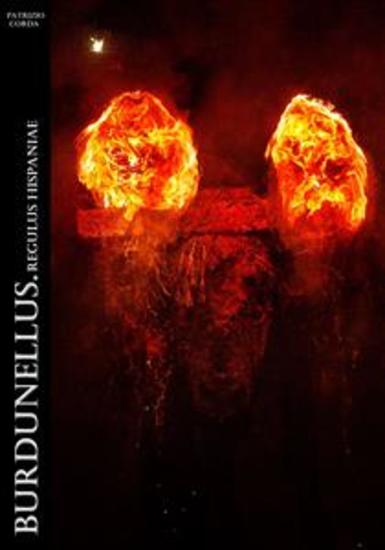
Burdunellus Regulus Hispaniae - cover

Burdunellus Regulus Hispaniae

Patrizio Corda

Publisher: Patrizio Corda

  • 0
  • 0
  • 0

Summary

494 AD. - Almost twenty years after the fall of the Western Roman Empire, Gaul and the Iberian Peninsula are now part of the vast kingdom of the Visigoths.
Their ruler himself, Alaric II son of the famous Euricus, reigns with an iron fist over a population as submissive as it is heterogeneous, consisting indeed of barbarians but
also by Romans now devoid of pride and patriotism. But despite his reprisals and his continual oppressive taxation, one of the surviving Romans of Hispania
will find within himself the strength to rekindle the ancient fire that enabled his ancestors to found and make the empire great. To his surprise, Claudius Aemilius Iberus,
known as Burdunellus, will succeed in making his personal cause that of all the people of Hispania, severely threatening Alaric's throne and sparking
one of the last, fierce but also least-told rebellions of the post-imperial age.

 
Available since: 11/02/2024.

Other books that might interest you

  • Philosophies of Language and Society - The Shifting Understandings of Truth Power and the Social Construct (3 in 1) - cover

    Philosophies of Language and...

    Hector Davidson

    • 0
    • 0
    • 0
    This book bundle contains the following three titles:  
    - Derrida: Jacques Derrida, one of the most influential philosophers of the 20th century, revolutionized the way we think about language, meaning, and interpretation. His development of the concept of deconstruction has left a profound impact on philosophy, literary theory, and critical thought. To understand Derrida's legacy, it is essential to explore the key elements of his intellectual journey and how his ideas continue to shape contemporary discourse. 
    - Deconstructionism: Deconstructionism emerged in the late 20th century as a philosophical and literary movement that fundamentally questioned the nature of meaning, language, and interpretation. It is primarily associated with the work of French philosopher Jacques Derrida, who, in the 1960s and 1970s, began to develop ideas that would challenge long-held assumptions in philosophy, literary theory, and critical thought. The movement was a response to structuralism, which sought to uncover the underlying structures that govern language and society. In contrast, deconstruction aimed to show that meaning is inherently unstable and that texts and concepts can never be fully fixed or understood in a singular, unchanging way. 
    - Michel Foucault: Michel Foucault, a French philosopher, historian, and social theorist, is renowned for his critical exploration of power, knowledge, and social institutions. Born in 1926, Foucault’s work spans a range of disciplines, from philosophy to sociology, psychology, and political science. His intellectual journey reflects a unique approach to understanding human societies, focusing not on abstract metaphysical systems but on the structures that shape human behavior, knowledge, and institutions.
    Show book
  • Hidden History of Chapel Hill - cover

    Hidden History of Chapel Hill

    Brian Burns

    • 0
    • 0
    • 0
    Delve into the forgotten past of town and university. Well known as a university town, Chapel Hill's rich and fascinating history dates back to the eighteenth century. Learn all about the origins of the 1,200-acre Strowd plantation and its complete transformation into a modern neighborhood. Robert Strowd was vital to the town's prosperity, growth and image. Meet aristocratic slaveholder Hardy Morgan, who grew tobacco in today's Glen Lennox area and wealthy dry goods merchant Jesse Hargrave, whose plantation home stood in today's Greenwood. Learn about Adelaide Walters, who in 1957 became the town's first female alderman, and Harold Foster, the Black high schooler who spearheaded the 1960s fight against segregation. Witness the thirteen-year controversy over fluoridating water and dig into the details of a mysterious case of cyanide poisoning on the UNC campus. Author Brian Burns recounts lesser known tales of Chapel Hill.
    Show book
  • Playing Possum - How Animals Understand Death - cover

    Playing Possum - How Animals...

    Susana Monsó, Mark Rowlands

    • 0
    • 0
    • 0
    When the opossum feels threatened, she becomes paralyzed. Her body temperature plummets, her breathing and heart rates drop to a minimum, and her glands simulate the smell of a putrefying corpse. Playing Possum explores what the opossum and other creatures can teach us about how we and other species understand mortality, and demonstrates that the concept of death, far from being a uniquely human attribute, is widespread in the animal kingdom. 


    With humor and empathy, Susana Monsó tells the stories of ants who attend their own funerals, chimpanzees who clean the teeth of their dead, dogs who snack on their caregivers, crows who avoid the places where they saw a carcass, elephants obsessed with collecting ivory, and whales who carry their dead for weeks. Monsó, one of today's leading experts on animal cognition and ethics, shows how there are more ways to conceive of mortality than the human way, and challenges the notion that the only emotional reactions to death worthy of our attention are ones that resemble our own. 


    Blending philosophical insight with new evidence from behavioral science and comparative psychology, Playing Possum dispels the anthropocentric biases that cloud our understanding of the natural world, and reveals that, when it comes to death and dying, we are just another animal.
    Show book
  • Determinism - Fate Coincidence and the Question of Free Will - cover

    Determinism - Fate Coincidence...

    Hector Davidson

    • 0
    • 0
    • 0
    The question of whether humans possess free will has intrigued philosophers, scientists, and thinkers for centuries. At the heart of this debate lies the concept of determinism—the idea that every event or action is the result of preceding causes, governed by laws of nature and logic. If everything that happens is the result of a cause, can we truly say we have control over our decisions? Is free will simply an illusion? These questions challenge our sense of autonomy and personal responsibility, and they invite us to explore the complex relationship between fate, coincidence, and choice. 
    Determinism suggests that all events, including human actions, are preordained by prior causes. From a deterministic standpoint, the universe is a vast, interconnected web of cause and effect, where each moment flows seamlessly from the one before it. This view raises profound questions about the nature of human agency. If every decision we make, every thought we have, and every action we take is determined by a series of preceding events—genetic, environmental, and even cosmic—where does the space for free will lie? Are we merely puppets of fate, our strings pulled by forces beyond our control? 
    However, this deterministic view is not universally accepted. Many philosophers argue that humans can exercise free will—that we have the capacity to make choices independent of the deterministic forces at play. This belief in free will asserts that while factors such as genetics, upbringing, and circumstances may influence our decisions, we retain the ability to act in ways that transcend these influences. The challenge, then, is reconciling the possibility of free will with the idea that many of our actions may be shaped or even constrained by forces outside our conscious control.
    Show book
  • The Art of Difficult Customers - A Practical Guide to Managing Conflict and Improving Service - cover

    The Art of Difficult Customers -...

    Jamie Ford

    • 0
    • 0
    • 0
    Anyone negotiating the difficulties of customer service will find "The Art of Difficult Customers: A Practical Guide to Managing Conflict and Improving Service" to be an invaluable resource. This book is intended for professionals who deal with difficult clients regularly and are looking for practical ways to handle these situations confidently and skillfully.  
    Every sector has difficult clients, and how a company handles them can have a big influence on its performance and image. This book offers a thorough exploration of the psychology underlying consumer behavior, assisting you in identifying the underlying reasons for conflict and discontent. It provides helpful guidance on handling a variety of challenging clients, including those who are demanding and irrational as well as irate and impatient. 
    "The Art of Difficult Customers" gives you the communication and conflict resolution skills you need to turn difficult situations into opportunities for service development through a combination of theoretical ideas and real-world experiences. You'll discover how to handle problems in a way that benefits the customer and fortifies the connection, as well as how to listen intently and speak with empathy. 
    This book offers the techniques and resources to improve service delivery, lower stress levels, and make sure that even the most challenging clients leave with a great impression—whether you work in customer service or manage a team. "The Art of Difficult Customers" will change the way you handle customer service and help you turn confrontations into chances for growth.
    Show book
  • His New Body - Gender Swap - cover

    His New Body - Gender Swap

    Kinky Press

    • 0
    • 0
    • 0
    What would you do if you went to sleep as a forty year old man and woke up in the body of a nineteen your old woman? 
      
    Tom's body is quitting on him, and there is only one option left if he wants to live. He needs to transplant his brain and consciousness into another body – any body.  
      
    The procedure is done, and Tom wakes up in a body so fundamentally different from his own that he doesn't know how to feel. His reflection shows a nineteen year old woman's face and body. How is a man supposed to react to that? How will his wife react? 
      
    Tom explores what it means to be a woman, how pleasure feels to a woman, and if he has what it takes to follow his wife's wish – that he submits to a man. Tom will turn into Sarah. Sarah embraces her newfound femininity as she quivers and quakes – and moans and mewls – while she explores her own body, her wife's body, and the body of Donnie, the man who has been chosen for her.  
      
    PSA: This story contains a man in a woman’s body. There will be fingers and plastic molds shoved into places – and he never knew how good a woman has it. He’ll be satisfied by his wife and have his newfound innocence removed by a strangers stiff piston.
    Show book