Join us on a literary world trip!
Add this book to bookshelf
Grey
Write a new comment Default profile 50px
Grey
Subscribe to read the full book or read the first pages for free!
All characters reduced
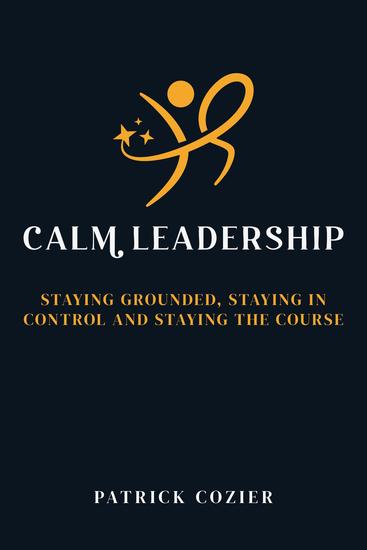
Calm Leadership - Developing leaders that last - cover

Calm Leadership - Developing leaders that last

Patrick Cozier

Publisher: Crown House Publishing

  • 0
  • 0
  • 0

Summary

Drawing on his twenty-four years' experience, Patrick Cozier reflects on the reality of school leadership in Calm Leadership, providing a candid and personal account of his journey. Patrick first stepped into headship in 2006, one of the few Black school leaders in the UK at the time. Over the next two decades, he learned to lead through the highs and lows of the role, from navigating imposter syndrome and everyday pressures to experiencing moments of joy and hard-won progress and to do so calmly.
At the heart of this book is Patrick's 'CALM' leadership model, honed and crafted by him over many years, which entails:

- Confronting uncalm feelings
- Adapting to the feeling of leadership
- Leading people with humanity and understanding
- Maturing into the leader you are meant to be
This model offers a framework for managing stress, staying well and maintaining a positive outlook so that readers can sustain leadership roles in the long term.  This book addresses a part of leadership that's often overlooked: what it actually feels like to lead.
The central message of this book is that leadership doesn't have to be a burnout job; it can be a source of joy, fulfilment and lasting impact when approached with the right mindset and strategies, which Patrick presents with clarity, passion and heart.
Essential for current and aspiring school leaders at all levels.
Available since: 11/28/2025.
Print length: 200 pages.

Other books that might interest you

  • The Dementia Caregiver's Survival Guide - An 11-Step Plan to Understand the Disease and How To Cope with Financial Challenges Patient Aggression and Depression Without Guilt Overwhelm or Burnout - cover

    The Dementia Caregiver's...

    Janet G Cruz

    • 0
    • 0
    • 0
    REVOLUTIONIZE YOUR DEMENTIA CAREGIVING WITH KNOWLEDGE & PRACTICAL TIPS 
    This book for dealing with dementia loved ones equips you with everything you need to become a better dementia caregiver. 
    The book provides insight into the patient's perspective as well as the caregiver's perspective, helping you understand what your dearest one is going through living with dementia. By keeping lines of communication open and never giving up hope, you can create moments of connection and joy that strengthen your bond. 
    TAKING CARE OF YOURSELF TO BETTER CARE FOR OTHERS 
    This dementia caregiver’s guide emphasizes the importance of self-care, providing strategies to reduce stress, prevent burnout, and maintain your own physical and emotional health. We recognize the importance of nurturing your caregiving spirit and highlight the essential role that taking a well-deserved break to recharge plays in achieving this. 
    Comprehensive Guide: Features a complete guide to caregiving, covering everything from the basics of the disease to advanced caregiving strategies. 
    11 Step-by-Step Plan: The book offers a roadmap to help caregivers to understand the complexities of dementia care with ease. 
    Dual Perspective: The dementia caregiver book takes into account both the perspective of the dementia patient and the caregiver, providing a holistic approach to caregiving. 
    Written for: This self-help book is written for dementia caregivers, providing them with invaluable knowledge, tools, and emotional support to make their journey smoother. 
    Written by: The book for dealing with people with dementia is authored by Janet G. Cruz, an expert in dementia care with years of experience in helping caregivers navigate the challenges of dementia care. 
    Navigate the complexities of dementia care with confidence and compassion.
    Show book
  • Sex & It's Power To Heal - cover

    Sex & It's Power To Heal

    Monica Arora

    • 0
    • 0
    • 0
    Is healing an internalised process, or does something as basic as a gentle touch enable us to heal? Is sex overrated? Or does the physical intimacy, touch, and connection between two human beings act as a balm for bruised souls? While sex is the most natural act of living beings as an expression of love, affection, kinship, and connection, it is interesting to discover that it can also act as a great healer in times of setbacks or adversities.
    Show book
  • The Catastrophic Worrier - Why You Worry and How to Stop - cover

    The Catastrophic Worrier - Why...

    PhD Graham Davey

    • 0
    • 0
    • 0
    Do you turn all your molehills into insurmountable mountains? This accessible and engaging book will guide you along the path to stop catastrophizing so that you can reclaim control, achieve your goals, and live a happier life. 


    Is your worrying keeping you up all night, eroding your self-confidence, paralyzing your ability to make decisions, and harming your physical health? Excessive worrying is a problem that affects everyone at some point in their lives, but for some people it can become a lifelong affliction. Catastrophic worry can turn even imagined setbacks into a cascade of devastating events, impacting your sleep, self-confidence, decision making, problem solving, ability to cope, and overall health. 


    In this guide, leading worry expert Graham Davey explains the science of why we worry, and offers a clear path to stopping catastrophic worry so you can regain control and live a happier life. Focusing first on the psychological processes that contribute to catastrophizing, you'll gain a solid, research-based understanding of where your worry comes from, with insight into how it can snowball. You'll also learn how to assess your own level of catastrophic worrying, and find exercises that directly address those processes to help you establish healthy habits, manage your mood and anxiety, and make decisions with confidence.
    Show book
  • Buying Silence - How oligarchs corporations and plutocrats use the law to gag their critics - cover

    Buying Silence - How oligarchs...

    David Hooper

    • 0
    • 0
    • 0
    This timely and important book focuses on the controversial issue of SLAPP cases – Strategic Lawsuits Against Public Participation – which are designed to censor, intimidate and silence critics by burdening them with aggressive opposing lawyers, heavy legal costs and enquiry agents until they abandon the case.
    David Hooper, veteran media lawyer, explores how the power of money enabled the very wealthy to crush their critics and outlines the tactics they used.
    He examines how billionaire oligarchs, often ex-convicts and linked to organised crime, have tried to launder their reputation in this country by suing for libel, and how they have found lawyers only too happy to pocket their roubles.
    Hooper describes his experience with some of these oligarchs, including Boris Berezovsky when Hooper needed an armed bodyguard while collecting evidence in Moscow. It was a case where both plaintiffs were ultimately murdered, as was his client, the editor of Forbes Russia.
    The UK also has its home-grown Slappsters, of whom Nadhim Zahawi and Mohamed Amersi are the most recent examples. They also come from Greece, Sweden, Azerbaijan, Kazakhstan, Malaysia, Malta and the United States. Hooper describes how those with something to hide tried, with varying degrees of success, to stop you knowing about it, and how their lawyers were willing to help them. The well-paid legal profession does not emerge with credit.
    Show book
  • Parasitology - How These Tiny Organisms Shape life on Earth - cover

    Parasitology - How These Tiny...

    Mike Crawford

    • 0
    • 0
    • 0
    Parasites are among the most successful and adaptable organisms on Earth, yet they often go unnoticed. From microscopic protozoa to large intestinal worms, these creatures have evolved remarkable strategies to exploit their hosts for survival. They infiltrate nearly every ecosystem, from the deepest oceans to the highest mountains, shaping the health, behavior, and evolution of countless species, including humans. Despite their negative reputation, parasites play an integral role in maintaining ecological balance, influencing biodiversity, and even driving evolutionary changes. 
    One of the most astonishing aspects of parasites is their sheer ubiquity. They infect nearly every living organism, from plants and insects to birds and mammals. Some parasites, like malaria-causing Plasmodium, have coexisted with humans for thousands of years, evolving alongside us in an ongoing battle for survival. Others, such as the toxoplasmosis-causing Toxoplasma gondii, subtly manipulate the behavior of their hosts to improve their chances of transmission. The ability of parasites to adapt to new environments and hosts makes them a fascinating subject of study, particularly as climate change and globalization increase their spread. 
    While parasites are often viewed as destructive, their influence extends far beyond causing disease. Many parasites regulate host populations, preventing overgrowth and maintaining ecological stability. Some even shape the behaviors of their hosts in ways that benefit entire ecosystems.
    Show book
  • The Ethics of Rhetoric - cover

    The Ethics of Rhetoric

    Richard M. Weaver

    • 0
    • 0
    • 0
    In The Ethics of Rhetoric, Richard M. Weaver evaluates the ethical and cultural role of rhetoric and its reflection on society. Weaver draws upon classical notions of rhetoric in Plato's Phaedrus, and he examines the effectiveness and implications of the manipulation of language in the works of Lincoln, Burke, and Milton. In this collection of essays, Weaver examines how different types of rhetoric persuade, their varying levels of effectiveness and credibility, and how one's manner of argumentation and style of persuasion are indicative of character. Ultimately, Weaver argues that the cultivation of pure language creates pure people. Initially published in 1953, The Ethics of Rhetoric remains timeless in its evaluation of rhetoric's role in society. 
    Richard M. Weaver (1910-1963) an esteemed scholar, humanist, cultural critic, and political philosopher, revolutionized conservativism of the mid-twentieth century. Weaver's original scholarship produced groundbreaking insight on human nature and society.
    Show book