Join us on a literary world trip!
Add this book to bookshelf
Grey
Write a new comment Default profile 50px
Grey
Subscribe to read the full book or read the first pages for free!
All characters reduced
7 Birds - cover

7 Birds

Pat Fitz

Publisher: BookRix

  • 0
  • 0
  • 0

Summary

This story was written as a way to explore how few details I could write and still convey a message and invoke sympathy for the characters. The beginning of the story has very little details and as it progresses, more and more details are added to show thoughts and deeper emotions. 
 
The reason why there are very little visual details about the characters, is because I desired for the readers to create their own visuals. Around the world, people look different. So if I write about one visual, that works for some areas but not for others, even if it was a very general look. However, this is a story that can happen anywhere. So it's more important that the readers fill in the visuals with their own beliefs and ideas than it is for me to write them. As the writer, I am responsible for conveying their actions, feelings, thoughts, and some beliefs. And I believe that the readers can create visuals that resonate more with their lives than I ever could. So I ask the readers to interact with the characters. Create your own visuals. Explore the world in which these characters live in. There isn't a right or wrong for these characters. Maybe the boy is a boy who thinks he is a boy. Maybe the boy is a girl who identifies as a boy because he wants to or his parents wanted a boy. Maybe the boy is an adult who thinks of himself as a boy. All three choices are right because, the character thinks of themselves as a boy regardless of their exterior. 
 
There are some clues of a timeline, but for brevity, this happens within 4-6 months. It's a little flexible becausethe story wanted to show how things were barren at the beginning, and then things become more fruitful and giving towards the climax.  All of the sightings happen within 2-3 weeks of each other and build in frequency until the end of the story. 
 
I hope the story resonates with you. I've been sitting on it since 2016 and just recently I've felt a strong push to share it. It's a bit nerve-wracking because of the style I used. While I wrote the story, I listened to "Save Me" on repeat (with the violin version). The melody and the words evoked a lot of feelings that wanted to come out as a story. That's how this story was written in the first place. If you can figure out who sings "Save Me", then you'll know who the seven birds are. :)
Available since: 12/22/2023.
Print length: 12 pages.

Other books that might interest you

  • Antigone (unabridged) - cover

    Antigone (unabridged)

    Sophocles

    • 0
    • 0
    • 0
    Experience the timeless power of Greek tragedy with our unabridged audiobook of "Antigone". This classic play by Sophocles explores themes of loyalty, honor, and the price of defiance against unjust laws.In the aftermath of a brutal civil war, Antigone is torn between the laws of the city and her duty to her family. Her decision to honor her fallen brother sets her on a tragic path of resistance against the king's decree.Our audiobook brings this ancient drama to life with a clear and engaging narration. Every line of Sophocles' poetic dialogue is delivered with precision, immersing you in the emotional turmoil of Antigone's struggle.Whether you're a student studying Greek literature, a lover of classic drama, or someone seeking a thought-provoking listen, "Antigone" is a compelling choice. Experience the tragedy and triumph of one of literature's most enduring heroines. Add "Antigone" to your audiobook collection today!
    Show book
  • Moments We Stand The: Silence Breaks - cover

    Moments We Stand The: Silence...

    Ashlee Boyson

    • 0
    • 0
    • 0
    My name is Ashlee. I am a victim of murder. Through a series of events and by two shots of a gun, I was made a widow at the age of 28, with my youngest child just six weeks old. I am a victim of infidelity. I have felt unlovable. I have felt rejected. I have had days in my life when I wasn’t sure if I would ever take a breath again, let alone be able to raise my five children by myself. I have lived in fear. I have felt much heartache. I have felt truly broken to my core. I have carried some heavy burdens...not only of my own, but burdens put upon my shoulders by the death of my husband. I have felt alone. I have felt humiliated. I have been humbled to my knees. I have searched my soul to find my worth in this world, and in the life that was left for me. My world has been totally shattered. I have faced realities I never knew were possible, and found strength within myself to keep up the fight and live every day as if it was on purpose. I have been carried by Angels...both earthly beings and those unseen. I have found that being a “victim” doesn’t mean we have an excuse to stop living. Being a victim means finding a reason for seeking a higher road. I have picked up the pieces left and carried on. I am a mother. We are survivors. In one way or another, we are all victims. There are times in our lives when we are forced to question who we are at our core. This is my story...the defining moments that have truly brought me to my knees, the times when I’ve questioned to my core my very existence, and the experiences I’ve had that have shown me who I really am and who my Heavenly Father still needs me to become. The night of my husband’s death was my darkest hour, but also the very moment when I saw firsthand that my Heavenly Father sent Angels on errands for me. He carried me. It was the hour when all my fears and all the pain of this world collided together and He was there...putting back together all the pieces, one step at a time.
    Show book
  • Thy Black Wings - cover

    Thy Black Wings

    Anas Sadan

    • 0
    • 0
    • 0
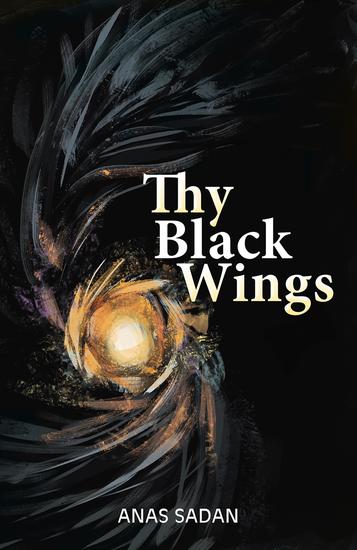
    Life, we say, is a grand theatrical production. But this performance feels more like a chaotic dress rehearsal gone awry. The script is a jumble of clichés, borrowing from tired tropes, leaving the audience yawning. And the actors? A stumbling crew, delivering lines with all the grace of a newborn giraffe on roller skates. The audience, ever critical, demands perfection yet contributes nothing. And so, the play stumbles on, performed by inept actors for an unappreciative crowd.
    Show book
  • The Poetry of Edwin Arlington Robinson - Three time Pultizer prize winner and four time Nobel prize nominee A true legend - cover

    The Poetry of Edwin Arlington...

    Edwin Arlington Robinson

    • 0
    • 0
    • 0
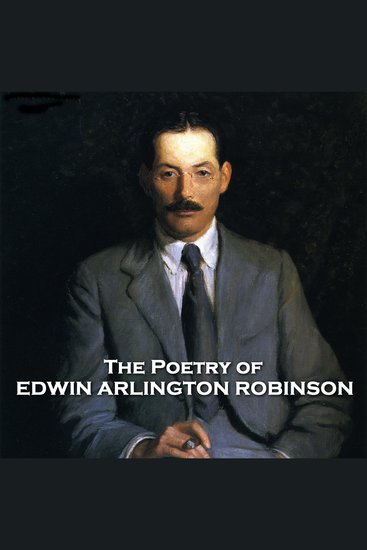
    Edwin Arlington Robinson was born on the 22nd December 1869 in Tide in Lincoln County, Maine.  
    His childhood was described by him as ‘stark and unhappy’.  His name was drawn out of a hat from a fellow vacationer from Arlington Massachusetts when fellow holiday makers decided that his parents had waited long enough at 6 months to name him.  It was a name he despised and reflects the station to which his parents had placed him; their great hope at his birth were that he was a girl to complement their two sons. 
    His pessimistic mood carried him to adulthood and a doomed encounter with Emma Loehen Shepherd who constantly encouraged his poetry.  Edwin was thought too young to be her companion and so his elder, middle brother, Herman was assigned to her.  It was a great blow to Edwin and during their marriage on February 12th, 1890, he stayed home and wrote ‘Cortege’ 
    In the fall of 1891 Edwin entered Harvard, taking classes in English, French and Shakespeare.  He felt at ease with the Ivy League and made great efforts to be published in one of the Harvard literary journals.  Indeed, the Harvard Advocate published ‘Ballade of a Ship’ but then his career appeared to stall.  His father died and although he returned to Harvard for a second year it was to be his last but also the start of some life-long friendships. 
    In 1893 he returned to Gardiner Maine as the man of the household.  Herman by this time had become an alcoholic, having suffered business failures, and was now to become estranged from Emma. 
    Edwin began farming whilst he wrote and quickly developed a close relationship with Emma who had now moved back to Gardiner after Herman’s death with her children. 
    Although he proposed twice, he was rejected and in consequence moved to New York to start afresh. 
    But it was a salutary experience. Although surrounded by artists he had little money and life was difficult. 
    In 1896 he published his own book, ‘The Torrent and the Night Before’, paying 100 dollars for 500 copies.  Edwin wanted it to be a surprise for his Mother, but days before its arrival she died of diphtheria. 
    His second volume, ‘The Children of the Night’, had a wider circulation.  At the behest of President Roosevelt, whose son was an avid admirer, he was given a job in 1905 at the New York Customs Office although it appears his real job was “to help American letters”. 
    Either way his success began to widen and his influence prosper.  During the 1920s he won the Pulitzer Prize for Poetry on three separate occasions. In 1922 for ‘Collected Poems’ again in 1925 for ‘The Man Who Died Twice’ and finally in 1928 for ‘Tristram’. 
    During the last twenty years of his life he became a regular summer resident at the MacDowell Colony in New Hampshire, where he became the object of fascination by several women.  But he never married. 
    Edwin Arlington Robinson died of cancer on the 6th April 1935 in the New York Hospital in New York. He was 65.
    Show book
  • The Imaginary Invalid - cover

    The Imaginary Invalid

    Molière Molière, John Wood...

    • 0
    • 0
    • 0
    France's master comic playwright has a field day with the subjects of hypochondria and our blind obedience to doctors. Molière’s witty attack on the medical profession has more than a little resonance today. Translated by John Wood, adapted by Beth Milles.


    Recorded before a live audience at the Doubletree Guest Suites, Santa Monica in December 1997.


    Directed by Beth Milles
     
    Producing Director: Susan Albert Loewenberg


    An L.A. Theatre Works full-cast recording, starring:


    The Actor’s Gang Theatre Company:
     
    Molly Bryant as Toinette
     
    Tom Fitzpatrick as Diaforirus
     
    Laurence O’Keefe as Cleante
     
    Dan Parker as Argan
     
    Evie Peck as Louison
     
    Dina Platias as Angelique
     
    Stephen M. Porter as Thomas
     
    Michael Rivkin as Purgon
     
    Dean Robinson as Beralde
     
    Patti Tippo as Berline
     
    Chris Wells as Fleurant


    Technical Director: Raymond Guarna
     
    Foley Artist and Stage Manager: John Lovick
     
    Associate Producer: Susan Raab Simonson
     
    Original Music by Laurence O’Keefe
    Show book
  • Irradiations - Emotional and thought provoking seaside poems - cover

    Irradiations - Emotional and...

    John Gould Fletcher

    • 0
    • 0
    • 0
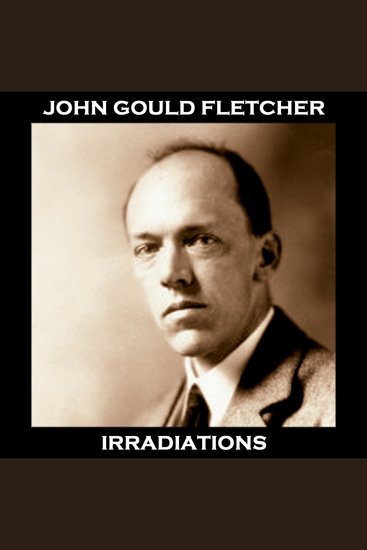
    John Gould Fletcher was born in Little Rock, Arkansas on 3rd January 1886 to a socially prominent family.  
    He was educated at Phillips Academy, Andover before advancing to Harvard University which he attended from 1903 to 1907, before dropping out after his father's death. 
    As a young man Fletcher spent many years in England where he became part of the influential Imagist group of poets together with Amy Lowell and Ezra Pound.   
    His first marriage came from a resumed relationship with the now married Florence Emily ‘Daisy’ Arbuthnot. Her adultery with Fletcher was the grounds for her divorce from Malcolm Arbuthnot.  They married on 5th July 1916 but later divorced.  
    Fletcher first published in 1912, with ‘The Dominant City’ too much praise and admiration and followed this with other well-regarded volumes such as ‘Irradiations: Sand and Spray’, and ‘Goblins and Pagodas’. 
    In the late 1920s and 1930s Fletcher became increasingly active with a group of Southern writers and poets known as the Southern Agrarians. They published the classic ‘I'll Take My Stand: The South and the Agrarian Tradition’. 
    Although he was highly regarded as a poet he was not very prolific.  However, such was the undoubted quality that in 1939 he received the Pulitzer Prize for his work ‘Selected Poems’.  He was the first poet from the south to receive such an accolade.  Fletcher’s other passion and pursuit was as an authority on modern painting, a subject on which he also published. 
    A second marriage followed in 1936 to the children’s author, Charlie May Simon. They built ‘Johnswood’, a residence on the bluffs of the Arkansas River and travelled frequently to New York for shots of modern culture and intellectual stimulation as well as to the American West and South for the climate after Fletcher developed chronic arthritis. 
    In 1937 he wrote his autobiography, ‘Life is My Song’. 
    His developing passion for his roots and background resulted in the writing of a history of his State and published in 1947; ‘Arkansas’. 
    By now Fletcher was suffering from bouts of depression and on 10th May 1950, he committed suicide by drowning himself in a pond near his home in Little Rock, Arkansas.
    Show book