Join us on a literary world trip!
Add this book to bookshelf
Grey
Write a new comment Default profile 50px
Grey
Subscribe to read the full book or read the first pages for free!
All characters reduced
Women of the Hearth - The Unsung Heroines of New England - cover

Women of the Hearth - The Unsung Heroines of New England

Pasquale De Marco

Publisher: Publishdrive

  • 0
  • 0
  • 0

Summary

Women of the Hearth: The Unsung Heroines of New England is a groundbreaking work that sheds light on the lives and contributions of women in colonial New England. Drawing on a wealth of primary sources, this book tells the stories of women from all walks of life, from the humble farmer's wife to the wealthy merchant's daughter.

These women were the backbone of their communities. They were responsible for a wide range of tasks, from cooking and cleaning to spinning and weaving. They also played a vital role in the education of their children and the care of their families. Despite the challenges they faced, these women made significant contributions to their communities. They were active in churches and schools, and they played a vital role in the American Revolution.

Women of the Hearth is a testament to the strength, resilience, and determination of the women who helped to build our nation. It is also a reminder that women's history is an integral part of American history.

This book is essential reading for anyone interested in American history, women's history, or the history of the family. It is also a valuable resource for teachers, students, and researchers.

In Women of the Hearth, you will learn about:

* The daily lives of colonial New England women
* The challenges they faced
* The contributions they made to their communities
* Their role in the American Revolution
* Their enduring legacy

Women of the Hearth is a fascinating and inspiring story of the women who helped to shape America.


If you like this book, write a review!
Available since: 06/02/2025.
Print length: 158 pages.
Other books that might interest you

  • World War II in 1945 - The History of the Battles Fought During the War’s Final Year - cover

    World War II in 1945 - The...

    Editors Charles River

    • 0
    • 0
    • 0
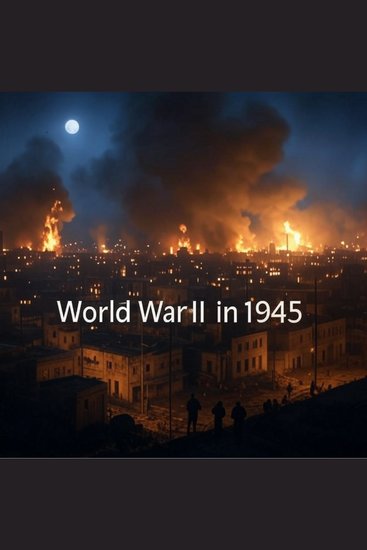
    After resisting the German attack during the Battle of the Bulge, the Allied armies began advancing, and with that, the race to Berlin was truly on. While much has been written of the Battle of the Bulge, Okinawa, Midway, Stalingrad, and many other conflicts of the Second World War, the Battle for Berlin has remained in the shadows for many historians. Its importance in toppling Hitler cannot be denied, despite the fact that some thought its strategic value unnecessary to the war itself. The capture of the city and the red Soviet banner hanging victorious over the Reichstag is one of history’s most famous (an ominous) images. In the weeks it took for the Battle of Berlin to be fought, an American president passed away, a British Prime Minister had to make concessions he did not desire, a Russian leader fought his way into Western Europe to stay, and a German one took his own life. The battle’s implications would be felt for the next 50 years. 
    The Battle of Iwo Jima, code name “Operation Detachment,” is more of a misnomer than anything. It was fought as part of a large American invasion directed by steps toward the Japanese mainland, and it was more like a siege that lasted 36 days from February-March 1945, with non-stop fighting every minute. In fact, the iconic flag-raising photo was taken just four days into the battle, and as that picture suggests, the battle was not a pristine tactical event but an unceasing horror with no haven for protection.  
    Okinawa witnessed every conceivable horror of war both on land and at sea. American ground forces on Okinawa had to deal with bad weather (including a typhoon), anti-tank moats, barbed wire, mines, caves, underground tunnel networks, and fanatical Japanese soldiers who were willing to use human shields while fighting to the death. Allied naval forces supporting the amphibious invasion had to contend with Japan’s notorious kamikazes, suicide pilots who terrorized sailors.
    Show book
  • The Heart of Learning - cover

    The Heart of Learning

    Lawrence Williams, EdD

    • 0
    • 0
    • 0
    The Heart of Learning provides heart-centered guidance and essential information for teaching young children and for creating a nurturing and effective learning environment. This educational classic has informed homeschooling families for four decades and continues to provide the foundation of Oak Meadow's K-3 curriculum.Written by Lawrence Williams, Oak Meadow's co-founder and a pioneer in homeschooling and distance learning, The Heart of Learning has been updated to reflect modern teaching and learning concerns.Based on our 40th Anniversary Edition, this audiobook includes expanded sections on sustainable homeschooling, mindful parenting, technology, boredom and entertainment, nature-based learning, and more. With its unique focus on helping the parent/teacher develop strong inner resources and become a better teacher, The Heart of Learning is highly recommended for every adult who guides and shapes the lives of children.
    Show book
  • Battle of Kadesh The: The History of the Most Important Battle Between the Egyptians and Hittites - cover

    Battle of Kadesh The: The...

    Editors Charles River

    • 0
    • 0
    • 0
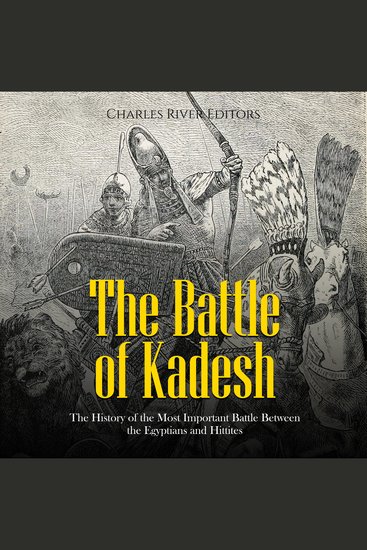
    Many battles fought in antiquity remain famous thousands of years later, such as Marathon, Thermopylae, and Cannae, mainly due to the belligerents involved and the ways in which the battles changed the course of history. However, even as people are fascinated by the Egyptians, one of the most important battles in antiquity has also been one of the most overlooked: the Battle of Kadesh, fought by Ramesses II against the Hittites.  
    	For one thing, it is the earliest known pitched battle to be documented, and the number of troops deployed by both the Egyptians and Hittites may have made it the largest battle ever fought up until that point in time. The organization of the forces, especially the Egyptians, is another intriguing aspect of this battle, because the Egyptians organized their units into divisions, which may be the first such case in history or simply the first time the organization was recorded. 
    	Arguably the most famous aspect of the battle is that it was passed down in ways that barely aligned with reality. Surrounded and swiftly outnumbered, most of the Egyptian soldiers were killed in the battle, and Ramesses II was forced to retreat in order to survive. What is known of the rest of the battle is that the pharaoh rallied his forces, fought on through the battlefield in order to evade capture and death, and managed to get away with only with a fraction of his troops, while the majority of his army lay slain on the field of battle that he left behind him. 
    	Nonetheless, the battle essentially ended in a stalemate, after which there was a period of extended peace and eventually an alliance between the Egyptians and Hittites. The ensuing peace also helped to solidify the Late Bronze Age Near Eastern geopolitical system modern scholars often refer to as the “Great Powers Club,” during which the most powerful empires of the Near East tended to use diplomacy instead of warfare to settle their differences.
    Show book
  • Knights Hospitaller The: A Captivating Guide to a Medieval and Early Modern Catholic Military Order and Their Impact on the Crusades the Great Siege of Malta and the Middle Ages - cover

    Knights Hospitaller The: A...

    Captivating History

    • 0
    • 0
    • 0
    War, virtue, corruption, adventure—the history of the Order of the Knights Hospitaller has it all. 
    The Hospitallers started out as caretakers of the Christian pilgrims in Jerusalem, but they soon emerged from their hospices and adopted a new military role that shaped the history of medieval Europe forever. This audiobook seeks to explore the curious rise of the Hospitallers from their humble origins to one of the most powerful institutions in medieval Europe. 
    Throughout their existence, the Hospitallers have managed to develop a renowned military tradition. At first, they just defended the traveling pilgrims to the Holy Land and provided them care in their hospices, but later on, thanks to their prowess and professionalism, the Hospitallers became a respected and feared military order that fought for Christendom. 
    After countless challenges, formidable foes, and internal and external threats, the Knights Hospitaller managed to survive against all odds and still exists today. They have adapted their role to modern times but never lost their true identity and mission. 
    Here’s a glimpse of what you will find in this audiobook:An in-depth history of the rise of the Knights HospitallerThe development of Hospitaller institutions, bureaucratic structures, and rolesHospitaller involvement in the events of the Levant during the CrusadesA deep dive into the military activities of the order, including the famous battles of La Forbie, Arsuf, Cresson, Ascalon, Rhodes, and many moreA look at the greatest grand masters of the order and how they shaped the order’s history 
    Scroll up and click the “add to cart” button to begin learning about this famous military order!
    Show book
  • The Rise of the American Corporate Security State - Six Reasons to Be Afraid - cover

    The Rise of the American...

    Beatrice Edwards

    • 0
    • 0
    • 0
    "A vital book about the ridiculously cozy relationship between corporate wealth and government power and how it only seems to be getting worse" (William Cohan, author of Money and Power). 


    In the United States today we have good reasons to be afraid. Our Bill of Rights has been rendered powerless by ubiquitous surveillance and our freedoms are impaired by government control of information, systemic financial corruption, and unfettered corporate influence in our elections. Behind a thinning veneer of democracy, the Corporate Security State is tipping the balance between the self-interest of a governing corporate elite and the rights of the people to freedom, safety, and fairness. 


    In The Rise of the American Corporate Security State, Beatrice Edwards examines the real reasons to be afraid in twenty-first-century America, and outlines how we can address them. Our first steps in the right direction may be small, but they are important. They are based on the principle that we have a right to know what our government is doing and to speak openly about it. Creeping censorship, secret courts, and clandestine corporate control are all anathema to democratic practices and must be corrected now—before this last chance to redeem our rights is lost.
    Show book
  • Tank Warfare on the Eastern Front 1941-1942 - Schwerpunkt - cover

    Tank Warfare on the Eastern...

    Robert A. Forczyk

    • 0
    • 0
    • 0
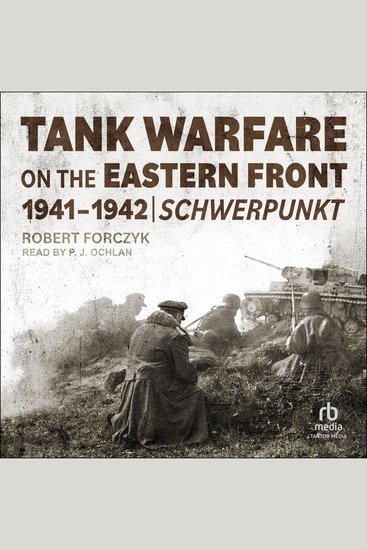
    The German panzer armies that swept into the Soviet Union in 1941 were an undefeated force that had honed their skill in combined arms warfare to a fine edge. The Germans focused their panzers and tactical air support at points on the battlefield defined as Schwerpunkt—main effort—to smash through any defensive line and then advance to envelope their adversaries. 


    Initially, these methods worked well in the early days of Operation Barbarossa and the tank forces of the Red Army suffered defeat after defeat. Although badly mauled in the opening battles, the Red Army's tank forces did not succumb to the German armored onslaught and German planning and logistical deficiencies led to over-extension and failure in 1941. In the second year of the invasion, the Germans directed their Schwerpunkt toward the Volga and the Caucasus and again achieved some degree of success, but the Red Army had grown much stronger and by November 1942, the Soviets were able to turn the tables at Stalingrad. 


    Robert Forczyk's incisive study offers fresh insight into how the two most powerful mechanized armies of WWII developed their tactics and weaponry during the early years of the Russo-German War. He uses German, Russian, and English sources to provide the first comprehensive overview and analysis of armored warfare from the German and Soviet perspectives.
    Show book