Join us on a literary world trip!
Add this book to bookshelf
Grey
Write a new comment Default profile 50px
Grey
Subscribe to read the full book or read the first pages for free!
All characters reduced
Warriors of the Rainbow Nation - A History of the South African Armed Forces - cover

Warriors of the Rainbow Nation - A History of the South African Armed Forces

Pasquale De Marco

Publisher: Publishdrive

  • 0
  • 0
  • 0

Summary

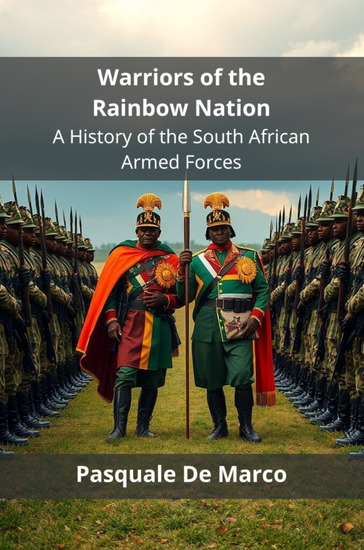
In the heart of southern Africa lies a nation steeped in history and resilience, a nation that has risen from the ashes of apartheid to become a beacon of hope and progress. At the forefront of this transformation stands the South African National Defence Force (SANDF), a formidable force that has played a pivotal role in safeguarding the nation's sovereignty and contributing to regional stability.

"Warriors of the Rainbow Nation: A History of the South African Armed Forces" is a comprehensive and engaging narrative that chronicles the remarkable journey of the SANDF, from its humble beginnings in 1994 to its current status as a modern and capable military organization. Through a detailed examination of the SANDF's structure, equipment, training, and operations, this book provides a unique perspective on the inner workings of one of Africa's most powerful militaries.

This book delves into the challenges and triumphs that have shaped the SANDF's identity, from the daunting task of integrating former enemies into a single cohesive force to the complexities of peacekeeping operations in conflict zones across the continent. It also explores the SANDF's role in society, highlighting its contributions to civil-military relations, community engagement, economic development, and environmental protection.

Beyond its historical account, this book also examines the SANDF's future prospects, considering the evolving global security landscape and the ongoing modernization and transformation of the organization. It explores the investments being made in new equipment, training, and infrastructure, and examines how the SANDF is adapting to meet new challenges and maintain its status as a regional powerhouse.

"Warriors of the Rainbow Nation" is a must-read for anyone interested in the intricacies of modern warfare, the history of South Africa, or the role of the military in society. It is a compelling narrative that captures the essence of a nation's struggle for peace, progress, and prosperity.


If you like this book, write a review!
Available since: 06/02/2025.
Print length: 163 pages.
Other books that might interest you

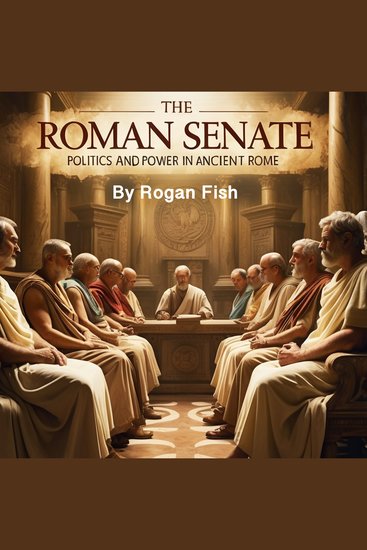
  • The Roman Senate - Politics and Power in Ancient Rome - cover

    The Roman Senate - Politics and...

    Rogan Fish

    • 0
    • 0
    • 0
    The Roman Senate, one of the most enduring institutions in ancient history, traces its origins to the very foundation of Rome. Emerging during the early monarchy period, the Senate originally functioned as an advisory body to the king. According to Roman tradition, the Senate was established by Romulus, the legendary founder of Rome, who appointed one hundred of the most distinguished men, known as "patres," to serve as the initial senators. These men and their descendants formed the aristocratic class, later known as the patricians. The formation of the Senate marked the beginning of a political structure that would shape Roman governance for centuries. 
    The early Senate's primary role was to offer counsel to the king on matters of state. While its authority was limited under the monarchy, the Senate's influence grew as it represented the city’s elite and carried the weight of collective wisdom. Senators held their positions for life, symbolizing stability and continuity within the Roman state. The Senate's name itself, derived from the Latin word "senex" (meaning old man), emphasized the value placed on experience and elder leadership. During this period, the Senate did not possess legislative or executive power but acted as a stabilizing force, guiding the monarch through complex political and military decisions. 
    The transition from monarchy to republic in the late 6th century BCE marked a significant turning point for the Senate’s role. After the fall of the last Roman king, Tarquin the Proud, the Senate became more central to governance. The expulsion of the monarchy led to the establishment of the Roman Republic, where power was distributed more broadly among elected magistrates. The Senate, now composed mainly of patricians, gained considerable influence as a body that advised the newly formed consuls.
    Show book
  • Skirts - Fashioning Modern Femininity in the Twentieth Century - cover

    Skirts - Fashioning Modern...

    Kimberly Chrisman-Campbell

    • 0
    • 0
    • 0
    In a sparkling social history, Skirts traces the shifting roles of women over the twentieth century through the era's most iconic and influential dresses. 


    While the story of women's liberation has often been framed by the growing acceptance of pants over the twentieth century, the most important and influential female fashions of the era featured skirts. Suffragists and soldiers marched in skirts; the heroines of the Civil Rights Movement took a stand in skirts. As women made strides towards equality in the vote, the workforce, and the world at large, their wardrobes evolved with them. 


    Kimberly Chrisman-Campbell's Skirts looks at the history of twentieth-century womenswear through the lens of game-changing styles like the little black dress and the Bar Suit, as well as more obscure innovations like the Taxi dress or the Pop-Over dress, which came with a matching potholder. These influential garments illuminate the times in which they were first worn—and the women who wore them—while continuing to shape contemporary fashion and even opening the door for a genderfluid future of skirts. At once an authoritative work of history and a delightfully entertaining romp through decades of fashion, Skirts charts the changing fortunes, freedoms, and aspirations of women themselves.
    Show book
  • Only Three Votes - The Battle for the Political Soul of Wales in 1970s Carmarthenshire - cover

    Only Three Votes - The Battle...

    Gwynoro Jones, Alun Gibbard

    • 0
    • 0
    • 0
    "These were events which prefigured and did much to shape the political battles of the last half century, the devolution half century in Wales. They shaped the non-nationalist, but distinctive Welsh social democratic preferences of the last sixty years. For anyone interested in the formative moments of today's Wales, this is both essential and highly entertaining reading." – Mark Drakeford, First Minister of Wales 2018-2024
    It was a period of Welsh politics that has become etched in the collective memory. The rise of a Welsh independence movement and the first Plaid Cymru Member of Parliament. The Labour Party searching for a way forward in a political climate that was riven with dissension and eventual rancour. It was a fight for social democracy against the centralised power of the British state.
    The first battlefield was Carmarthen and the protagonists were Gwynfor Evans, the leader of Plaid Cymru and the young Labour hopeful Gwynoro Jones. Their rivalry lasted throughout the Seventies. They fought three elections and on one occasion the result was decided by just three votes.
    This book tells the story of a political rivalry which was also very personal. It was a local confrontation that drew on national battlelines. It was about Carmarthen and Wales. Both men had their vision of the Wales they wanted to fight for. These pages unfold the story from Gwynoro Jones' perspective for the first time, in an attempt to redress the imbalance of Gwynfor Evans' story dominating the narrative for so long.
    Drawing on an extensive archive, collected at the time, Gwynoro shows how the two fought their politics in the newspapers of the day and through speeches on constituency public platforms, where they argue about the Welsh language and devolution, Europe and agriculture. But they only ever actually met once. Gwynoro also reflects on how he views those turbulent years today.
    Through their wranglings, a picture is also painted of Welsh politics in the decade that led up to the referendum on devolution in 1979, as Plaid and Labour searched for a way forward. And ultimately, a generation later, to the creation of a parliament for Wales.
    Show book
  • Radiant Rebellion - Reclaim Aging Practice Joy and Raise a Little Hell - cover

    Radiant Rebellion - Reclaim...

    Karen Walrond

    • 0
    • 0
    • 0
    Join Karen Walrond, author of The Lightmaker's Manifesto, in this intriguing investigation into how we can reclaim aging, cultivate joy, and resist ageism. 


    During her own year of transition—a milestone birthday, a wedding anniversary, the emptying of the nest—Walrond, in the buoyant and luminous style her readers have come to love, does a deep dive into dimensions of getting older, including health, beauty, spirituality, connection, adventure, and meaning and purpose. Through conversations with social workers and neurologists, activists and clergy, Walrond satisfies her curiosity about why the dominant culture treats aging as a time of dwindling capacity. She also embarks on a series of experiments that help her rebel against convention: letting her hair go naturally gray, going on a silent retreat, revamping her health practices, and plotting her next adventure. 


    Internalized ageism is not our only option; we can write a different story of aging than the one we've been handed. With wisdom from luminaries who light our way, Walrond helps us radiantly rebel against the fads and assumptions that hold us back, redefine the adventure of getting older, and create a shining future of expanded potential. We might even raise a little hell while we're at it!
    Show book
  • City Growth and Urban Form - Models and Theories - cover

    City Growth and Urban Form -...

    Lyric Vale

    • 0
    • 0
    • 0
    Urban growth and development have been central to human progress for centuries, shaping the landscape, economies, and cultures of societies around the world. As the global population continues to urbanize, cities are experiencing rapid expansion and transformation. This urbanization process, which involves the migration of people from rural to urban areas, is driven by a combination of economic, social, and political factors. Understanding the forces behind urban growth is essential for urban planners, policymakers, and scholars who aim to navigate the challenges and opportunities that come with it. 
    The rise of cities is closely linked to the development of agriculture, trade, and industry. In early history, cities were established as centers of commerce and governance, offering opportunities for social, political, and economic advancement. With the Industrial Revolution, cities became hubs of production, attracting large numbers of people seeking employment and better living conditions. This period marked a significant shift from agrarian economies to industrial economies, fueling the growth of urban centers across Europe and North America. 
    In the modern era, urbanization has reached unprecedented levels, with more than half of the world’s population now residing in urban areas. The growth of cities is not limited to developed countries but is also occurring rapidly in the developing world, particularly in regions of Asia, Africa, and Latin America. This has led to the expansion of megacities—urban areas with populations exceeding 10 million people—while smaller cities also experience considerable growth. The factors driving this global urbanization include the pursuit of better economic opportunities, access to education and healthcare, and the promise of improved living standards.
    Show book
  • Belonging Matters - Conversations on Adoption Family and Kinship - cover

    Belonging Matters -...

    Julie Ryan McGue

    • 0
    • 0
    • 0
    Belonging Matters is meant to support the adoption community while creating a conversation with those not directly touched by adoption. The collection addresses the questions:
    —If you are part of the adoption universe, how do you find identity, family, and community
    
    —If someone you know is adopted, how do you understand and support them in their search for identity, family, and belonging
    
    —How do we improve the adoption experience to invoke social change that benefits the individual, the family unit, and the communities in which they live?
    
    This collection is about examining all that makes us unique, and it is about finding meaning and healing from the difficulties we encounter in life.
    Show book