Join us on a literary world trip!
Add this book to bookshelf
Grey
Write a new comment Default profile 50px
Grey
Subscribe to read the full book or read the first pages for free!
All characters reduced
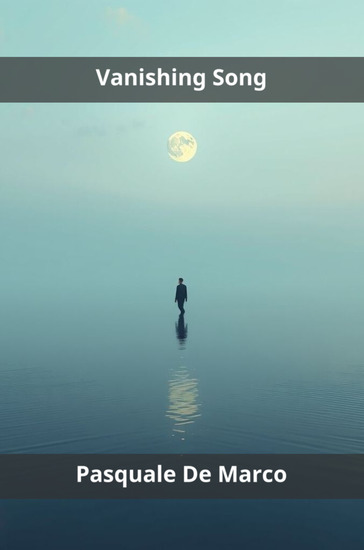
Vanishing Song - cover

Vanishing Song

Pasquale De Marco

Publisher: Publishdrive

  • 0
  • 0
  • 0

Summary

In the realm of imagination, where shadows dance and whispers carry secrets, Vanishing Song weaves a captivating tapestry of dreams, illusions, and forgotten lore. Prepare to embark on a literary odyssey that will challenge your perception of reality and transport you to a realm where the boundaries of existence blur.

Within these pages, you will encounter characters who navigate desolate landscapes, haunted by the echoes of lost souls. You will witness the unraveling of enigmas, as mirrors of deception and the fleeting nature of truth are revealed. Brace yourself for a journey that will test the limits of your imagination and leave you questioning the very fabric of reality.

As you delve deeper into this ethereal realm, you will discover the glimmering embers of hope amidst the fading light of despair. Resilience ignites, and the indomitable spirit of determination rises, inspiring you to embrace the interwoven destinies that shape the loom of fate. Unravel the threads that bind you to ancestral burdens and step into the silent storm that rages within.

Confront your inner demons and navigate the tumultuous sea of emotions, as you teeter on the edge of doubt and shatter the veil of illusion. Gaze beyond the horizon and glimpse the enigmatic unknown, where the enduring echo of a song fades away.

Vanishing Song is a symphony of prose that captivates the senses and invites you to ponder the mysteries of existence. Its lyrical language and evocative imagery will transport you to a realm where the boundaries of imagination dissolve, and the music of the unseen captivates your soul. Immerse yourself in this extraordinary tale and let the whispers of the unseen guide you on a journey that will forever transform your perception of reality.


If you like this book, write a review!
Available since: 06/02/2025.
Print length: 156 pages.
Other books that might interest you

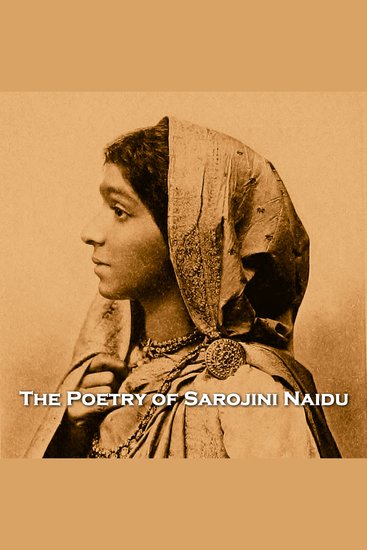
  • The Poetry of Sarojini Naidu - One of the finest modern global poets - cover

    The Poetry of Sarojini Naidu -...

    Sarojini Naidu

    • 0
    • 0
    • 0
    Sarojini Chattopadhyay was born into a Bengali family in Hyderabad, India on 13th February 1879, the eldest of the eight siblings. The family was well-respected in Hyderabad and were established artists. 
     
    Naidu passed her matriculation examination at the University of Madras and took a four-year break from her studies.  
     
    In 1895, H.E.H. the Nizam's Charitable Trust founded by the 6th Nizam, Mahbub Ali Khan, gave her the chance to study in England, first at King's College, London and later at Girton College, Cambridge.  
     
    Even in these early times she was a social activist.  It was whilst in England that she worked as a suffragist and was first drawn to the Indian National Congress' Hindu movement for India's independence from British Colonial rule.  
     
    She began writing at the age of twelve. Her play, ‘Maher Muneer’, written in Persian, impressed the Nawab of Hyderabad. It was an auspicious start. 
     
    Sarojini met Paidipati Govindarajulu Naidu, a physician, and after finishing her studies at age 19 married him. The couple would have five children.  Interestingly their families approved their marriage even though they were from different castes and society was not as tolerant as it might be today.  Additionally, Sarojini was from Bengal and Naidu from Andhra Pradesh and marriages between those from the north and south were frowned upon.  Happily, they overcame these problems and both marriage and careers thrived. 
     
    In 1905, her first collection of poems, ‘The Golden Threshold’ was published. 
     
    Naidu became a part of the Indian nationalist movement and was a follower of Mahatma Gandhi and his idea of swaraj (this was an India without its colonial administration systems).  Despite her growing political career she still found time to write and published several further volumes of poetry. Such was her eloquence that she became known as the ‘Nightingale of India’. 
    Sarojini was appointed the President of the Indian National Congress in 1925 and was a major influence and figure in the Independence movement.  
     
    Along with several other Congress leaders including Gandhi and Jawaharlal Nehru she was arrested for taking part in the 1930 Salt March.  Indeed Sarojini faced frequent arrest by the British Authorities and spent, in total, many months in prison. 
     
    Following India's independence from British rule in 1947, Sarojini was appointed as the governor of the present-day Uttar Pradesh in so doing she became India's first female governor. 
     
    Returning from work in New Delhi on 15th February, 1949 she was advised to rest by her doctors, and her official engagements were cancelled.  Her health deteriorated rapidly and on 1st March bloodletting was performed after she complained of severe headache.  
     
    Sarojini Naidu died of a cardiac arrest on 2nd March 1949.  She was 70.
    Show book
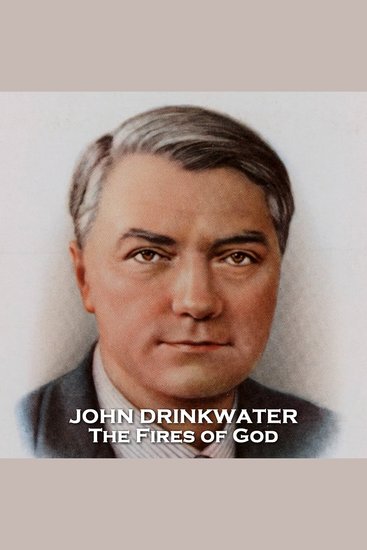
  • The Fires of God - A postwar poem that counters the modern view of things - cover

    The Fires of God - A postwar...

    John Drinkwater

    • 0
    • 0
    • 0
    John Drinkwater was born in Leytonstone, Essex on the 1st June 1882. 
    He initially worked as an insurance clerk before embarking on a career as a poet and playwright. 
    In the years before the Great War, he was one of six poets associated with the Gloucestershire village of Dymock who became known as The Dymock Poets and included the likes of Robert Frost, Rupert Brooke and Edward Thomas. 
    As a poet he began publishing in 1903 with his volume ‘Poems’.  Whilst he was not overly prolific, he was the only poet to be published in all 5 volumes of Georgian Poetry (1912-1922).  He also wrote and edited anthologies on other poets. 
    In 1918, he had his first major success as a playwright with ‘Abraham Lincoln’ and followed this with others in the same biographical vein. 
    John Drinkwater died in London on the 25th March 1937.  He was 54.
    Show book
  • Fifty Forgotten War Poets - Where the best and worst of humanity meet - cover

    Fifty Forgotten War Poets -...

    Wilfrid Wilson Gibson

    • 0
    • 0
    • 0
    War is that most awful and heinous display of man’s inhumanity. 
    And within the legions of slaughtered young men in the trenches of Western Europe, or the desperate carnage of battles fought elsewhere, were a group of men we now call the War Poets.  Names such as Owen, Thomas, Brooke for example may still have a legacy that so eloquently describes the suffering, brutality and the waste of the human body and spirit, but so many others have left their words on a page and sunk to forgotten obscurity. 
    In this volume we bring together some of those forgotten talents whose verse still captures their time, and with it, valuable lessons on what might happen now ‘lest we forget’.
    Show book
  • The Boxkart Rebel - cover

    The Boxkart Rebel

    Graham Thomas

    • 0
    • 0
    • 0
    Danny Redding is the fastest super kart racer in the city. His younger brother Chris knows that one day he will be faster. But in between fantasy and destiny another life exists. A life of fear, of anger and of courage. The life of the 'Boxkart Rebel'  
    'The Boxkart Rebel' is a coming-of-age tale about the courage it takes to go your own way, to get through life no matter the hardships. It is also about family and about racing.
    Show book
  • No Thoroughfare - cover

    No Thoroughfare

    Wilkie Collins, Charles Dickens

    • 0
    • 0
    • 0
    Walter Wilding has lived his life secure in the knowledge that he was the son of his mother. But a chance encounter shocks him to his deathbed, leaving his friend and Executor George Vendale charged with the finding of the real Walter Wilding. Meanwhile, George pitches woo to Margerite Obenreizer, but has to deal with her dastardly guardian and uncle. The story twists and turns from the wine cellars of England, to Soho and then to the Alps of Switzerland, where George discovers that Mr Obenreizer is right about one thing to the last... "So little is the world, that one cannot keep away from persons." Originally written as a stage play by Wilkie Collins and Charles Dickens, it was later turned into a collaborative novel by the two.  
    Narrated by Michael Ward.
    Show book
  • The Vibration of the Eternal - cover

    The Vibration of the Eternal

    John O'Donohue PhD

    • 0
    • 0
    • 0
    Beloved poet and philosopher shares profound insights on our hunger to belong and the grandeur of possibility found in our longing. In the quiet spaces of our lives, we feel it—a deep stirring in our hearts, a yearning to bridge the distance between what is and what could be. It shows up when everything we want is before us, when life seems to have come together, yet another voice appears—a whisper—that there is something still missing. “The restlessness of longing is not a flaw or failure,” says John O’Donohue. “It is the divine dissatisfaction that keeps us alive to our potential and the radiance of what is yet to be discovered.”With The Vibration of the Eternal, beloved Irish poet and philosopher John O’Donohue shares an intimate and life-changing audio program for understanding the profound mystery of life and our universal desire for belonging, connection, and meaning. Here, he explores a series of themes that evoke in us an awareness of the profound beauty, depth, and grace inherent in our existence and the boundless possibility within and beyond us. His words echo with timeless wisdom as he offers reflections on:• Longing as a sacred flame—a divine hunger that birthed us, sustains us, and is waiting to receive us again• The gift of presence—the transcendence of distraction, and an invitation to fully inhabit each moment• The dance of longing and belonging—where absence inspires creativity, and connection becomes meaning• Nature as sacred guide—where mountains and rivers become our teachers, compassionate and kind• Awakening to life—a call to be curious, reflective, and open to the wonder and complexity of being alive• And much more“May each of us have the wisdom to enter generously into our own unease,” says O’Donohue. “As we do, we’ll discover the new direction our longing wants us to take.” This revered work offers nourishment for the soul, calling us to awaken to the vast, luminous fullness of being.
    Show book