Join us on a literary world trip!
Add this book to bookshelf
Grey
Write a new comment Default profile 50px
Grey
Subscribe to read the full book or read the first pages for free!
All characters reduced
Under a Veil of Benevolence - cover

Under a Veil of Benevolence

Pasquale De Marco

Publisher: Publishdrive

  • 0
  • 0
  • 0

Summary

In this groundbreaking work, Pasquale De Marco offers a fresh perspective on the history of slavery in the United States, exploring the complex interplay between ideology, politics, and economics that sustained the peculiar institution. Drawing on a wealth of primary sources, Pasquale De Marco argues that slaveholders were not simply motivated by greed, but also by a deeply ingrained belief in the superiority of the white race.

Slaveholders constructed an elaborate ideology to justify their actions, one that was rooted in paternalism, racism, and a distorted interpretation of Christianity. They argued that slavery was a necessary evil, essential for maintaining social order and economic prosperity. They claimed that slaves were inferior beings, incapable of caring for themselves, and that slavery was a benevolent institution that provided them with food, shelter, and protection.

Pasquale De Marco challenges these claims, demonstrating how the institution of slavery was a system of exploitation and oppression that dehumanized slaves and denied them their basic rights. He also explores the impact of slavery on the white population of the South, showing how it created a herrenvolk democracy in which white men enjoyed a privileged status based on their race.

This book is a major contribution to our understanding of slavery in the United States. It is a work of meticulous scholarship that sheds new light on one of the darkest chapters in American history. Pasquale De Marco has written a book that is both provocative and insightful, a must-read for anyone who wants to understand the legacy of slavery in America.


If you like this book, write a review!
Available since: 06/02/2025.
Print length: 160 pages.

Other books that might interest you

  • Fighting After the War: A History of the Most Famous American Battles that Took Place after the Wars Had Ended - cover

    Fighting After the War: A...

    Editors Charles River

    • 0
    • 0
    • 0
    There are countless examples of battles that take place in wars after a peace treaty is signed. The last battle of the Civil War was a skirmish in Texas that Confederate forces won, nearly a month after Lee’s surrender at Appomattox. As fate would have it, the last fighting of the Civil War took place two days after Confederate President Jefferson Davis had been captured in Georgia 
    It’s certainly rare for the most famous battle of a war to take place after the peace treaty is signed, but luckily for Andrew Jackson, the War of 1812 was that unique exception. Less than a year after his victory in the Battle of Horseshoe Creek, Jackson led his forces into a more important battle at the Battle of New Orleans. The British hoped to grab as much of the land on the western frontier as they could, especially New Orleans, which had a prominent position on the Mississippi River for trading. With more than 8,000 soldiers aboard a British fleet sailing in from Jamaica in early January 1815, the attack on New Orleans promised to be a significant one, while Jackson’s men defended New Orleans with about half that number. This went on despite the fact that the two sides had signed the Treaty of Ghent on Christmas Eve 1814, which was supposed to end the war.  
    Despite the fact the French & Indian War had recently concluded, Pontiac led the first major attack of Pontiac’s War in May 1763, when he and 300 of his men attacked Fort Detroit in what is now the city by the same name. Unfortunately for his cause, Pontiac failed to gauge just how strong the British presence there was, and his attack was quickly repelled. On the other hand, he was not a man who gave up easily, so instead of retreating, he and his warriors would lay siege to the British stronghold. In the days that followed, word spread of his efforts, and in short order nearly 1,000 men from various tribes in the area had joined him.
    Show book
  • Noble Savage Deadbeat Dad - How Rousseau Invented Modern Society While Failing at Basic Human Decency - cover

    Noble Savage Deadbeat Dad - How...

    Sophia Blackwell

    • 0
    • 0
    • 0
    In this mercilessly funny takedown, Jean-Jacques Rousseau—history's most insufferable philosopher—gets the roasting he so richly deserves. "Noble Savage, Deadbeat Dad" exposes the spectacular hypocrisy of a man who abandoned five children at orphanages while writing the definitive guide to education, preached natural virtue while exposing himself to strangers, and railed against wealth while living off rich patrons. 
    Laugh out loud as we dissect Rousseau's greatest contradictions: his fetishization of indigenous cultures (without meeting any actual indigenous people), his belief that society corrupts natural goodness (while engaging in deeply unnatural bedroom activities), and his conviction that he alone understood true freedom (while being pathologically dependent on others for basic survival). 
    This savagely irreverent guide reveals how a paranoid, chronically constipated Swiss misanthrope somehow managed to inspire both democracy AND totalitarianism between bouts of accusing everyone he met of conspiring against him. With brutal honesty and razor-sharp wit, we explore how Rousseau's complete disaster of a personal life somehow produced philosophical insights that still haunt us today—especially when we complain about technology ruining society while scrolling through social media. 
    Perfect for philosophy students in desperate need of comic relief, or anyone who enjoys watching narcissistic geniuses get thoroughly eviscerated. Warning: Reading this book in public may cause uncontrollable laughter and concerned looks from serious academics.
    Show book
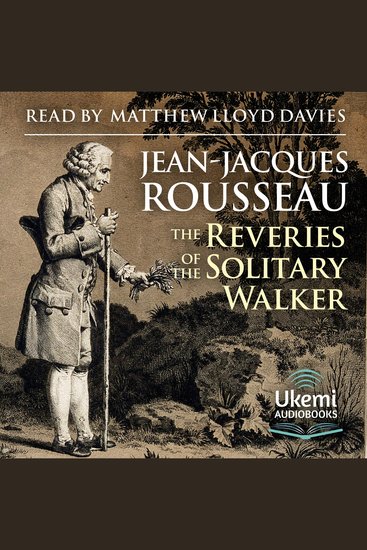
  • The Reveries of the Solitary Walker - cover

    The Reveries of the Solitary Walker

    Jean-Jacques Rousseau

    • 0
    • 0
    • 0
    The Reveries of the Solitary Walker was one of the last works written by the French philosopher Jean-Jacques Rousseau (1712-1778) and was, in fact, not quite complete. It was published four years after his death and came quickly to be regarded as one of his most poetic works. 
     
    It consists of 10 Walks (only the final ‘Walk’ was unfinished) during which he muses on a variety of topics including thoughts on issues which featured strongly in his notable life as a philosopher and commentator, including education and political philosophy. However, interwoven into the reflective narrative are personal observations and memories—some painful, concerning times when he felt attacked and severely criticised for his writings. There are also comments on nature particularly the plants he encounters which, placing the writer in the countryside, balances the darker inner musings. This puts the tone beyond nostalgia, and if there is undoubtedly a feeling of resignation, the essays emanate a sense of end-of-life understanding and acceptance. 
     
    The First Walk sets the scene: “BEHOLD me then as if alone upon the earth, having neither brother, relative, friend or society but my own thoughts; the most social and affectionate of men proscribed as it were by unanimous consent. They have sought in the refinement of their hatred what would be the most cruel torment to my susceptible soul and have rent asunder every bond which attached me to them. I should have loved mankind in spite of themselves and it was only by throwing off humanity that they could avoid my affection. At length, then, behold them strangers, unknown, as indifferent to me as they desired to be; but thus detached from mankind, and everything that relates to them, what am I? This remains to be sought. Unhappily the search must be preceded by casting a glance on my own situation, since I must necessarily pass through this examination, in order to judge between them and myself.” 
     
    Matthew Lloyd Davies reads the first translation into English which appeared in 1796, less than 20 years after Rousseau’s death.
    Show book
  • Lesbian Cuckold – Humiliating My Wife - An explicit story with domination BDSM humiliation and F F F action - cover

    Lesbian Cuckold – Humiliating My...

    Daniel P.

    • 0
    • 0
    • 0
    This audiobook is narrated by an AI Voice.   
    What if your darkest desire was also the salvation of your relationship? 
    Emma and Rose have been together for ten years. Ten years of love... and routine, of silence, of looks that no longer burn. Until a suspicious message on Rose's phone changes everything. Instead of breaking apart, Emma lets herself be carried away by an unexpected flood: the thrill of watching. Of spying. Of obeying. 
    What starts as a suspicion turns into a dynamic of power, lust, and submission that awakens the deepest desires of both. Rose, dominant, cruel, and addicted to control, finds a new way to love through play, humiliation, and exposure. Emma, sweet, emotional, and insecure, discovers that being used, shared, and marked gives her something she thought she'd lost: pleasure... and belonging. 
    This is an intense, uncensored erotic story about a couple's relationship reborn through pain, surrender, and consensual perversion. Featuring explicit scenes, BDSM dynamics, cuckolding, fetishes, and moments of deep emotional connection, this novel is not for sensitive readers. 
    But if you dare to watch, feel, and surrender... welcome to this journey where love and humiliation dance to the same rhythm.
    Show book
  • René Descartes - Rationalism and Meditations on First Philosophy - cover

    René Descartes - Rationalism and...

    Hector Davidson

    • 0
    • 0
    • 0
    René Descartes, often regarded as the father of modern philosophy, revolutionized the intellectual landscape of the seventeenth century. His groundbreaking ideas in mathematics, metaphysics, and epistemology laid the foundation for a new way of thinking, challenging the dominance of Aristotelian scholasticism. Born in 1596 in La Haye en Touraine, France, Descartes displayed an early aptitude for learning. He was educated at the Jesuit College of La Flèche, where he received a rigorous grounding in classical philosophy and mathematics. However, dissatisfied with the prevailing methods of acquiring knowledge, he sought a more systematic and rational approach, leading to his development of the Method of Doubt. 
    Descartes' intellectual pursuits extended beyond philosophy. His contributions to mathematics were equally significant, particularly in the creation of Cartesian geometry, which established a link between algebra and geometry through the use of coordinate planes. This innovation became a cornerstone of modern mathematics and physics, influencing generations of scientists. His emphasis on deduction and reason over mere observation shaped the trajectory of scientific inquiry, reinforcing the idea that true knowledge must be derived from fundamental principles. 
    His most famous philosophical work, Meditations on First Philosophy, published in 1641, sought to establish an unshakable foundation for human knowledge. In this work, he introduced the concept of radical skepticism, questioning the reliability of sensory perception and challenging assumptions about reality. Through this process, he arrived at his famous conclusion, "Cogito, ergo sum" (I think, therefore I am), which he considered the first indubitable truth. From this foundation, Descartes attempted to prove the existence of God and the distinction between mind and body, a theory known as Cartesian dualism.
    Show book
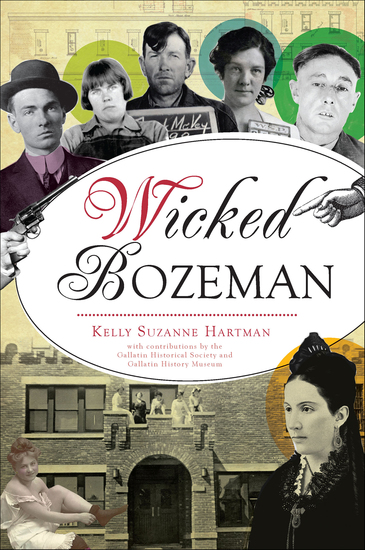
  • Wicked Bozeman - cover

    Wicked Bozeman

    Kelly Suzanne Hartman

    • 0
    • 0
    • 0
    Wicked Bozeman delves into a dangerous and dark pastThe Gallatin History Museum, housed in the old Gallatin County Jail, holds many secrets. From the house of ill repute on Mendenhall Street to the earliest jail break in 1873, the historic crimes are replete with con artists, forgers, robbers and the insane each leaving a trail of deceit and mystery. There is laughter, shock and the hard reality of a life lost to time behind bars. Using the original jail ledgers as a jumping off point, Museum Curator Kelly Suzanne Hartman takes the reader along on an investigative journey through Bozeman's seedier past.
    Show book