Join us on a literary world trip!
Add this book to bookshelf
Grey
Write a new comment Default profile 50px
Grey
Subscribe to read the full book or read the first pages for free!
All characters reduced
Trance Liberation - cover

Trance Liberation

Pasquale De Marco

Publisher: Publishdrive

  • 0
  • 0
  • 0

Summary

In "Trance Liberation: A Journey into the Transformative Power of the Unconscious Mind," embark on an extraordinary exploration of the world of trance and its potential to unlock profound healing, growth, and personal transformation. Drawing inspiration from the pioneering work of Milton H. Erickson, this comprehensive guide delves into the depths of the unconscious mind, revealing its secrets and unlocking its vast resources.

Discover the spectrum of trance states, from light relaxation to deep immersion, and explore the role of trance in everyday life. Learn how to induce trance effectively, establishing rapport, creating a conducive environment, and employing a variety of verbal and nonverbal techniques. Delve into advanced Ericksonian techniques, such as the double bind, confusion techniques, and parts therapy, and witness their therapeutic applications and potential for profound change.

Explore the ethical considerations surrounding hypnosis, ensuring its practice with integrity, respect, and the utmost care for clients' well-being. Investigate the diverse applications of hypnosis, from pain management and stress reduction to habit change and addiction recovery, personal growth, and spiritual development.

Envision the future of hypnosis, considering the latest research, emerging trends, and the potential for integrating hypnosis with other therapeutic approaches. Contemplate the role of hypnosis in a changing world, its potential to empower individuals and communities, and its contribution to our understanding of the human mind and consciousness.

Within these pages, you will find a wealth of knowledge and practical guidance, empowering you to harness the transformative power of trance for healing, growth, and personal liberation. Whether you are a seasoned hypnotherapist seeking to expand your skills, a healthcare professional exploring alternative approaches to therapy, or an individual seeking to unlock your inner potential, "Trance Liberation" offers an invaluable journey into the depths of the unconscious mind.


If you like this book, write a review!
Available since: 06/02/2025.
Print length: 158 pages.
Other books that might interest you

  • A Rare Recording of Robert Baden-Powell - cover

    A Rare Recording of Robert...

    Robert Baden-Powell

    • 0
    • 0
    • 0
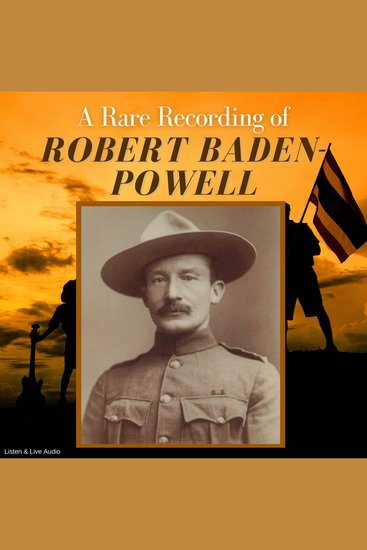
    In these two rare recordings of Robert Baden-Powell, founder and first Chief Scout of The Boy Scouts Association and founder of the Girl Guides, he extols the virtues of the Scout movement and that Scout duties are working for God and the King, helping other people, and keeping Scout law. 
    A Listen & Live audio production.
    Show book
  • Hannibal Barca - The Carthaginian General’s Life and Mission - cover

    Hannibal Barca - The...

    Kelly Mass

    • 0
    • 0
    • 0
    Hannibal Barca, one of Carthage’s most influential generals, lived a couple hundred years before Christ, and has led many Roman troops to victory to conquer the surrounding nations. Famous were his battles with elephants he employed during tactical moves of cavalry and infantry armies alike. His resistance against the Roman powers in the Punic Wars have been praised and lamented worldwide. 
    What was his life like? 
    Where did he come from? 
    What were his motives? 
    Which fights were mostly significant when we speak of his name? 
    How did he die? 
    These are just some of the questions that will be answered in this comprehensive guide. You will get a better understanding of the culture, the times, and the pressures that Hannibal Barca was confronted with.
    Show book
  • The Appeal to Authority Fallacy - Relying on Authority Figures for Validation - cover

    The Appeal to Authority Fallacy...

    William Rands

    • 0
    • 0
    • 0
    Authority plays a significant role in shaping our understanding of the world, influencing decisions, and providing guidance in countless areas of life. It’s embedded in every facet of society, from the classroom to the courtroom, from the boardroom to the laboratory. At its core, authority is the power or right to give orders, make decisions, and enforce obedience. However, the nature of authority is multifaceted and often taken for granted, especially in a world where expertise is increasingly revered. 
    The concept of authority is deeply ingrained in human culture and history. From the earliest civilizations to modern-day societies, humans have sought structure and order, often relying on individuals or institutions with perceived knowledge and expertise to guide them. These figures, whether they are religious leaders, scientists, political figures, or educators, are often seen as trusted sources of truth. This trust is not just a reflection of their knowledge or expertise but also a product of social conditioning. In many cultures, authority is linked to the idea of legitimacy, with authority figures perceived as credible due to their position, reputation, or experience. 
    Yet, this reliance on authority can also be a double-edged sword. While authority figures often provide valuable insights and direction, they are not infallible. The human tendency to defer to authority can sometimes lead us to accept claims or decisions without questioning their validity. This uncritical acceptance, while often harmless, can lead to significant errors, as seen in the history of science, medicine, politics, and more. Blind trust in authority can stifle innovation, suppress dissent, and allow misinformation to spread unchecked.
    Show book
  • Lion City - Singapore and the Invention of Modern Asia - cover

    Lion City - Singapore and the...

    Jeevan Vasagar

    • 0
    • 0
    • 0
    In 1965, Singapore's GDP per capita was on a par with Jordan. Now it has outstripped Japan. After the Second World War and a sudden rupture with newly formed Malaysia, Singapore found itself independent–and facing a crisis. It took the bloody-minded determination and vision of Lee Kuan Yew, its founding premier, to take a small island of diverse ethnic groups with a fragile economy and hostile neighbors and meld it into Asia's first globalized city.Lion City examines the different faces of Singaporean life–from education and health to art, politics, and demographic challenges–and reveals how in just half a century, Lee forged a country with a buoyant economy and distinctive identity. It explores the darker side of how this was achieved too; through authoritarian control that led to it being dubbed "Disneyland with the death penalty."Jeevan Vasagar, former Singapore correspondent for the Financial Times, masterfully takes us through the intricate history, present, and future of this unique diamond-shaped island one degree north of the equator, where new and old have remained connected. Lion City is a personal, insightful, and definitive guide to the city, and how its extraordinary rise is shaping East Asia and the rest of the world.
    Show book
  • International Space Station The: The History and Legacy of the Multinational Space Research Lab - cover

    International Space Station The:...

    Editors Charles River

    • 0
    • 0
    • 0
    Much has been written about the Space Race, which is still taught across America today, but the story of human space exploration is mostly one of cooperation. Even in the summer of 1969, the Soviets had given the United States the flight plan for its Luna 15 mission, allowing Apollo 11 to avoid it.  
    	That was the first of many examples of cooperation in space between the United States and the Soviet Union during the Cold War, and ultimately, their research and cooperation helped lead to the construction of the International Space Station (ISS), a large space station assembled in Earth’s orbit that represents the most ambitious international space project in history.  
    	Thanks to the various components that have been put together, the International Space Station is bigger and brighter than all other artificial satellites. With relatively low power magnification, people can see the solar panels radiating outward from the numerous international modules which make up the ISS. The reality of that platform, at the edge of the ocean of space, is pretty astounding when looked at from the perspective of history. Only 120 years ago, mankind did not know if it was possible to fly in a heavier-than-air vehicle. Constructed with over 30 different modules and pieces that were carried into orbit by dozens of different launches, the ISS is already over 150 feet long, 300 feet wide and 60 feet tall. Astronauts from 10 nations have spent time on the space station as long-term crew. 
    	In addition, the International Space Station can truly be held as a sign that the Space Age is maturing quite nicely, at least on a social and personal level. A total of 34 women have visited the space station, eight tourists have paid for the privilege of taking the trip to the station, and there have been many who have made multiple trips to the ISS.
    Show book
  • How to Be Grateful - An Aztec Guide to the Art of Gratitude - cover

    How to Be Grateful - An Aztec...

    Pablo of Texcoco

    • 0
    • 0
    • 0
    A delightful Aztec work that has much to teach us about the value of giving thanks—to our contemporaries, our elders, and our ancestors 


    Centuries before anyone ever thought of keeping a gratitude journal, the Aztecs understood the profound value of being grateful. For generations, specially trained Aztec public speakers presented traditional dialogues at marriages, births, funerals, government ceremonies, and other important occasions. In these dialogues, people of different generations are imagined speaking to each other with mutual respect and gratitude across time, encouraging listeners to be grateful to their contemporaries, elders, and ancestors, as well as the divine, and reminding the living what they owe to future generations. In the late 1500s, one of these Aztec speakers, Pablo of Texcoco, recorded a collection of these dialogues, now known as the Bancroft Dialogues. In How to Be Grateful, Nahuatl- or Aztec-language specialist Frances Karttunen and Camilla Townsend, Cundhill History Prize–winning author of Fifth Sun: A New History of the Aztecs, present this fascinating work in an accessible translation.
    Show book