Join us on a literary world trip!
Add this book to bookshelf
Grey
Write a new comment Default profile 50px
Grey
Subscribe to read the full book or read the first pages for free!
All characters reduced
The Unveiling Urban Mosaic - cover

The Unveiling Urban Mosaic

Pasquale De Marco

Publisher: Publishdrive

  • 0
  • 0
  • 0

Summary

Cities are the engines of economic growth, innovation, and cultural exchange. They are also home to some of the most pressing challenges facing our world today, from poverty and inequality to climate change and environmental degradation.

In this groundbreaking book, Pasquale De Marco takes readers on a journey through the complex and ever-changing world of urban life. Drawing on a wealth of research and real-world examples, Pasquale De Marco provides a comprehensive and accessible overview of the forces that shape cities, the challenges they face, and the opportunities they offer.

Pasquale De Marco argues that cities are more than just physical spaces; they are also social, economic, and political systems that are constantly evolving. Cities are shaped by the people who live in them, the industries that drive their economies, and the policies that govern them. They are also shaped by the natural environment in which they are located, and by the global forces that connect them to other cities around the world.

The result is a dynamic and ever-changing urban landscape that is both exhilarating and challenging. Cities offer their residents a wealth of opportunities, but they also pose a number of risks. Cities can be places of poverty, inequality, crime, and environmental degradation. They can also be places of conflict and social unrest.

However, cities are also places of hope and resilience. They are home to a wealth of human capital and creativity, and they have a long history of overcoming adversity. Cities are also increasingly becoming leaders in the fight against climate change and environmental degradation.

This book is essential reading for anyone who wants to understand the challenges and opportunities facing cities today. It is also a valuable resource for anyone who is working to create a more sustainable and just future for all.


If you like this book, write a review!
Available since: 06/02/2025.
Print length: 169 pages.
Other books that might interest you

  • Wisest Learners (Parent Edition) - Unlock the Secrets to Your Child's Academic Success - cover

    Wisest Learners (Parent Edition)...

    Wallace Panlilio II, Artyom...

    • 0
    • 0
    • 0
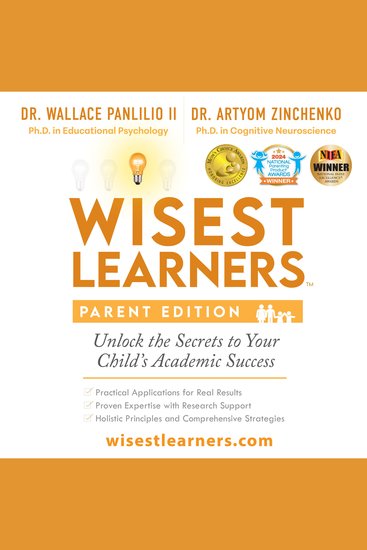
    Lay the foundation for your child's academic success with this award-winning book, Wisest Learners (Parent Edition): Unlock the Secrets to Your Child’s Academic Success. This book has received the following prestigious awards from esteemed organizations:Mom’s Choice Awards® Gold RecipientWinner of the National Parenting Product Awards (NAPPA) 2024Winner of the 18th Annual National Indie Excellence® Awards (Education Category)Winner of the NYC Big Book Award 2024 
    Dr. Wallace Panlilio and Dr. Artyom Zinchenko, educators with PhDs in Educational Psychology and Cognitive Neuroscience, have written this modern and practical guidebook for both new and seasoned parents, providing invaluable insights and strategies to nurture inquisitive, motivated, and triumphant lifelong learners. 
    Discover the power of intentional parenting and witness its profound impact on your child's educational journey. Inside this audiobook, you'll discover helpful guides encompassing parental strategies, learning foundations, and learning strategy management. These proven techniques have been meticulously developed through the authors' years of practical application, experience, and research. 
    Audiobook Highlights:The connection between parents and their young learners and how to foster a passion for acquiring new information.A comprehensive approach that merges proven principles and research-based strategies, empowering you to nurture lifelong learners.Tools and resources to guide your children on a journey of self-discovery, unleashing their potential and exploring the world around them.An enlightening and transformative experience for parents, empowering you to equip your children with the tools they need to excel academically and in life.
    Show book
  • Stewardship - The Responsible Management - Caring for Resources with Integrity - cover

    Stewardship - The Responsible...

    Esther Jameson

    • 0
    • 0
    • 0
    Stewardship is a comprehensive approach to management that emphasizes responsible care and accountability for the resources entrusted to individuals, organizations, and communities. At its core, stewardship requires an understanding of both the tangible and intangible values of these resources and a commitment to ensuring they are used in a manner that preserves their potential for future generations. This chapter explores the historical evolution, philosophical underpinnings, and modern applications of stewardship, offering readers a solid grounding in the fundamental principles that guide responsible management. 
    Historically, the concept of stewardship can be traced back to ancient civilizations where caring for community resources was integral to societal survival and growth. Early cultures recognized the importance of balancing consumption with preservation, creating frameworks that emphasized duty, trust, and ethical responsibility. As societies evolved, these early principles laid the groundwork for more complex systems of governance and ethical management, adapting to meet the challenges of rapidly changing environments. This evolution underscores that stewardship is not a static concept but a dynamic practice that reflects the values and needs of the times. 
    In today’s world, stewardship extends far beyond basic resource management. It embraces sustainable practices, ethical leadership, and a long-term vision necessary for navigating the complexities of modern challenges in finance, the environment, and social structures. Central to this approach is the belief that effective management involves a deep respect for all resources—natural, financial, and human—and a commitment to their wise utilization. By integrating time-honored values with contemporary techniques, stewardship creates resilient frameworks that enable organizations to adapt to change while maintaining their core principles.
    Show book
  • Ancient Iraq: A Captivating Guide to Mesopotamia from the Sumerians and Akkadians through the Assyrians and Persians to the Romans and the Sassanian Empire - cover

    Ancient Iraq: A Captivating...

    Captivating History

    • 0
    • 0
    • 0
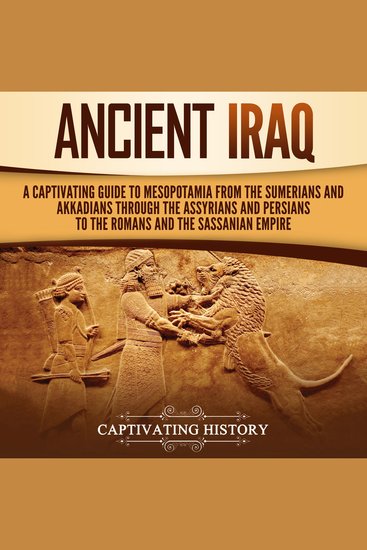
    The first transportation wheel, the first writing, the first law codes, and the first empires—the innovative ancient Iraqis transformed our world! 
    The “Cradle of Civilization” brought us the sixty-second minute, the sixty-minute hour, and the twelve-hour day and night. Their brilliant sages predicted solar and lunar eclipses and developed quadratic equations. 
    Ancient Iraq was undeniably a powerhouse of creativity and stunning achievements. Come explore how the Akkadian, Babylonian, Assyrian, Persian, and Greek empires surged to the top, only to crash and burn. This engaging audiobook will guide you through an incredible journey from the earliest civilizations to the fall of the Sassanian Empire in 651 CE. 
    This audiobook will unpack the following questions and more!What was the world’s oldest city?How similar was Hammurabi’s Law Code to the Law of Moses?How many times was the god Marduk stolen from Babylon?What massive coalition crushed Assyria once and for all?How do today’s historians and astronomers use the ancient Chaldean eclipse records?What three Iranian dynasties ruled Iraq, beginning with Cyrus the Great?What were Alexander the Great’s plans for Babylon?How did the Antonine Plague interrupt Rome’s invasion of Iraq?What Sassanid emperor called on China for help against the Muslim Arabs? 
    To explore ancient Iraq’s historical legacy, scroll up and click the “add to cart” button!
    Show book
  • Start of the Thirty Years’ War The: The History and Legacy of the Early Battles that Began the Deadly Conflict - cover

    Start of the Thirty Years’ War...

    Editors Charles River

    • 0
    • 0
    • 0
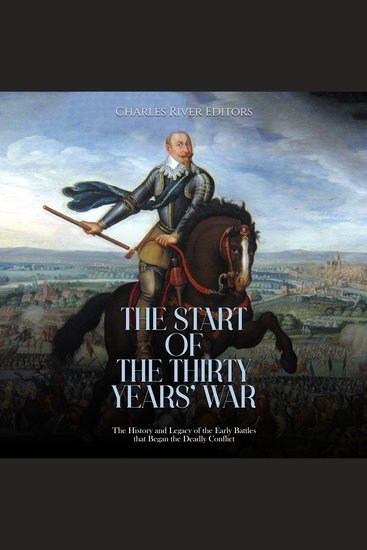
    It has been famously pointed out that the Holy Roman Empire was neither holy, nor Roman, but it was also not an empire in the sense people expect when hearing the term. In theory, the emperor was the highest prince in Christendom, and his dominion extended the length and breadth of Western Europe. The empire had been created by the papacy in 801 when Pope Leo III famously crowned the supposedly unwitting Charlemagne in Saint Peter’s Basilica, intending to recreate the Western Roman Empire. In truth, the imperial power did not extend beyond central Europe, which by the beginning of the 16th century included Germany, northern Italy, and the Netherlands. Even in these lands, however, the emperor struggled to command obedience. His dominion over northern Italy was theoretical only, the cities of the Netherlands were deeply conscious of their ancient rights and privileges, and Germany had long ceased to be compliant. They were united in only one sense: denying the emperor power. 
    The Thirty Years' War was one of the most horrific conflicts in history, resulting in the deaths of nearly two-thirds of Germany's population, and the Battle of White Mountain in 1620 was the first major battle of that war. The battle was fought mainly due to Holy Roman Emperor Ferdinand II’s dealings with the Bohemians and their new king, Frederick of the Palatinate, who Ferdinand regarded as illegitimate. It was also partly a struggle between the centralizing attempts of the Habsburg dynasty conflicting with the traditional regional autonomy that existed within the legislative institutions called the Estates. What gave it an emotional element was the enmity between Bohemian Protestantism and Ferdinand II’s zealous Catholicism. The war would permanently affect the fate of modern Europe. 
    Show book
  • The Unlikely Village of Eden - cover

    The Unlikely Village of Eden

    Emma Nadler

    • 0
    • 0
    • 0
    A hopeful memoir about adapting when life doesn't go to plan, redefining family, and creating your own path. 


    One afternoon, Emma Nadler gets a call from her daughter's doctor that changes her life forever. Faced with the realities of raising a child with a rare genetic condition, Nadler must confront her preconceptions of motherhood and her perfectionistic beliefs. 


    Nadler—who also happens to be a psychotherapist—offers a rare window into the unconventional ways she and her family adapt to their improbable path. Every relationship in her life—with herself, her husband, children, friends, and even clients—is reimagined as she navigates the heartbreak and hilarity of her daily life. 


    As she and her husband join the 53 million caregivers in the US, Nadler wrestles to belong in a society that devalues both caregivers and people with disabilities. She challenges the scripts that mothers should be martyrs, or that self-sacrifice is a necessary component of love. Nadler illustrates the complexity, grief, and joy of living an unexpected life, all with the wisdom of a therapist, the heart of a loving parent, and the ingenuity of a queer woman who refuses to be shackled by cultural expectations.
    Show book
  • Hoysala Empire - The Architectural Splendor of Southern India - cover

    Hoysala Empire - The...

    Rolf Hedger

    • 0
    • 0
    • 0
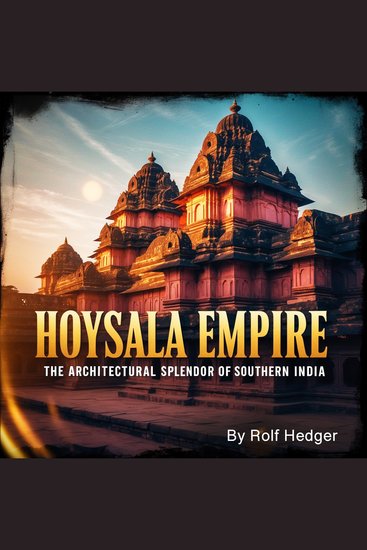
    The Hoysala Empire was one of the most influential dynasties in South Indian history, known for its patronage of art, culture, and architecture. Flourishing between the 10th and 14th centuries, the empire left an indelible mark on the Deccan region, particularly in present-day Karnataka. The Hoysalas emerged as a powerful force after the decline of the Western Chalukyas, establishing their capital first at Belur and later at Halebidu. Their rule was characterized by military conquests, administrative efficiency, and an enduring legacy of architectural splendor that continues to captivate historians and art enthusiasts. 
    The origins of the Hoysala dynasty are traced to a chieftain named Sala, who, according to legend, was instructed by a Jain monk to kill a tiger that was attacking them. This act of bravery led to the adoption of the royal emblem depicting a warrior slaying a tiger, symbolizing the valor of the Hoysala rulers. Over the centuries, the dynasty expanded its influence through strategic alliances and military campaigns, gaining control over vast territories in the Deccan. Prominent rulers such as Vishnuvardhana and Veera Ballala II played a crucial role in consolidating the empire and fostering a rich cultural heritage. 
    A significant aspect of Hoysala rule was its deep connection with religious and artistic traditions. The dynasty was known for its support of Hinduism, Jainism, and, to some extent, Buddhism, leading to the construction of numerous temples and religious institutions. These temples were not just places of worship but also centers of learning and artistic expression. The Hoysalas employed skilled artisans and sculptors who developed a distinctive architectural style, characterized by intricate carvings, star-shaped temple layouts, and finely detailed sculptures depicting gods, celestial beings, and mythological narratives.
    Show book