Join us on a literary world trip!
Add this book to bookshelf
Grey
Write a new comment Default profile 50px
Grey
Subscribe to read the full book or read the first pages for free!
All characters reduced
The Unlikely Explorers - Extraordinary Stories of Everyday People Who Made Science History - cover

The Unlikely Explorers - Extraordinary Stories of Everyday People Who Made Science History

Pasquale De Marco

Publisher: Publishdrive

  • 0
  • 0
  • 0

Summary

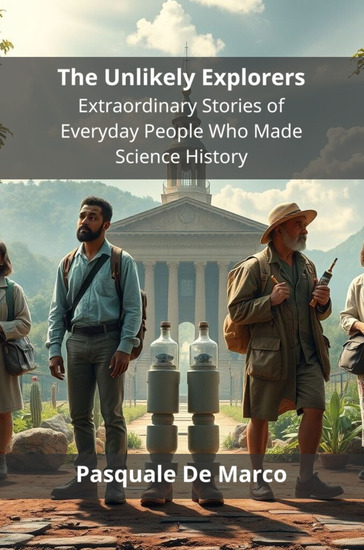
In the realm of scientific discovery, there exists a hidden history, a narrative often overshadowed by the tales of celebrated scientists. This book shines a light on the extraordinary contributions of amateur scientists, individuals who, despite lacking formal training or institutional support, have made significant contributions to our understanding of the natural world.

From the groundbreaking voyage of Charles Darwin aboard the HMS Beagle to the tireless advocacy of Rachel Carson, these unsung heroes of science have left an indelible mark on our collective knowledge. Their stories are not only inspiring but also serve as a testament to the power of curiosity, perseverance, and the democratization of knowledge.

Within these pages, you will encounter ten remarkable individuals who dared to challenge conventional wisdom and pursue their scientific passions against all odds. Meet Sue Hendrickson, a high school dropout who became one of the world's greatest fossil hunters, and Srinivasa Ramanujan, a self-taught mathematician who astounded the world with his brilliance. Discover the contributions of Maria Sibylla Merian, a pioneering naturalist who documented the life cycles of insects, and John Harrison, a clockmaker who revolutionized navigation with his invention of the marine chronometer.

Through their stories, you will gain a new appreciation for the diversity of scientific inquiry and the incredible discoveries that can be made beyond the confines of academia. These amateur scientists remind us that scientific progress is not limited to the ivory towers of universities but can flourish in the most unexpected places.

This book is a celebration of the enduring legacy of amateur scientists and a call to action for fostering a culture that encourages and supports scientific exploration by all. It is an invitation to embrace the wonders of the natural world and to pursue your own scientific passions, regardless of your background or circumstances. Join us on this journey of exploration and discovery as we uncover the hidden stories behind some of the most groundbreaking scientific achievements in history.


If you like this book, write a review!
Available since: 06/02/2025.
Print length: 164 pages.

Other books that might interest you

  • The Shocking Truth about Animal Testing - cover

    The Shocking Truth about Animal...

    Zoey Fraisers

    • 0
    • 0
    • 0
    Animal testing has long been a cornerstone of scientific research, serving as a method to understand biological processes, test the safety and efficacy of products, and develop medical treatments. It involves the use of live animals in experiments and observational studies to explore the effects of drugs, chemicals, and other substances on biological systems. This practice, while often viewed as essential, is fraught with controversy, ethical dilemmas, and scientific scrutiny. 
    The origins of animal testing can be traced back to ancient Greece, where philosophers like Aristotle and Erasistratus conducted rudimentary experiments on animals to study anatomy and physiology. Over centuries, as medicine and technology advanced, the scope and complexity of animal testing expanded. By the 19th and 20th centuries, animal experimentation had become an institutionalized component of biomedical research, contributing to groundbreaking discoveries such as vaccines, antibiotics, and surgical techniques. 
    Today, animal testing is pervasive across multiple industries, including pharmaceuticals, cosmetics, and chemicals. It is primarily used to evaluate the safety of products, ensure regulatory compliance, and develop new treatments for diseases. Animals such as mice, rats, rabbits, and primates are commonly employed because of their physiological similarities to humans, which researchers argue make them suitable models for studying human biology.
    Show book
  • Machine Learning with Python - Advanced Methods and Strategies to Learn Machine Learning with Python - cover

    Machine Learning with Python -...

    Alexander Cane

    • 0
    • 0
    • 0
    Ways to combat retraining depend on the algorithm and consist of the correct values of the trainer's met parameters. In practice, model estimation is not performed on the same input data that was used to train the model. Divide 10-20% of all available data into a separate set and call it a set for evaluation. We will bring the other 10-20% into the set for ratification, and 60-80% of the remaining ones will be given to the trainer. The principle of data sharing depends on the data and the task. Random sampling is often a good method if inputs are independent of each other, and there is no strong imbalance between the number of positive and negative entries. 
    The intuitive analogy here is the same as with university studies: the teacher solves some problems with students in pairs and gives other’s similar tasks in the exam. What is important here (both in teaching students and models) is that these tasks are varied, and students cannot simply memorize the answers, and those who have mastered the material (similar tasks) will be able to repeat the thought process and answer correctly. 
    In machine learning, we split into data two sets: we will use the evaluation set to evaluate each model we train, using different approaches, algorithms, and model types to select the best one. That is, for each model, we will have two precision values - precision on the training dataset and precision on the evaluation dataset. It is normal for the former to be higher than the second, but not significantly. A big difference indicates retraining.
    Show book
  • Environmental Science - Challenges and Solutions for a Healthier Planet - cover

    Environmental Science -...

    Jeron Iris

    • 0
    • 0
    • 0
    Environmental Science is an interdisciplinary field that integrates various scientific disciplines to study the natural world and the impact of human activities on it. This branch of science explores the complex interactions between living organisms, their physical surroundings, and the broader ecosystems they form. The primary goal of environmental science is to understand how natural systems function, identify environmental problems, and develop strategies for addressing these issues. 
      
    At its core, environmental science seeks to answer fundamental questions about the earth's resources, how they are used, and how human actions influence the balance of ecosystems. It draws from biology, chemistry, physics, geology, and social sciences to provide a comprehensive understanding of the environment. For example, ecology, the study of living organisms and their relationships to each other and their surroundings, is a central component of environmental science. By examining the dynamics of ecosystems, scientists can assess the health of the environment and predict the effects of human activities such as urbanization, deforestation, and pollution. 
    One of the primary focuses of environmental science is resource management. As the global population continues to grow, the demand for natural resources such as water, energy, and food increases. Environmental scientists work to ensure that these resources are used sustainably, balancing the needs of current populations with the preservation of resources for future generations. This includes studying renewable resources, such as solar and wind energy, and nonrenewable resources, like fossil fuels, to understand their availability and impact on the environment.
    Show book
  • Ultimate Women's Health Emotional Physical & Mental Coaching Session & Healing Meditations - Natural hormonal balance drug free therapies deep emotional wounds hurts pains past breakups - cover

    Ultimate Women's Health...

    LoveAndBloom

    • 0
    • 0
    • 0
    The mental and emotional state of a woman’s health can affect her deeply physically. Women are generally more receptive to the energies and influences surrounding them. They are more empathetic. 
    When you are too sensitive to energies, you need tools to balance your hormones, mental state and emotional health. We need to protect our energies and psyches to feel balanced loved and nurtured. 
    In this course, we will heal from a spiritual perspective. We will cut all your ex-partner's cords. We want to stay healthy in all connections without any past influences. Next, we will heal your womb. Your womb has tremendous power in your manifestations. We clear all residue traumas wounds or pains that are recorded. Then we will do a menstrual cycle healing to balance your physical period back to balance. 
    This is a very powerful course in healing all aspects of womanhood. Take a chance to nurture yourself now!
    Show book
  • Born of Fire and Rain - Journey into a Pacific Coastal Forest - cover

    Born of Fire and Rain - Journey...

    M.L. Herring

    • 0
    • 0
    • 0
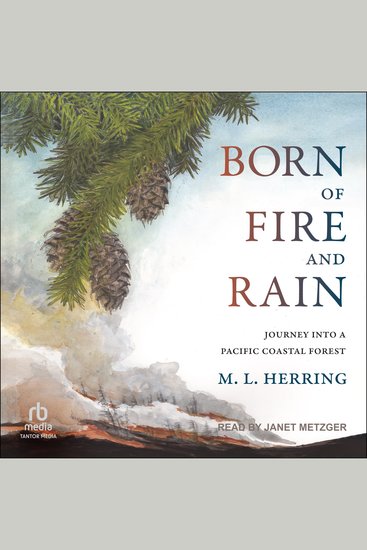
    If you live on a rapidly changing planet, you'd be wise to learn how it works. The giant old forests on a skinny stretch of land on the far west coast of North America have a lot to say about living in a twitchy world. 


    In this engaging book science writer M. L. Herring takes listeners into the Pacific temperate rainforest at the tumultuous edge of a shifting continent in a precarious moment of time. Listeners peek behind the magnificent scenery into a forest of ancient trees, exploding mountains, disappearing owls, tsunamis, megafires, and ten million people to learn what it means to be a forest in a world of upheavals. 


    Through Herring's words, listeners drift into the canopy through masses of ferns and lichens, burrow into soil through hair-thin threads of fungi, and plunge headlong through a watershed flushed with rain and snowmelt. Listeners experience the temperate rainforest through science and art as it faces a shifting climate and the shifting priorities of a constantly changing society. The book journeys beyond the grid of latitude and longitude and into places only one's imagination can fit, to discover what it means to be human in an ecological world.
    Show book
  • Design for Cognitive Bias - cover

    Design for Cognitive Bias

    David Dylan Thomas

    • 0
    • 0
    • 0
    We humans are messy, illogical creatures who like to imagine we’re in control—but we blithely let our biases lead us astray. In Design for Cognitive Bias, David Dylan Thomas lays bare the irrational forces that shape our everyday decisions and, inevitably, inform the experiences we craft. Once we grasp the logic powering these forces, we stand a fighting chance of confronting them, tempering them, and even harnessing them for good. Come along on a whirlwind tour of the cognitive biases that encroach on our lives and our work, and learn to start designing more consciously. 
    THIS BOOK EXPLORES: 
    • Why our brains take shortcuts—and why that matters in our work 
    • How bias influences everything from user behavior to stakeholder decision-making to team dynamics 
    • Techniques for noticing your own biases, and using them for good where you can 
    • Making more humane and conscientious products and experiences
    Show book